Hair Care Marketing Guide for 2026
Table of Contents
The hair care game has completely changed – customers aren’t just buying shampoo or styling products anymore. They’re buying solutions to solve deeply personal problems: hair loss, scalp sensitivity, heat damage, post-partum shedding, heat damage, curl confidence, and more.
As the hair care world continues to evolve, brands must keep up to break through the noise. Marketing is no longer something you work with after formulation. It is the strategic backbone of the brand.
The marketing part of your journey can feel a bit overwhelming, but no worries – we have designed a guide to help you understand how hair care marketing works these days. Let’s dive right in!
What Hair Care Marketing Looks Like in 2026
Hair care marketing in 2026 is defined by three major shifts: credibility over hype, community over virality, and consistency over single campaigns.
Customers now focus on ingredients more than ever before. They expect brands to explain why exactly a product works. Nobody needs a promise of shiny hair anymore.
Social media platforms – especially TikTok and Instagram – have totally reshaped how hair care is discovered. Wash day routines, get ready with me videos, educational stories from your favorite influencers outperform traditional ads. Hair care is now visual, habitual and emotional, which makes it perfectly suited for short-form video and community storytelling.
What no longer works?
Overproduced ads with unrealistic transformations
One-size-fits-all messaging
Launching products without a clear content or distribution plan
Hair Care Market: Size and Growth (Why it Matters)
The hair care market isn’t just growing. It’s evolving fast. What used to be a quick shampoo and conditioner routine is now a self care ritual. Innovation, personalization, and social media are driving the change. You just need to know the market, and connecting the dots gets a lot easier.
The global hair care market continues strong growth, driven by rising customer interest in hair wellness, personalized solutions, and performance-focused products – with projected growth through the late 2020s.
Some facts about hair care market:
Research shows that the global hair care market was valued around USD 99.5 billion in 2023 and continues to expand strongly.
The same report says that 63% of customers trust hair brands with natural ingredients more than those without.
According to Fortune Business Insights, the market is estimated to reach USD 216.9 billion by 2024, with an annual growth rate near 7.5%.
Luxury hair care segment is growing steadily, with market size near USD 29 billion in 2025, and expanding to over USD 30 billion in 2026.
According to Global Growth Insights, about 68% of customers use more than one hair care product regularly.
Hair care industry statistics show that natural, organic and vegan hair care categories are also expanding as people get ingredient-aware.
The numbers speak for themselves – the hair care market is booming, and customers are picky, ingredient-aware, ready to invest in products they trust. With growth like this, it’s clear that smart, creative brands have a huge opportunity to make things happen.
Building a Marketing Plan for Hair Care Products From Day One
A strong hair care marketing plan starts long before your first batch is produced. The most successful brands in 2026 treat marketing as a product development tool, not a promotional afterthought.
Define the Real Problem You Solve
The hair care market is crowded. “Hydrating,” “strengthening,” or “clean” are no longer breakout factors on their own.
A smart place to start is by defining the core problem your customers face:
Post-bleach breakage for fine or fragile hair
Oily roots paired with dry ends
Curl definition that lasts past day one
Hair thinning linked to stress or hormones
Frizz triggered by humidity
Breakage from tight hairstyles
Your marketing strategy should be able to answer one simple question in three seconds:
Who is this for, and what do your products solve?
This clarity shapes everything — from formulation and claims to packaging copy and creator partnerships.
Choose Your Hero Product
You don’t need to launch a whole lineup – just one unforgettable product. In fact, the fastest growing and most successful brands lead with one hero product.
A hero product:
Solves a clearly defined problem;
Is easy to demonstrate visually;
Can be used differently for content purposes: routines, before/after shots, education etc.
How you can use your hero products for social media content:
Scalp serum: massage tutorials, expert commentary, ingredient explainers, 30 day result journeys, before/after content.
Heat protectant mist: quick styling hacks, hot tool demos, creator tips, damage comparison clips.
Color-protect shampoo: wash tests, fade comparisons, user reactions, ingredient education.
Scalp exfoliating scrub: flake removal time lapses, scalp massage demos, routine tutorials.
Anti-frizz serum: frizz vs. sleek comparisons, styling hacks, humidity test challenges, quick fixes for flyaways.
Explore Selfnamed’s Keratin Product Line
Pick 1–2 Primary Channels
If you are building a hair care brand, start with TikTok and Instagram.
TikTok (education, discovery, community)
Instagram (brand building, social proof, DMs)
TikTok has over 1.6 billion monthly users and drives trends, community, and discovery. Around 69% of brands use it for influencer campaigns. Instagram hits 1.47 billion users, with reels boosting engagement and DM’s driving conversations. Together, these channels give you reach, social proof, and measurable growth.
Budget Realistically
Hair care marketing doesn't need to be expensive, but it sure must be consistent.
Smart early-stage budgets prioritize:
Content creation (UGC, creator fees, editing)
Sampling and seeding (let your potential customers try the product and give the product to influential voices)
Small, test-based ads (see what works before spending a lot)
Find out more about budget-friendly marketing tactics, how to use social media platforms and how to choose the right influencers in this guide to marketing beauty products.
Hair Care Product Marketing Strategies That Drive Real Sales
The hair care brands that actually sell in 2026 focus on what works: solving real problems, highlighting hero products and telling authentic stories. They turn education, social proof and creator-driven content into real sales, not just likes.
Educational Content That Builds Trust
Education isn’t just nice-to-have – it’s your secret growth hack. In 2026, hair care content that teaches how to take proper care of hair, wins every time.
Well known brands like Briogeo frequently use Instagram to explain how their products work. Their content goes way beyond pretty photos – Briogeo breaks down why ingredients like rosehip oil or charcoal help with frizz and hydration.
Olaplex is another great example of education and action on Instagram. Their posts often explain the science behind their bond-building technology and how the ingredients work on hair.
Effective educational content includes:
Ingredient spotlights tied to real hair problems
“How to use” routines for different hair types
Education positions your hair care brand as a guide, not just a seller.
Creator-Led Storytelling
In 2026, creators are not billboards. They are co-storytellers. Your products basically come alive through creators.
Rather than one-off sponsored posts, hair care brands now build long-term creator relationships that feel authentic.
A strong example is indie scalp care brands. They partner with creators to show hair wash routines. Before/after content reveals setbacks and progress, and everyday use.
Pattern Beauty works with creators to show their products and how to use them. For example, hair wash routines highlight the benefits.
The most effective creator content:
Feels unscripted
Acknowledges imperfections
Speaks in the creator’s native language and format
Who sees the stories creators are telling?
There is no doubt that Millennials and Gen Z are heavy lifters on social media, especially Instagram and TikTok. According to Statista’s consumer insights data, TikTok, Instagram and YouTube were the favorite social networks for Gen Z (with about 79-91% of Gen Z users active on those platforms in late 2025). At the same time, roughly 62 - 63% of Instagram users globally fall between ages 18 and 34, capturing both Millennials and Gen Z.
These generations spend so much time on social media. They discover products, engage with different brands. Creator‑driven content becomes a powerful way to reach and influence customers.
In a social media world, where Millennials and Gen Z dominate, you’ll definitely need this guide for marketing to Millennials and Gen Z.
Social Proof as a Growth Engine
In hair care, seeing real results from others makes trying something new feel less risky.
Before purchasing, consumers look for:
Comments confirming results
Before-and-after visuals
Trusted recommendations
Expert validation
Brands that turn UGC and reviews into content see higher trust and stronger conversion rates.
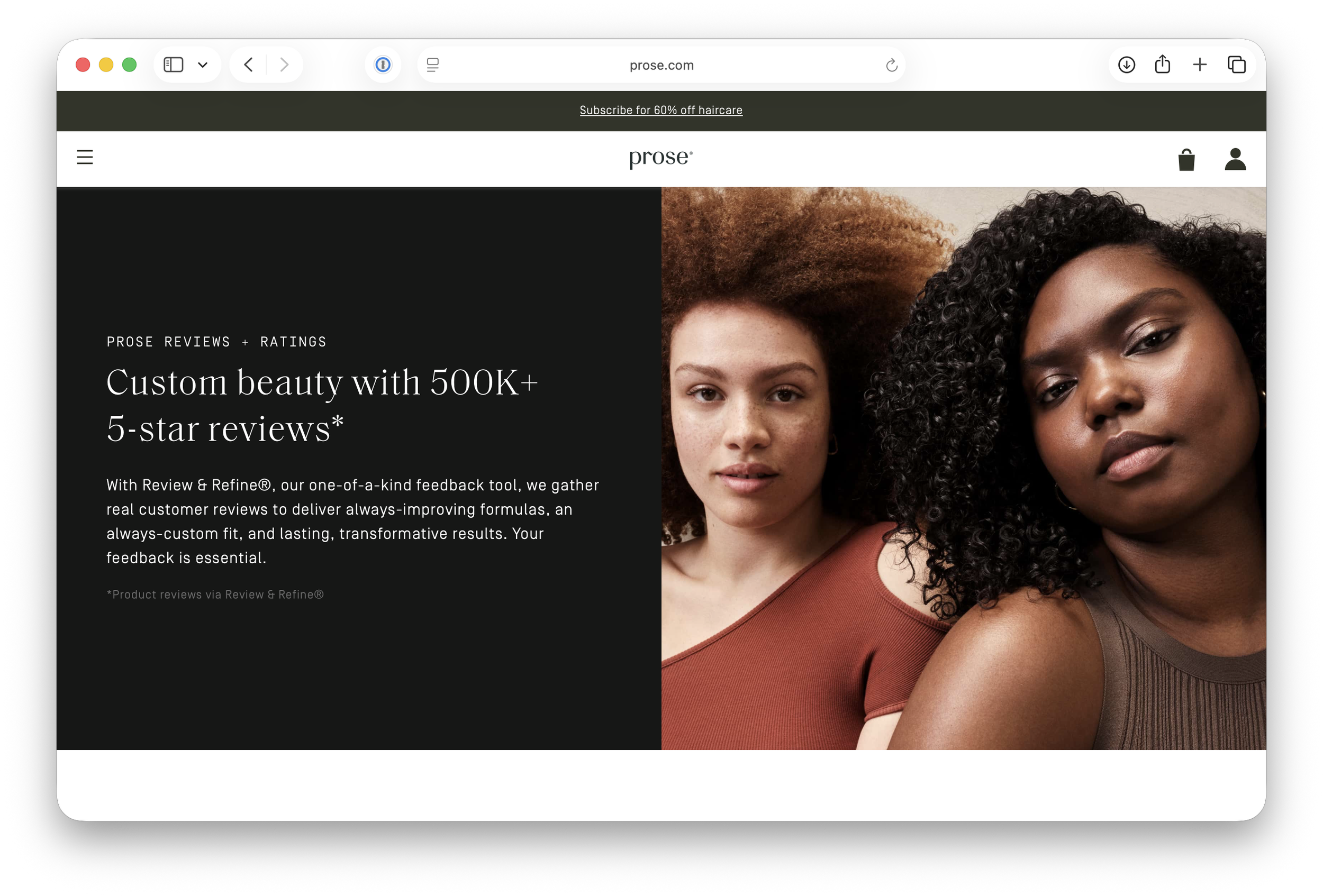
For example, hair care brand Prose encourages users to share their real experiences and results. You’ll find authentic customer reviews on their website and also user-generated posts across social media platforms.
Hair Care Marketing Campaigns That Set the Bar
Some hair care campaigns do more than sell. They turn heads, start conversations, and make people talk. Creative ideas, social buzz, and memorable visuals raise the bar for the whole industry.
From jaw-dropping billboards to viral TikToks and creator-driven journeys, winning brands know the drill. They mix strategy, storytelling, and spectacle. And they do it in a way people actually care about.
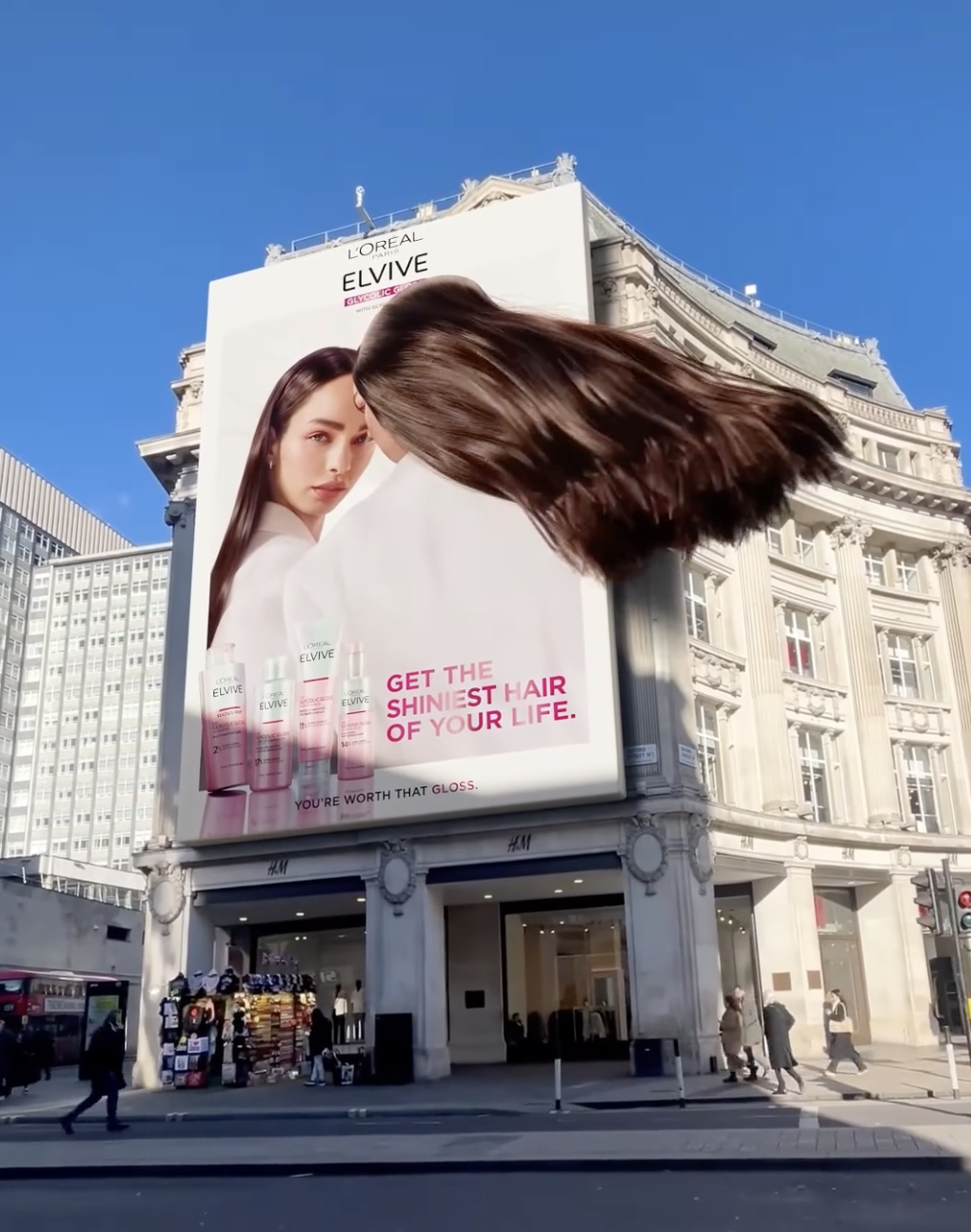
FOOH (Fake Out-of-Home) Marketing: L’Oréal Paris
L’Oréal Paris showed what FOOH can do: massive 3D billboards at Oxford Circus and other places made hair look impossible shiny and hyper-real, practically flowing off the screen.
These digitally rendered moments were designed for social first, generating millions of views despite never physically existing. The campaign proved that spectacle still works.
Source: FOOH Library
Wash Day Content – Pattern Beauty
Pattern Beauty’s wash day campaigns highlight real routines, real textures, and real time investment. Instead of quick transformations, the brand embraces the full process — shampoo, mask, styling, drying.
Kérastase’s “House of Gloss” Pop-Up
Kérastase blended physical experience with digital virality through the “House of Gloss” pop-up, supported by TikTok-first content strategies.
Creators documented their experience – interior, installations, personalized consultations, and product rituals – turning a temporary space into weeks of social content.
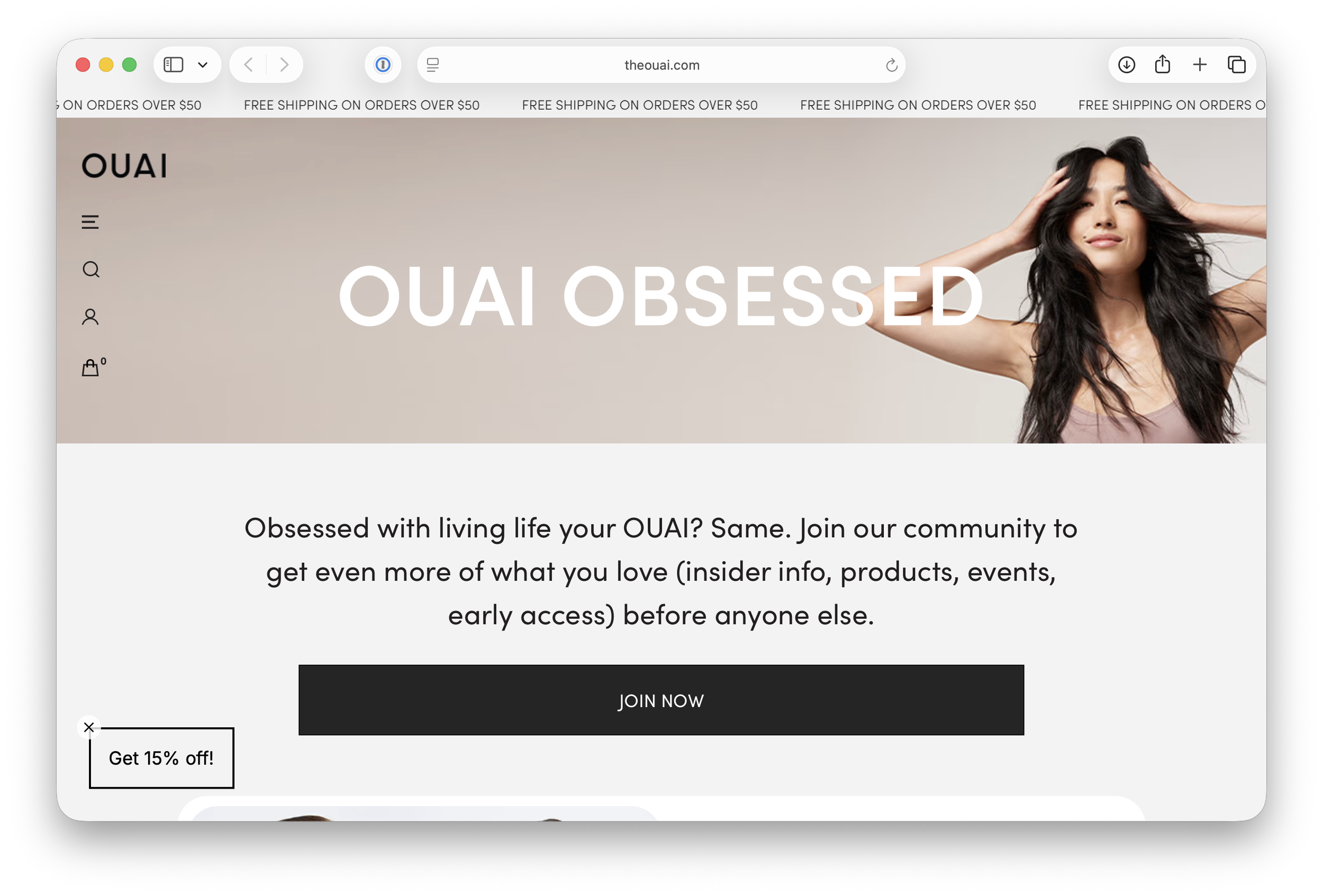
OUAI’s Community-Led Brand Building
OUAI’s “OUAI Obsessed” community hub shows that brand-owned platforms can do more than sell - they can build a full-on fan club.
By putting fans, creators and routines in the spotlight, OUAI makes everyone feel like they belong - because hair is personal.
Source: OUAI website
Clean Beauty Trends Reshaping Hair Care Marketing
Clean beauty isn’t just a buzzword anymore – it’s a movement. Shorter ingredient lists, refillable bottles, and even AI-powered diagnostics. These trends shape how people shop and what they care about. For founders, tapping into clean beauty isn’t optional – it’s how you stay on radar, earn trust and get talked about.
Minimal INCI Lists
Short ingredient lists are trust signals. People want to know exactly what’s in (and what’s not) their hair care products. Simple INCI lists give them confidence. Here, less is definitely more.
Refillable Packaging
Refill, reuse, repeat. People want products that look good and don’t trash the planet.
Clinical Testing Claims
Proof matters. When a product actually does what it says, call it out. Customers trust numbers, studies and real results more than loud slogans.
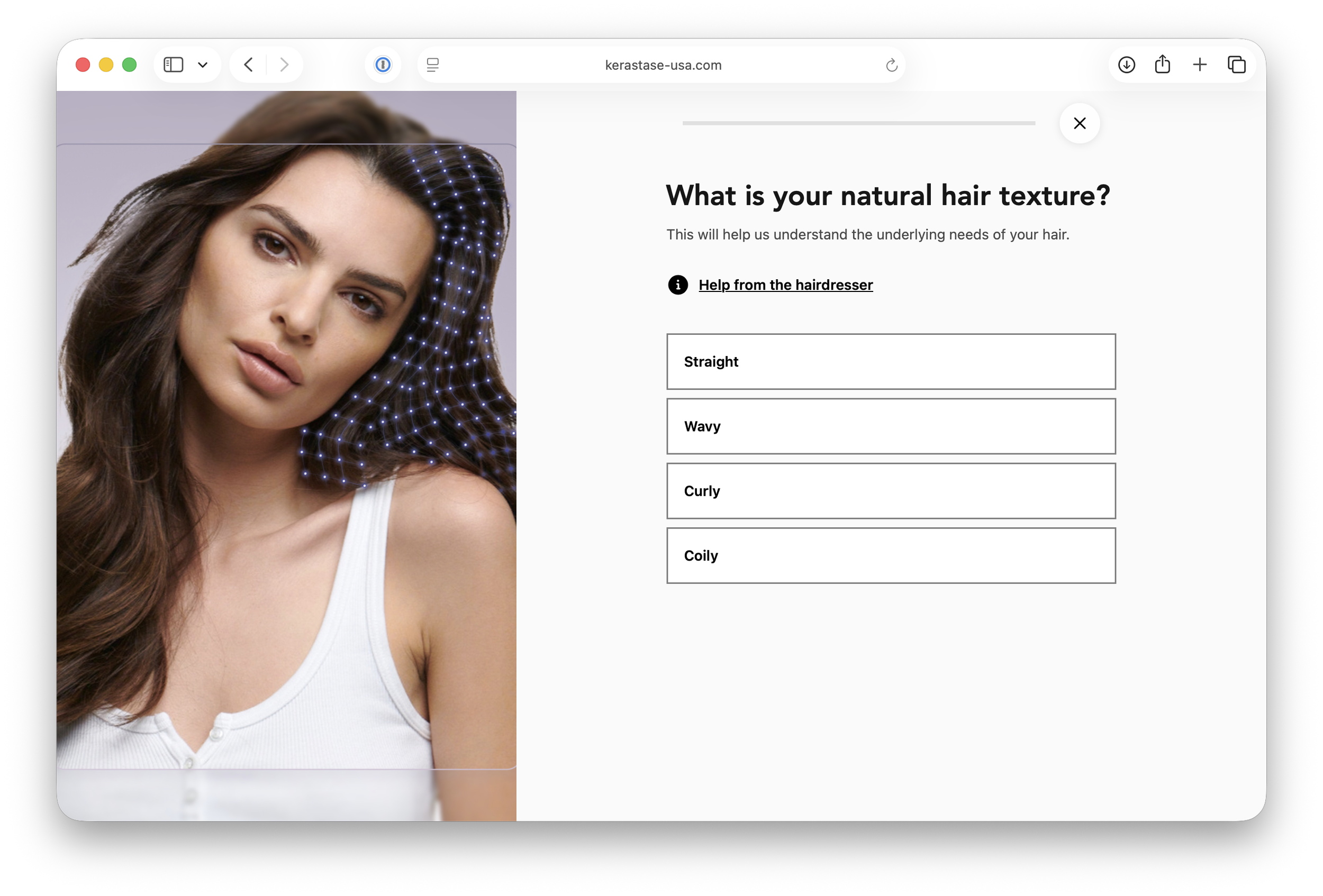
AI-Powered Hair Diagnostics (Emerging)
AI tools that recommend routines or products based on your hair type make marketing personal, futuristic and oh-so-sharable.
Source: Kerastase
What This Means for Indie Brands & Private Label Founders
For indie founders and private label entrepreneurs, 2026 is all about speed and flexibility.
You can:
Test niche positioning quickly – try bold ideas without waiting for a massive launch.
Build community before scale – engage real fans early and let them shape your story.
Let marketing insights shape formulation decisions – design products with your audience in mind from day one.


Private label and customizable manufacturing give founders a real edge. You can align products with what your audience actually responds to.
Platforms like Selfnamed make this easy – lower MOQs, quicker launches, customizable products and designs and room to iterate.
Bottom line: founders who think about hair care marketing before launch always win over those who leave it for later.
Conclusion
Hair care marketing in 2026 isn’t about chasing trends. It’s about building trust, relevance and community in a deeply personal category.
The brands that win:
Start with a clear problem
Lead with education and authenticity
Invest in creators and community
Let marketing guide product decisions
The opportunity has never been bigger – but success belongs to those who approach marketing as a long-term system, not a launch-day tactic.
Frequently Asked Questions
-
Hair care marketing is the strategy of promoting hair products by educating customers, building trust and connecting solutions to real hair and scalp concerns.
-
Start by defining the problem you solve, choosing a hero product, selecting 1–2 primary channels, and building consistent educational and social proof-driven content.
-
In 2026, TikTok, Instagram and also websites are the strongest channels for discovery, engagement and conversion.
-
They don’t have to be. Many successful brands grow through organic content, UGC and creator partnerships before investing heavily in paid campaigns.
-
Clean beauty increases demand for transparency, clinical validation, sustainable packaging and ingredient education — all of which shape how hair care brands communicate today.
Must read