What Are the Different Hair Types? A Complete Guide for Brands
Table of Contents
If your hair had a personality, it would probably say, “We’ve been together for years, and you still don’t get me.” Hair isn’t complicated; we just act like it is.
Walk down any beauty aisle, and you’ll see products promising everything from shine to frizz control, repair, volume, and curl definition. The problem? What works for one head of hair can totally flop on another.
Understanding what are the different types of hair isn’t just trivia; it's how you pick products that actually work, instead of experimenting blindly. For consumers, it means picking formulas that deliver, not crossing your fingers and hoping for the best. For brands, it means formulating with intention, not just chasing trends or guessing what might stick.
Hair type is more than a label. It influences how oil travels, how moisture is retained, how protein is tolerated, how much shrinkage occurs, and how frizz forms. Ignore that, and you’re formulating in the dark.
You know the saying, “One product for all hair types”? Yeah, it usually only delivers for one person in the room.
Let’s break it down so that anyone who cares about hair, from users to makers, knows exactly what’s going on.
What Are the 4 Types of Hair?
Back in the 1990s, Oprah Winfrey’s stylist, Andre Walker, created what’s known as the Andre Walker Hair Typing System (also known as “The Hair Chart”). He originally designed it to promote his own haircare line, but it quickly became one of the most widely used curl classification systems out there.
Is it perfect? Probably not. It’s been criticized for being subjective and not exactly scientific. That’s valid.
But honestly? It’s still a very helpful visual starting point, especially if you’re just beginning to understand and embrace your natural texture.
This system organizes hair into four main types based on curl pattern. Each type is further divided into A, B, and C subcategories depending on how loose or tight the pattern is.
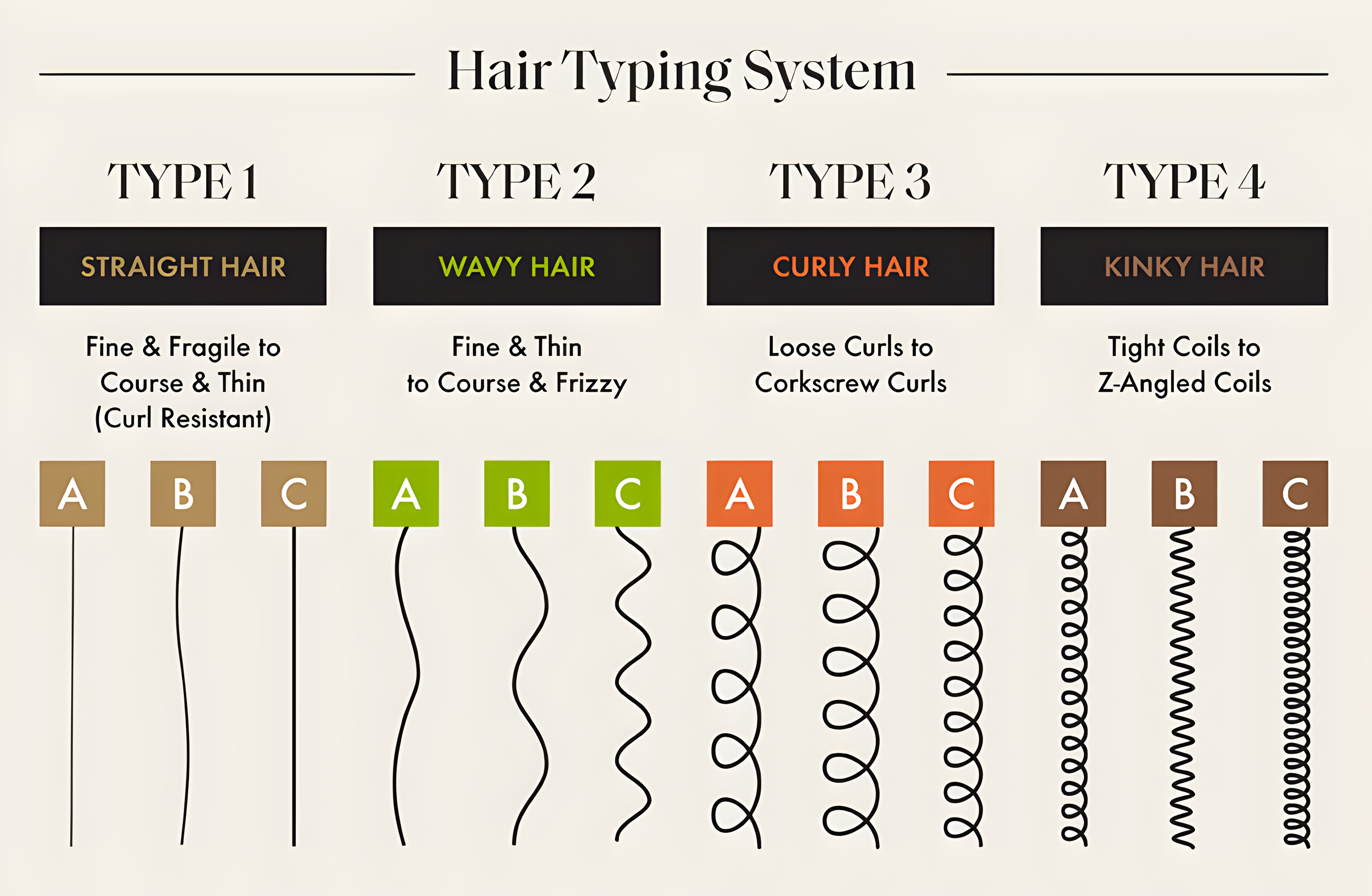
Source: elle.com
So when someone asks, “What are the different hair types and how do they behave?”, this system is usually where the conversation begins.
Type 1: Straight
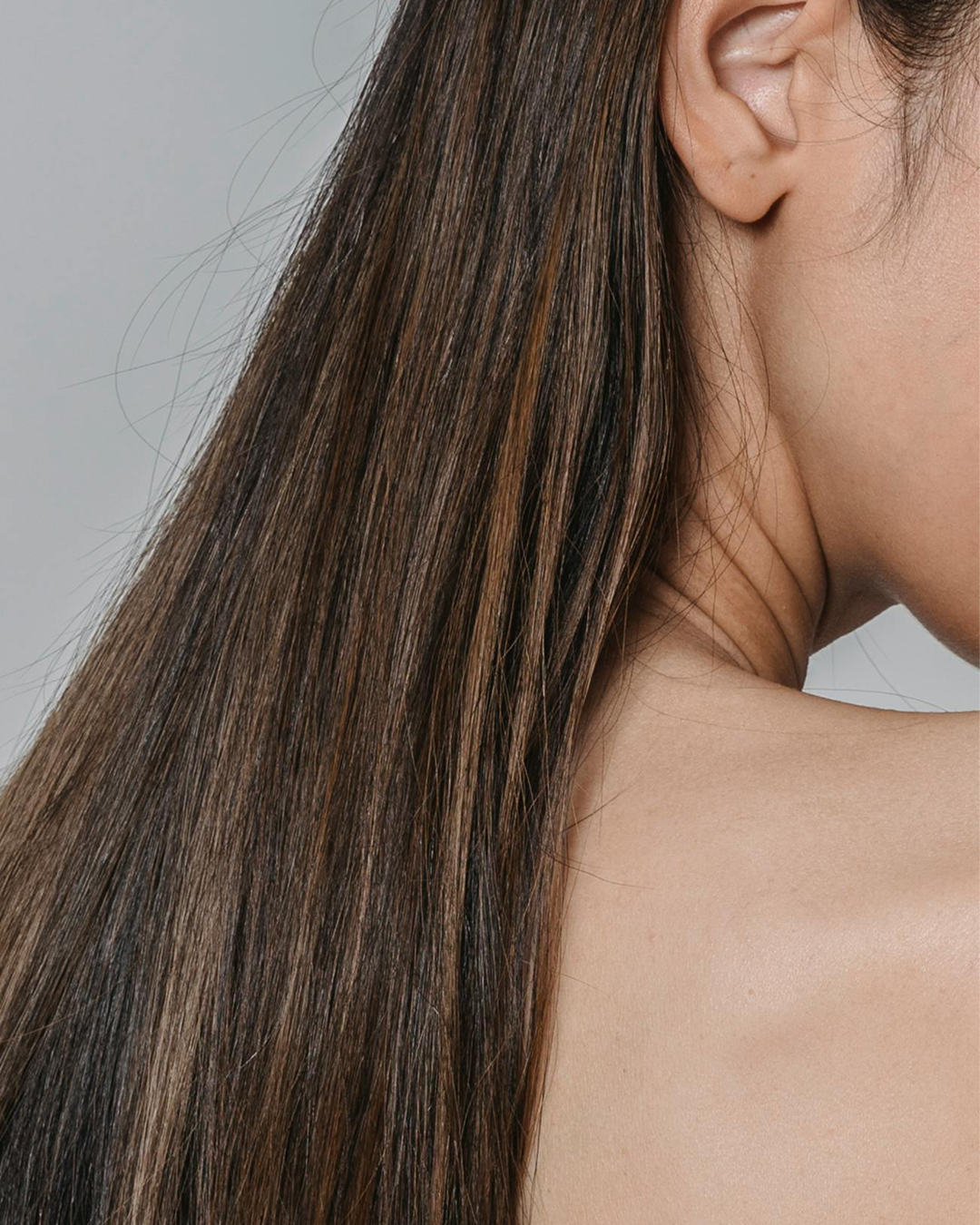
Straight hair lies flat from root to tip. No bends, no spirals. And because of that, your scalp’s natural oils can travel easily down the hair shaft. The result? It often looks shinier, but it also gets oilier faster.
Straight hair usually struggles more with flatness and oil buildup than dryness.
Subtypes:
Type 1A: Very fine and pin-straight. This is the straightest of the straight. Smooth, sleek, and shiny;
Type 1B: Still straight, but with a slight bend or wave in it.
Type 1C: Thicker, with more body and a subtle wave. It is almost wavy, but not quite, and it’s usually more resistant to styling.
Formulation focus: lightweight conditioners, oil control balancing ingredients, and minimal heavy butters.
If you overload straight hair with dense emollients, it will collapse instantly. It’ll fall flat and have no volume.
Type 2: Wavy
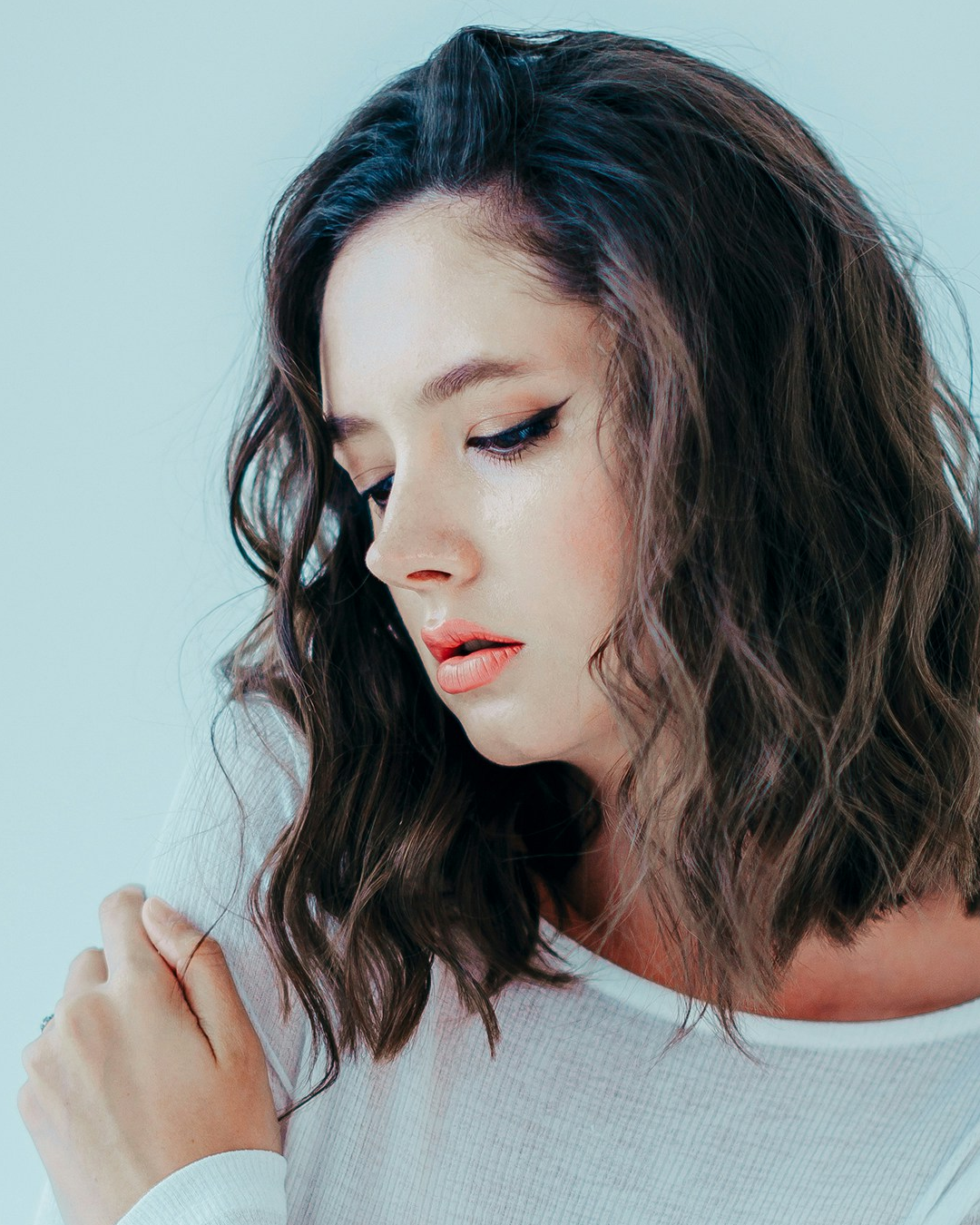
If your hair forms loose S shapes, you’re probably Type 2. Wavy hair sits right between straight and curly. It’s the in-between texture, and it often tends to deal with frizz, uneven definition, and waves that won’t cooperate consistently.
Subtypes:
Type 2A: Loose, soft, and beachy waves. Typically, these waves start a few inches from the roots;
Type 2B: It tends to have more noticeable S shaped waves with a mild frizz. The wave pattern in type 2B hair is more defined than in type 2A hair;
Type 2C: Thick, voluminous waves that border on curls. The wavy pattern usually starts right at the root and goes all the way down to the ends of your hair.
Wavy hair usually needs balanced hydration. Too little moisture? Frizz. Too much weight? Goodbye wave pattern.
It’s basically the middle child of hair types. It needs attention, but not too much.
Type 3: Curly
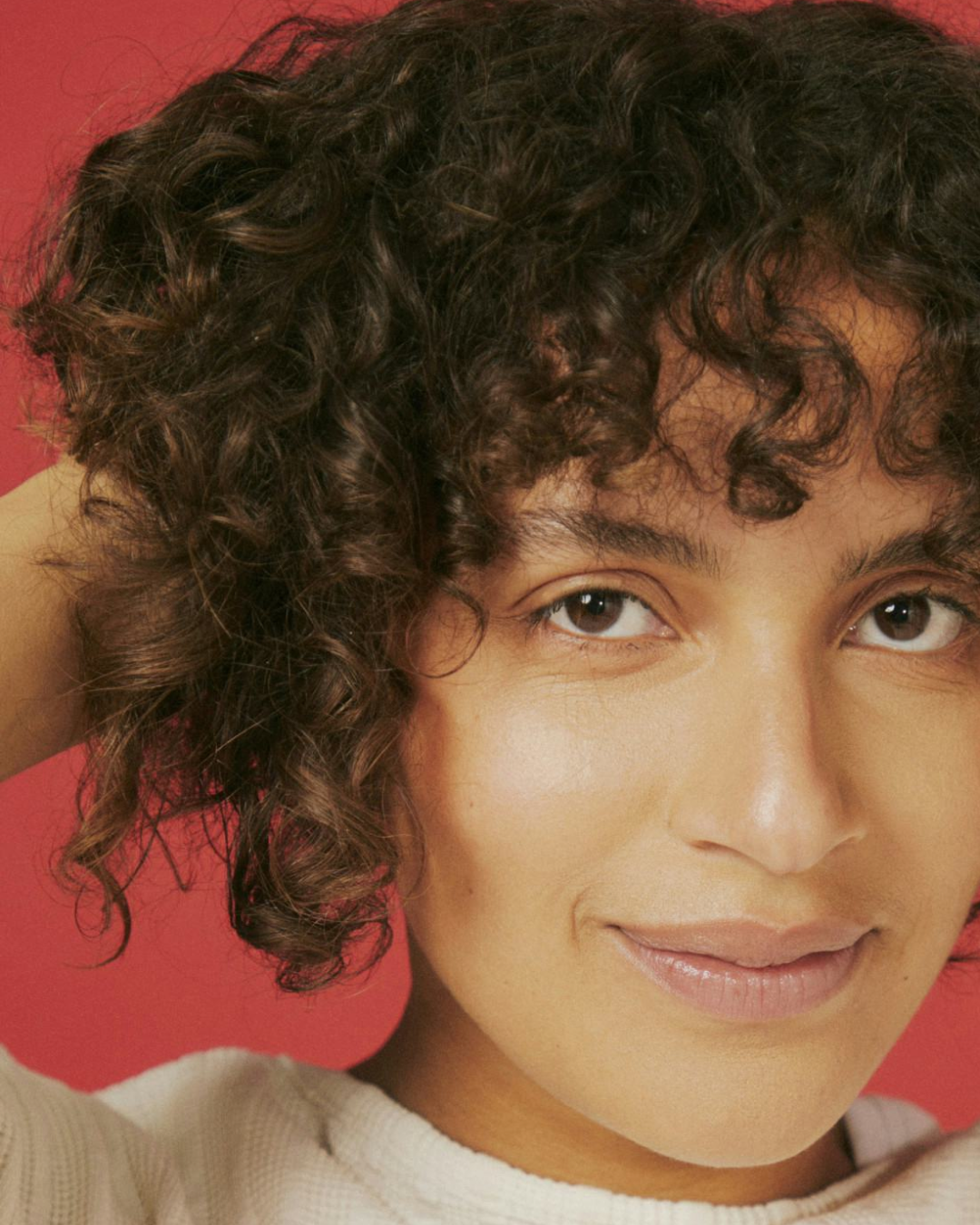
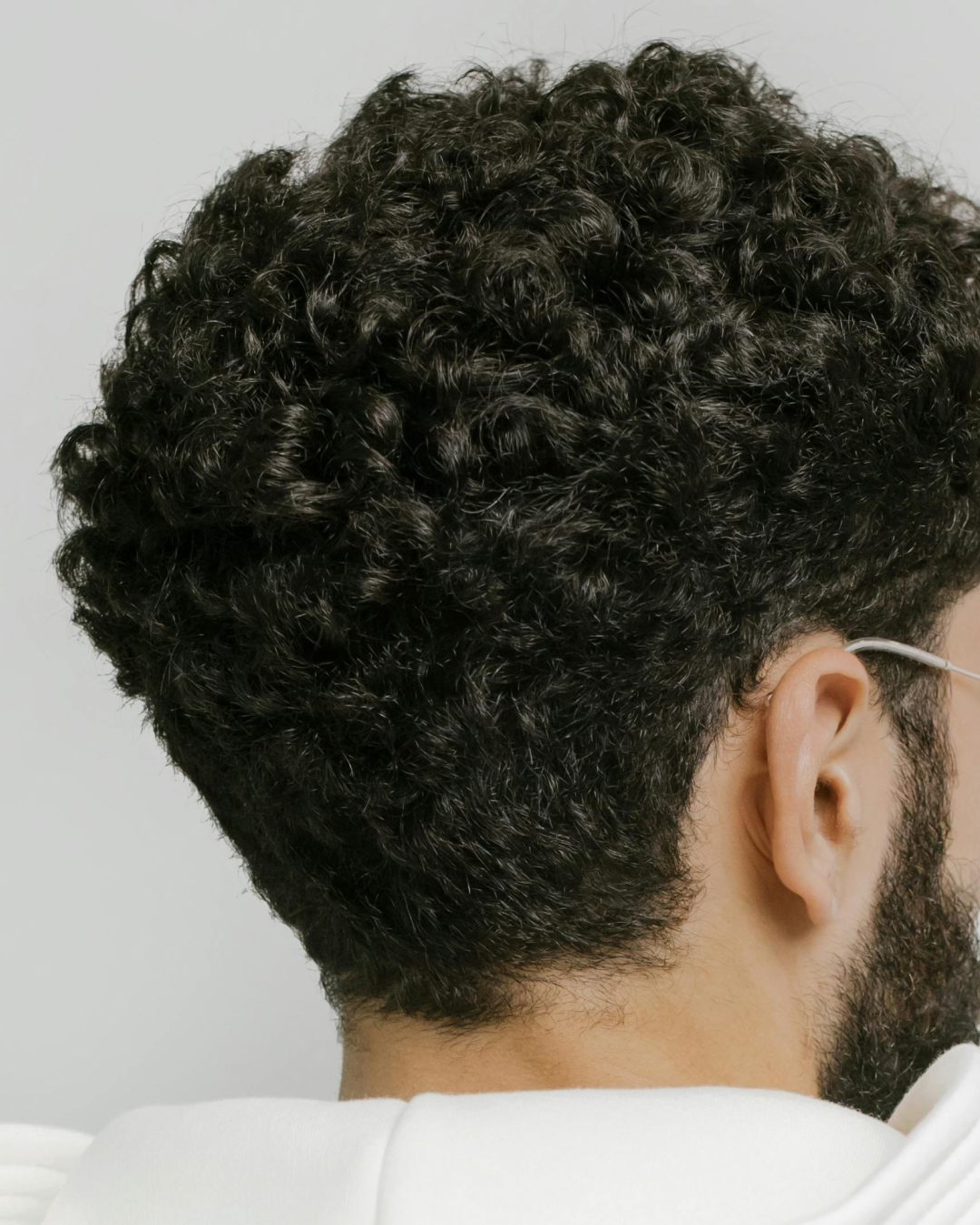
Now we’re talking about ringlets. Curly hair forms visible spirals.
Because of its spiral shape, natural oils struggle to travel down the strand. That means curly hair is naturally more prone to dryness.
Subtypes:
Type 3A: Loose, large curls. Curls typically have a loop-shaped pattern and are about as wide as a quarter;
Type 3B: Bouncy, springy ringlets about the size of a penny. These curls are much more defined than type 3A curls;
Type 3C: Tight corkscrew curls that have a spiral shape and are about the width of a pencil. Much more compact and defined. If you have type 3C hair, your curls are much tighter and more defined than type 3A or 3B hair.
Curly hair benefits from hydration-focused formulas, frizz control systems, and balanced protein support.
And yes, humidity will test your formulation integrity.
Type 4: Coily (Kinky)
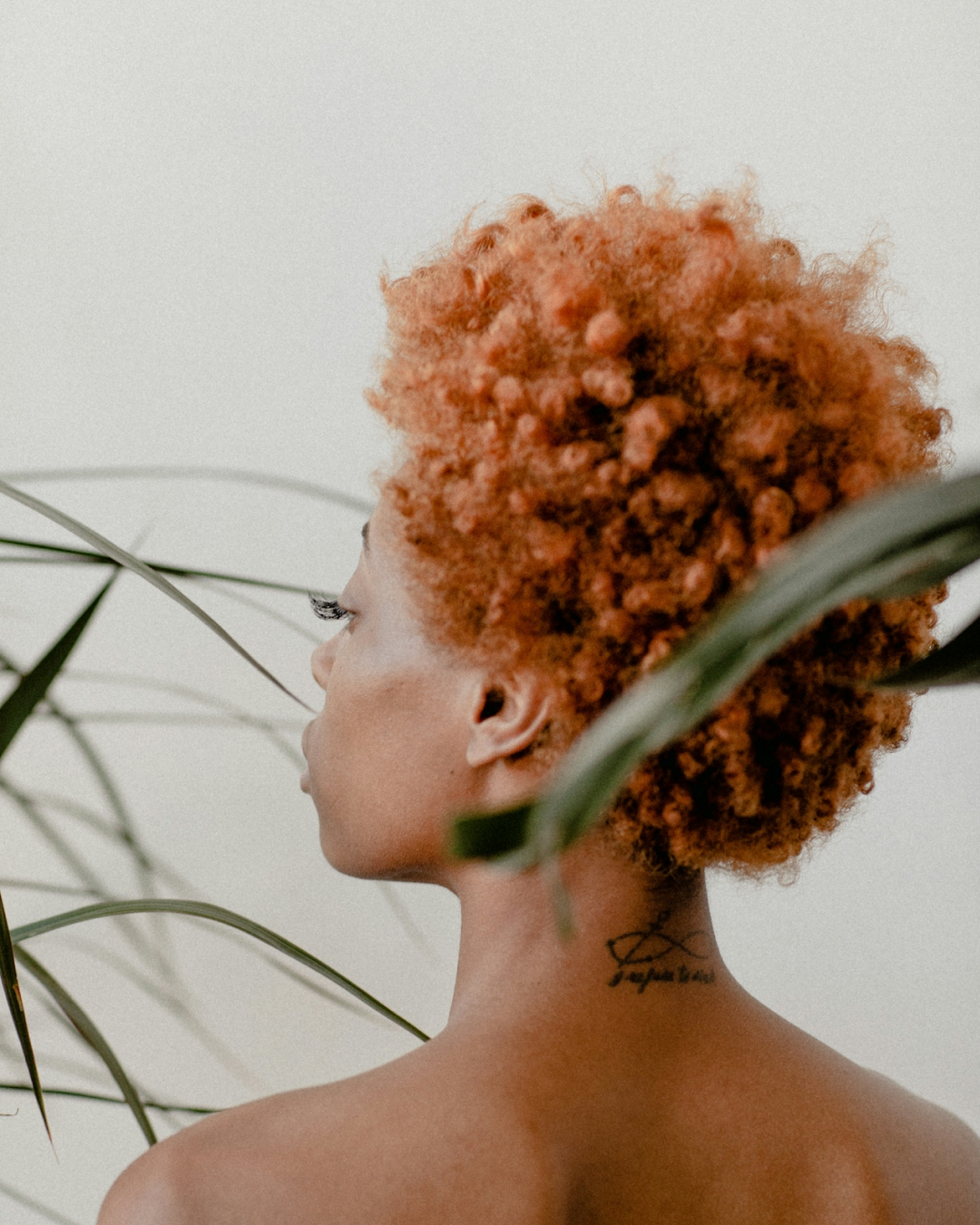

Type 4 hair forms tight zig-zag or spiral patterns. It’s typically the most fragile and experiences the most shrinkage. You might think shrinkage is a sign of damage, but it’s not. It’s actually a sign of elasticity, and it can shrink up to 70%.
Subtypes:
Type 4A: Defined tight coils with a visible loop pattern. And are about the size of a crochet needle;
Type 4B: More angular, Z shaped pattern. These Z shaped curls are much tighter and less circular than type 4A coils;
Type 4C: Very tight coils with minimal visible definition, hair is known for its super tight zig-zag spirals. The zig-zag pattern can be hard to see at first glance.
It’s highly textured, highly versatile, and needs thoughtful care.
This curl-based system focuses on the curl pattern, but it doesn’t consider things like density, porosity, strand thickness, elasticity, or even scalp health. And these details matter as they dictate how your hair actually behaves.
So yes, the hair typing system is a great starting point. It gives you a general idea of what you’re working with, but it’s not the whole picture.
What Are the Different Types of Hair Textures?
One of the biggest misunderstandings in hair care is how often different hair characteristics get blended into one category. Texture, type, density, and porosity are regularly used interchangeably, but they describe completely different things.
If you’re developing products, that confusion can cost you. If you’re choosing products, it can leave you frustrated.
Let’s separate them properly.
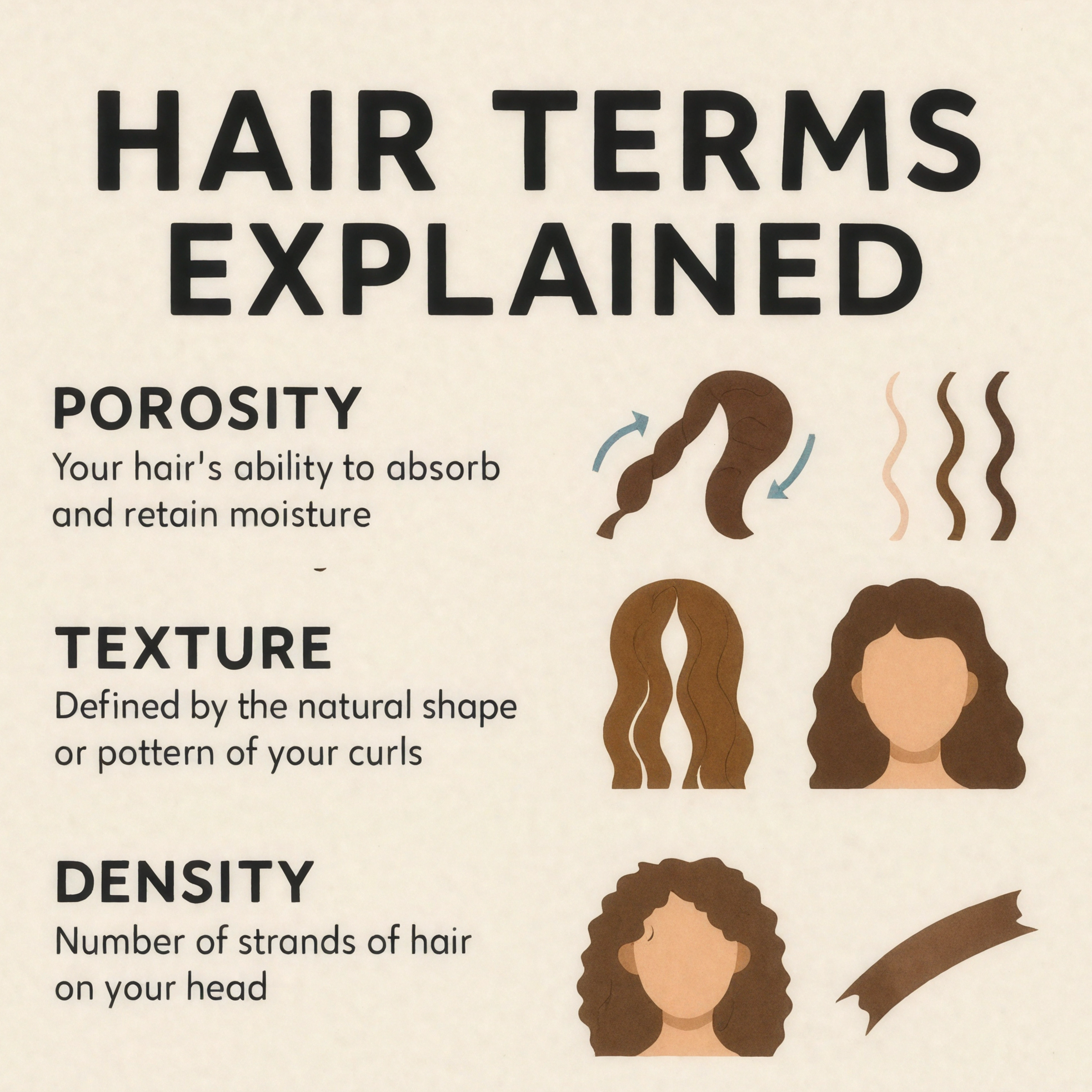
Source: yanibest.com
Texture vs. Curl Pattern
If hair type, as mentioned before, is about curl pattern (straight, wavy, curly, or coily), then hair texture is about strand thickness.
Hair type describes the shape the strand forms naturally. It’s the visible pattern you see.
Hair texture, on the other hand, refers to the diameter of each strand. It has nothing to do with whether the hair is straight or curly.
In simple terms, the curl pattern tells you the form. Texture tells you the fiber size.
So, two people can both have curly hair (same curl pattern) but very different textures. One might have fine spirals, the other thick, springy corkscrews. Same curl family, but completely different strand structure.
This difference is one of the biggest reasons people confuse “type” and “texture.” They sound similar, but they’re describing two separate traits.
And that difference changes a lot. From how much product the hair can handle to how it responds to protein, moisture, and styling tension.
When brands formulate only around curl patterns and ignore strand thickness, they oversimplify performance. “For curly hair” is far from a formulation strategy. It’s a starting point at best.
Fine, Medium, and Coarse Hair
Hair texture is generally categorized into fine, medium, and coarse. But these labels aren’t about how much hair you have; they only describe how thick or thin each hair is.
Fine hair has a small diameter. It often feels soft and light, but it can also be fragile and easily weighed down. It tends to show oil faster and collapses under heavy creams or dense butters. Lightweight conditioning and careful oil balance are critical here.
Medium hair sits in the middle. It has a noticeable strand thickness, holds styles relatively well, and usually tolerates a balanced mix of hydration and protein. This texture is often the most adaptable, but that doesn’t mean it’s immune to overload.
Coarse hair has a larger strand diameter. It feels substantial between the fingers and is typically more resistant to breakage. However, it can also feel rough or dry if it doesn’t receive enough moisture. Coarse strands often tolerate richer creams, oils, and structural ingredients far better than fine strands do.
Keep in mind you might have multiple textures on your head, as some strands can be finer while others can be coarser.
Texture determines weight tolerance. Curl pattern doesn’t.
Density: How Much Hair You Actually Have
Density is all about quantity. It refers to how many strands grow on your scalp, not how thick those strands are.
Someone can have fine strands but very high density, creating a full, voluminous appearance. Another person may have coarse strands but low density, resulting in hair that feels thick individually but doesn’t look especially full overall.
Density affects how products are distributed and layered. High-density hair often requires more product for even coverage. Low-density hair can appear greasy or flat if too much is applied.
Again, this has nothing to do with whether the hair is straight or coily.
Porosity: The Moisture Behavior Factor
Okay, let’s talk about porosity, your hair’s relationship with moisture.
Porosity is basically about how well your hair absorbs water and holds onto it. And that all comes down to the cuticle, the outer layer of your hair. Depending on how tightly or loosely they’re arranged, moisture either gets in easily or struggles to get past the front door.
Low-porosity hair has its cuticle layers lying flat and tightly sealed. It’s like your hair is saying, “Moisture? Do you have an appointment?” Instead of soaking in, water and products tend to sit on the surface. That’s why hair with this kind of porosity usually responds better to lightweight formulas and a little encouragement to let moisture in. Applying products to damp hair or using gentle heat to help with absorption can make all the difference.
Medium porosity is balanced and the easygoing one. It absorbs moisture well and holds onto it without much drama. Styling tends to cooperate, and products work the way they’re supposed to. Honestly, it’s the “I woke up like this” of porosity types.
High-porosity has a more open cuticle structure. It lets moisture in fast, but it also lets it leave just as fast. So it can feel dry, frizzy, and unpredictable. This hair structure usually needs richer moisture-retention strategies and strengthening ingredients like protein to help reinforce the structure and keep hydration from escaping. A sinful haircare regime filled with straightening, blow-drying and bleaching causes high porosity hair.
And here’s the important part: porosity has nothing to do with curl pattern. Straight hair can be highly porous. Super curly or coily hair can be low porosity. There’s no automatic pairing. Curl pattern is about shape. Porosity is about structure and moisture behavior. Totally different conversations.
So if your products aren’t working the way you expected, it might not be your curl type. It might just be your hair’s moisture personality. And yes, your hair absolutely has one.
Why This Distinction Matters
Hair type tells you how the hair looks.
Texture, density, and porosity tell you how it behaves.
If you truly want to understand what are the different types of hair in a way that leads to better product performance, you cannot stop at the curl pattern alone. Real formulation strategy considers strand thickness, overall density, and moisture behavior just as seriously as whether the hair forms an S-wave or a tight coil.
Because appearance is only half the story. Behavior is what determines results.
Why Hair Types Matter for Product Formulation
Not all hair behaves the same, and that’s exactly why formulation matters.
Today, roughly 60-70% of the world’s population has textured hair. Textured hair includes all hair that isn’t straight – wavy, curly, and coily (kinky) patterns. That’s the majority. So creating products based on a one-size-fits-all approach simply doesn’t make sense.
But when we talk about “hair types” in formulation, we’re not just talking about curl patterns. We’re looking at the full hair profile: curl shape, strand thickness, density, porosity, elasticity, and how the fiber responds to moisture and protein. All of these factors influence how a product performs.
Ignore them, and what works like a dream for one person can turn into a nightmare for someone else.
Here’s how hair structure directly influences formulation strategy:
Hydration Levels
Different hair structures absorb and hold onto water differently. Straighter hair allows scalp oils to travel down the strand more easily, while curly and coily patterns make that journey a lot harder. The result? Textured hair is naturally more prone to dryness.
That’s why formulation has to strike the right PEH balance, so hair stays strong, flexible, and properly moisturized:
Humectants (to attract moisture);
Emollients (to soften and smooth);
Occlusives (to seal everything in).
Too much of one element, and hair can feel stiff, brittle, or weighed down. Too little, and it becomes dry, limp, or lacking resilience. Go too light, and textured hair stays thirsty. Go too heavy, and finer hair collapses like it gave up halfway through the day.
It’s all about a careful balancing act and hitting that sweet spot to keep strands happy, healthy, and looking their best.
Protein Sensitivity
Not all hair handles protein the same way. Highly porous or chemically treated hair often needs structural reinforcement. On the flip side, low-porosity or protein-sensitive hair can turn stiff, brittle, or straw-like if you overdo it.
This is where ingredient choice gets strategic. Proteins like keratin can strengthen vulnerable areas of the hair fiber. But their effectiveness depends on the molecular weight, the concentration used, and how they’re delivered to the strand. If used correctly, keratin will support strength, elasticity, and cuticle integrity without making the hair feel like uncooked spaghetti.
Which is why understanding why keratin belongs in your haircare line isn’t just marketing talk; it’s essential for smart formulation.
Shrinkage
Shrinkage is elasticity in action and a good sign that your curls are healthy and thriving. Curlier and coily hair naturally contracts as it dries because of its helical structure. That spring-back is built in.
Products designed for these hair types often need:
Slip for elongation;
Film-formers for definition;
Flexible hold polymers that don’t flake or turn crunchy.
Ignore shrinkage in formulation, and you risk undefined curls, more tangling, and a consumer wondering why their twist out disappeared before they left the house.
Frizz Control
Frizz happens when moisture and cuticle irregularities team up against you. High-porosity or damaged hair absorbs humidity unevenly. Which causes strands to swell and lift.
Effective frizz control products require:
Cuticle-smoothing ingredients;
Humidity-resistant polymers;
Internal structural support (often protein-based);
Lipid replenishment.
And this is exactly where the industry is heading. Hair care trends in 2026 are centered around biomimetic ingredients, lightweight bond-building technologies, and multi-functional formulas that strengthen, hydrate, and defend against environmental stress.
Today’s consumer doesn’t want three separate products to solve one problem. They expect one formula to address multiple concerns at once.
Building a Hair Care Line for Different Hair Types

If you are building a brand, you aren’t just selling shampoo. You are solving a structural problem. And that starts with understanding who you are formulating for.
Niche Positioning
You can’t be everything to everyone, especially in textured hair. Define your focus clearly. Are you targeting fine wavy hair that struggles with volume? Or high porosity curls that need repair? Or maybe your focus is coily hair prone to shrinkage and breakage?
Specific positioning builds authority. Broad positioning builds confusion. If you need clarity on where to start, this is exactly what we cover in our article on how to start a hair care line.
Ingredient Selection
Ingredient strategy should reflect fiber behavior, not trends alone. Fine straight hair requires lightweight conditioning systems. High porosity curls benefit from structured protein support and lipid replenishment. Coily hair often needs richer emollient systems and moisture retention technology.
Choosing ingredients without aligning them to strand thickness, porosity, and elasticity is how formulas underperform. Strategic formulation is what separates emerging labels from serious hair care brands.
Marketing Messaging
Your messaging should mirror your formulation logic. If your formula is lightweight, explain why. If it contains protein, clarify who it is for and who should avoid overuse.
Consumers are now more educated than before. When your claims align with fiber science, trust increases. When they don’t, credibility drops quickly.
Inclusive Product Strategy
Inclusivity doesn’t mean one universal product. It means designing intentional solutions across hair structures.
Here are some examples:
A lightweight hydration line for fine waves;
A moisture plus protein balance system for curls;
A high retention, high nourishment line for coily textures.
An inclusive brand understands the spectrum and builds with intention across it.


Common Mistakes Brands Make When Targeting Hair Types
Let’s be honest. A lot of brands get this wrong.
Here are the usual suspects:
Treating all curls like one big happy family instead of recognizing the structural differences between wavy, curly, and coily hair;
Loading formulas with heavy silicone systems and then marketing them to fine or low-density hair (and wondering why it falls flat by noon);
Ignoring porosity and protein sensitivity when positioning products;
Failing to clearly segment product lines, leaving consumers standing in the aisle thinking, “Wait, which one is actually for me?”;
Building marketing around aesthetics instead of fiber behavior.
These mistakes aren't small. They affect product performance, brand trust, and ultimately repurchase rates. A customer might try a product once out of curiosity or great marketing. But they will only buy it again if it actually works.
Or to put it simply, pretty packaging might get you the first sale. But fiber science gets you the second.
Frequently Asked Questions
-
There are four main hair types based on curl pattern: straight, wavy, curly, and coily. Each type has A, B, and C subcategories.
-
Type 1 (straight), Type 2 (wavy), Type 3 (curly), and Type 4 (coily).
-
Yes. Many people have mixed curl patterns across different areas of their scalp.
-
Type 1A straight hair is often considered one of the least common globally, though prevalence varies by population.
-
No. Hair type refers to the curl pattern. Hair texture refers to the thickness, density, and porosity of strands.
Must read