What is Private Label Skincare: Essential Guide for Aspiring Brands
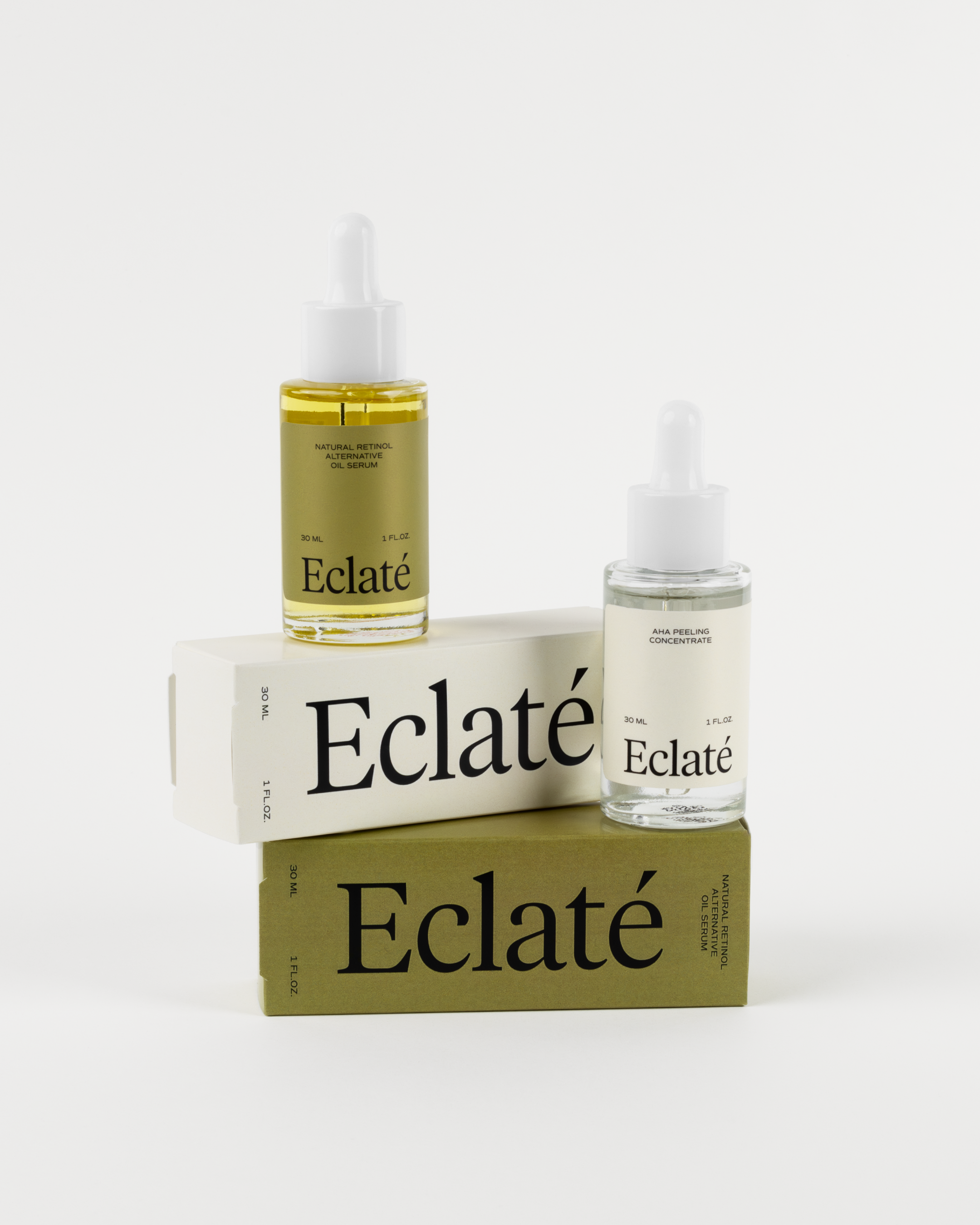
Table of Contents
Thinking about starting your own skincare brand? You’re not alone. More and more creators, influencers, and entrepreneurs are turning to private label skincare to bring their beauty vision to life, without needing a lab, chemist, or factory.
Whether you’re launching a passion project or expanding an existing business, private label offers a faster, smarter path to market. It makes it possible to launch quickly and confidently with high-quality formulas, expert support, and your unique vision front and center.
In this guide, we'll walk you through what is private label, how it works, and why it's the go-to model for beauty entrepreneurs today.

What Is Private Label Skincare?
Private label skincare is one of the most straightforward ways to start a skincare brand.
Instead of beginning with formulation and manufacturing, private label skincare starts with brand building. You work with professionally made skincare products and bring them to market under your own brand name. Your packaging. Your positioning.
This model exists because skincare is complex. Formulation, testing, and compliance increase manufacturing costs and slow down the path to launch. Private label skincare removes much of that friction, giving founders a clearer way to enter the market and focus on growth.
What Does Private Label Mean?
So, what is private label in practical terms?
Private label means skincare products are developed and produced by third party manufacturers, then sold under your own brand name. The formulas already exist. What customers recognize is the brand label.
Private labeling involves separating production from branding. One company manufactures the product. Another company sells it under its own brand name. This structure is what makes private label manufacturing possible across skincare, face care, hair care, and body care categories.
What Is a Private Label Brand?
A private label brand is the part customers actually experience.
Your role isn’t to manufacture products. You define the brand identity. The brand name. The brand voice. The point of view. You decide how products are positioned and who they’re for.
You also own the front end of the private label business – brand strategy, ecommerce, digital channels, marketing strategies, customer feedback. The entire customer experience sits with you.
This is why private label brands can build strong brand recognition and brand loyalty without owning factories or managing the supply chain.
What Are Private Label Skincare Products?
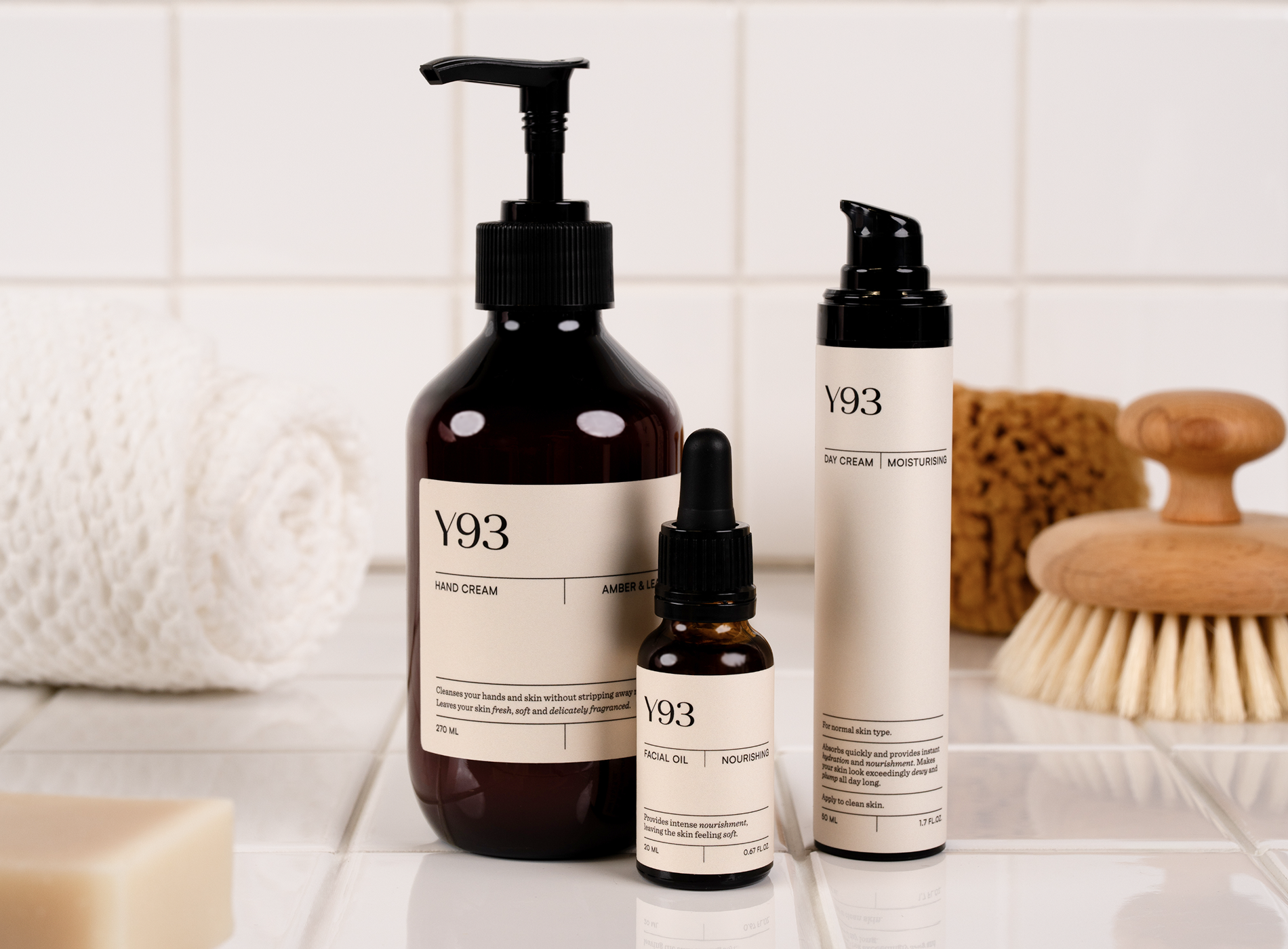
Private label skincare products are the actual goods a brand chooses to sell.
Most private label skincare lines focus on everyday essentials. Cleansers. Serums. Moisturizers. Masks. These are private label goods customers already know, trust, and feel comfortable using.
You may also see these referred to as private label cosmetics or private label products. The wording changes, but the idea stays the same. They are branded products selected and positioned by the brand, while being created by a private label manufacturer.
At this stage, the product itself is only the starting point. What matters next is how it’s used, how it’s explained, and how it becomes part of a unique brand customers trust.
How Private Label Skincare Works
Let’s take a look at how private label manufacturing functions, how turnkey private label cosmetics fit in, and how this business model is described across industries.
What Is Private Label Manufacturing?
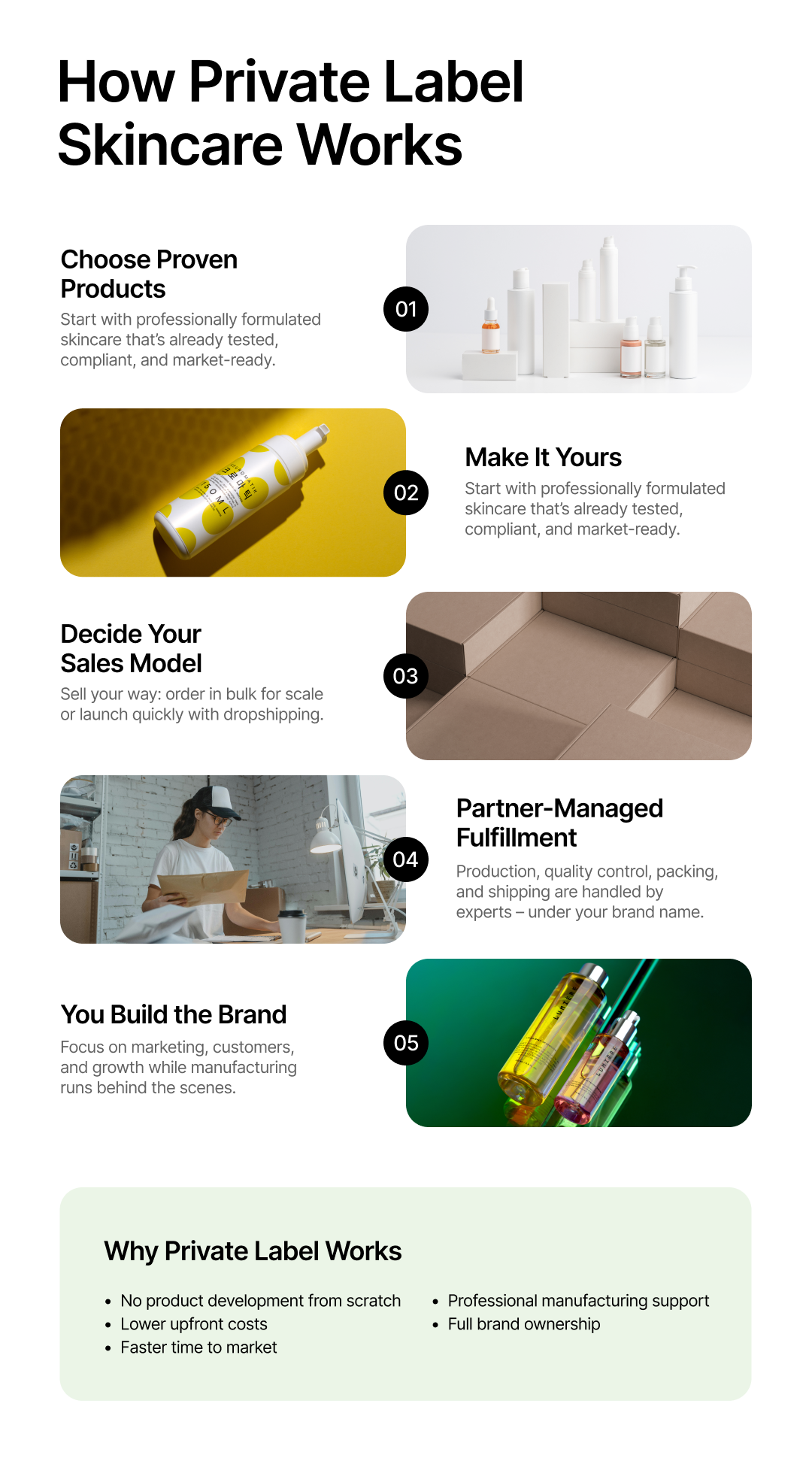
Private label manufacturing is the part of the private label business model that covers how products are made.
In this case, a third-party partner handles formulation, production, compliance, and production costs. This is how private label products are produced and prepared for brands to sell under their own brand name. That includes products manufactured across skincare, face care, hair care, and body care categories.
For the brand, the focus stays simple. You choose from existing private label products and spend your time building brand identity, selling through digital channels, and strengthening the customer experience.
This structure is why private labeling works. Production stays with experienced partners, while brands focus on growth.
Turnkey Private Label Cosmetics Explained
Once you understand private label manufacturing, the next question is how involved you want to be.
Turnkey private label cosmetics are designed for brands that want the simplest setup.
Turnkey means everything is ready. Products are developed. The production process is defined. Packaging and labeling requirements are set upfront.
In practice, you choose products, prepare your labels, confirm quantities, and place an order. Production and packaging then follow a standard workflow.
This approach reduces production costs, limits errors, and creates a faster path from idea to launch.
What Is Another Name for Private Label Brands?
Private label brands go by several names.
They’re often called own brands or store brands. In retail, you’ll also hear terms like private brands or store brand products. The names change, but the business model stays the same. Products are manufactured by one company and sold under another company’s brand.
Benefits of private label skincare products
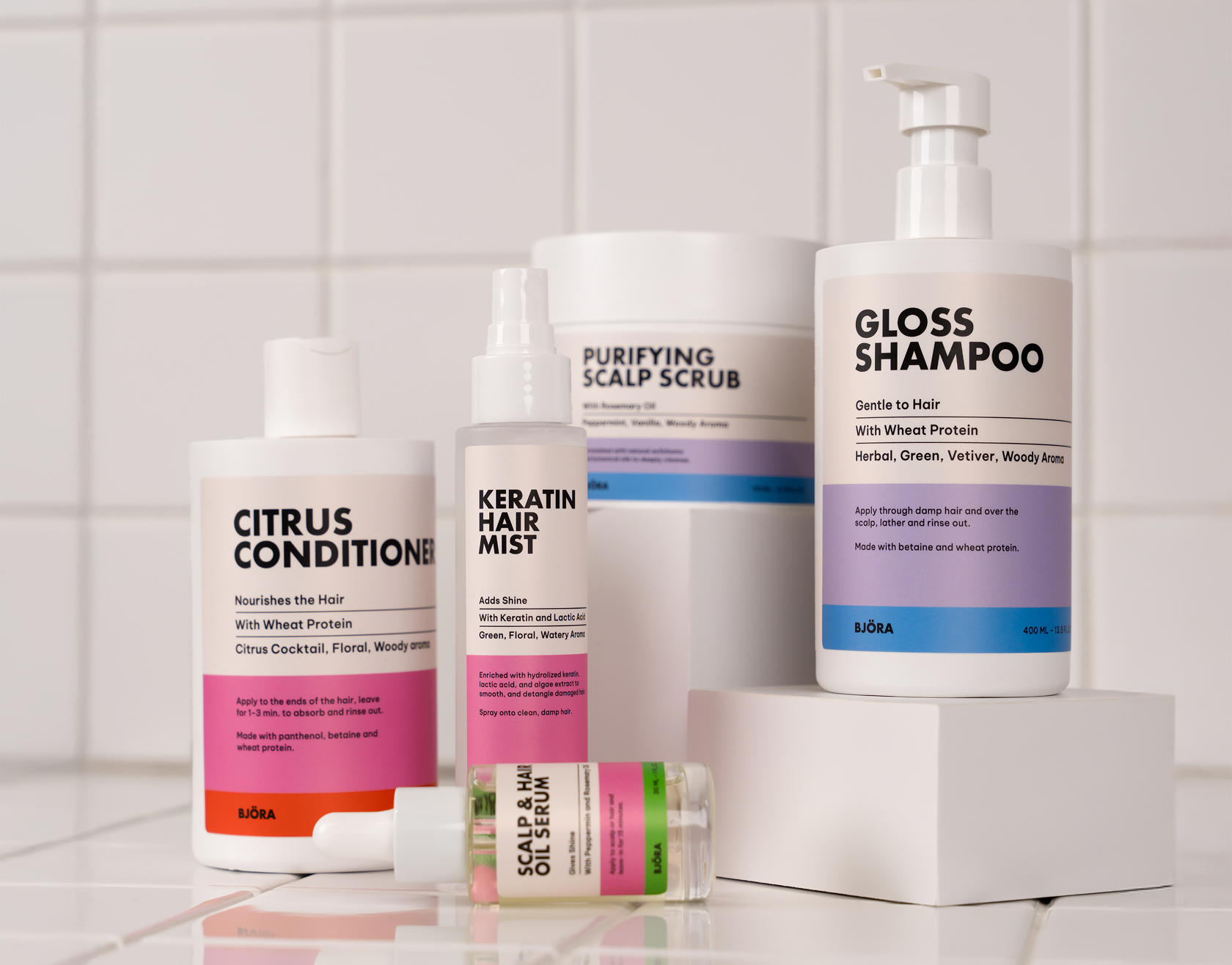
Private label skincare products offer several advantages, making them a popular choice for new and established brands alike. These benefits can be grouped into three main categories: competitive advantage, cost-effectiveness, and customization. By adapting to consumer demands and providing insights into preferences, private label skincare allows brands to stay ahead in the market.
The cost-effectiveness of this model enables better profit margins compared to traditional manufacturing methods. Additionally, the ability to customize products and packaging helps brands build a strong identity and connect with their target audience more effectively.
Competitive Advantage In The Market
Private label skincare gives brands the ability to move fast. Instead of spending months developing formulations, you can launch with proven, high-performance products. This speed-to-market is essential in an industry where trends evolve quickly. It also allows you to pivot easily based on customer feedback, meaning your product line stays fresh, relevant, and ahead of the curve.
Cost-Effectiveness And Profit Margins
By eliminating the need for R&D and formulation from scratch, private label skincare significantly lowers your starting costs. You can reallocate that budget into brand development, marketing, or scaling operations. Flexible minimum order quantities and the ability to set your own pricing also help optimize your margins. It's a leaner, more agile business model built for sustainable growth..
Customization And Brand Identity
This model gives you full creative control. You can align your packaging, labeling, and product selection with your brand’s voice and visual identity. Whether you're targeting eco-conscious consumers, skincare minimalists, or trend-driven buyers, private label allows you to craft a cohesive and emotionally resonant brand. It’s not just skincare. it’s a story your customers can see and feel.
Private Label Skincare vs Other Business Models
If you’re researching what is private label and whether it’s the right business model, it helps to see how it compares to other ways of selling products.
Private label skincare sits between speed and control. You don’t manufacture products yourself, but you also don’t give up ownership of your brand. That balance is why many founders choose private labeling when starting an own private label business.
Let’s break down how it compares to other common models.


Private Label vs White Label
With white label skincare, the same product is sold to multiple brands with minimal changes. The same product, sometimes even the same packaging, appears under different brand labels. This is common with store brand products and other retailers looking to move fast.
However, private label skincare gives you more control. You choose your skincarel line, sell private label products under your own brand name, and shape how those products fit into your brand identity.
White labeling focuses on convenience. Private labeling offers differentiation, brand recognition, and a clearer path to building brand loyalty.
Private Label vs Custom Formulation
Custom formulation means starting from zero. You work with national manufacturers or labs, decide on every ingredient, and build the product piece by piece.
That level of control sounds appealing, but it comes with disadvantages. Development takes time. Production costs are higher. And you’re committing before you really know how the product will perform.
Private label skincare skips that early friction. The products already exist, developed by third-party manufacturers. You’re not waiting on formulas or testing cycles. You’re selling branded skincare under your own brand name and learning from the market as you go.
That’s why many founders start here. You can test product categories, see what customers actually buy, and use real feedback before deciding whether custom formulas make sense.


Private Label vs Dropshipping
Private label and dropshipping are often compared, but in reality, they can work together.
Dropshipping can make sense at the very beginning. It’s a way to see what customers are actually willing to buy without putting money into inventory or production. You can learn fast what works and what doesn’t.
Private label usually comes in once there’s clarity. When you know which products sell. It lets you put your own name on them and shape the experience around your brand.
That’s the real difference. Dropshipping is useful for testing. A private label is what you use when you want something that lasts.
Steps to start your own private label skincare line
Starting a skincare brand doesn’t have to be overwhelming. With a clear plan and the right support, you can go from idea to shelf in a matter of weeks. Here’s how to turn your skincare concept into a beautifully packaged, ready-to-sell product line that reflects your brand values and vision.
Order samples and select products
Before you invest in production, it’s important to get hands-on with the products. Sampling gives you the chance to test texture, scent, absorption, and performance. It’s also a great time to evaluate how each product fits your brand promise and customer needs.
Selfnamed offers a wide and diverse product selection that covers every major skincare category, skin type, and routine, whether you’re looking for gentle cleansers, performance-driven actives, or nourishing moisturizers. This variety makes it easy to build a line that feels thoughtful, targeted, and entirely your own.

Choose packaging and design labels
Once you’ve chosen your products, the next step is designing how they’ll look and feel in your customers’ hands. Product design isn't just about aesthetics; it's about communication, and you should definitely research how brands are handling their designs. Your label is the first thing people see, and it sets expectations for what’s inside. It helps position your brand, signal product benefits, and create consistency across your entire line.

That means both the label on your product and the box it comes in matter. Clear typography, thoughtful layout, and a design that fits your brand personality can elevate the perception of quality. It's also a powerful opportunity to create recognition, whether your customer sees your product online, in their bathroom, or shared on social media.
With Selfnamed, you can upload or create label designs for both your product containers and external boxes. Tools like the Design Studio allow you to preview the final result, helping ensure alignment across every product you launch. Strong packaging isn’t about being flashy. it’s about being clear, consistent, and intentional.
Finalize manufacturing and launch
Once your samples are approved and your label designs are finalized, the next step is preparing for production. This involves confirming every detail, including product selection, label files, quantities, and packaging choices, avoidind missteps during manufacturing. Make sure that your files meet print guidelines and that your product lineup is locked in.
As production begins, keep track of timelines and understand what happens at each stage — filling, labeling, and packaging. You’ll also want to ensure everything complies with regulatory standards, including accurate labeling and safe handling practices.
While manufacturing is underway, use this time to finalize your e-commerce setup, plan your marketing rollout, and coordinate logistics for shipping and fulfillment. A well-organized pre-launch phase sets the tone for a smooth debut and creates the foundation for long-term success.


Marketing your private label skincare brand
Marketing is one of the most essential parts of building a successful skincare brand. It’s how your audience finds you, connects with you, and ultimately decides to trust your products. A thoughtful marketing approach should reflect your brand values and speak directly to the needs and lifestyles of your target audience.
Start with your story
Every brand begins with a reason. Maybe it was a personal skin journey, a gap in the market you noticed, or a belief in natural, ethical skincare. Whatever your origin, sharing it helps build trust and humanizes your brand. Consumers are more likely to support a business when they understand the passion and purpose behind it.
Develop your visual identity
Visuals play a key role in perception. Define a cohesive aesthetic that extends from your logo and labels to your website, packaging, and social media. This includes your brand colors, typography, photography style, and even how you edit your content. Consistency across these touchpoints helps customers instantly recognize your brand in a crowded digital space.
Build your digital presence
Where you show up matters. Start with a solid e-commerce platform that matches your goals, whether that’s Shopify, WooCommerce, Squarespace, or your own website. Then, build a content strategy for platforms like Instagram, TikTok, and Pinterest. Prioritize value: post skincare routines, product how-tos, ingredient education, and lifestyle content that aligns with your customer’s daily life.

Engage with your audience
Modern consumers expect conversation, not just content. Encourage interaction by using Instagram polls, Q&A boxes, and comment threads. Ask for product feedback, share user-generated content, and show real people using your products. The more human your brand feels, the more likely people are to become loyal customers.
Plan your launch campaign
Your launch is more than just putting products online. It’s about creating anticipation. Start teasing your audience early. Share behind-the-scenes content, build an email list, and set up influencer or creator collaborations in advance. Use countdowns, early access promotions, and giveaways to drive momentum and engagement.
Measure and adjust
Don’t just post — review your analytics. Monitor which content types drive clicks, what time your audience is most active, and which campaigns convert. Use tools like Google Analytics, Meta Business Suite, and email marketing insights to refine your strategy as your brand grows.
Marketing isn’t about trying to do everything. It’s about doing the right things with clarity, consistency, and a strong understanding of your customer.
Trends shaping private label skincare
New trends in private label skincare are emerging, focusing on natural ingredients, sustainability, innovation, and customization. The skin care market is increasingly influenced by consumer preferences for products that align with sustainability and ethical practices.
Customization allows brands to tailor their offerings to meet specific consumer needs and preferences. These trends are shaping the future of private label skincare, offering brands new opportunities to innovate and differentiate themselves in the market.
Clean beauty and organic ingredients
The clean beauty movement is defined by a growing demand for products that are free from harmful chemicals and prioritize ethical and sustainable practices. Organic ingredients are believed to enhance skin health by providing essential nutrients and minimizing exposure to potentially harmful compounds. Consumers are increasingly prioritizing their health and the environment, leading to a surge in demand for clean beauty products.
Integrating clean beauty principles and premium ingredients is becoming essential for brands looking to establish a successful private label skincare line.

Sustainable and eco-friendly packaging
Sustainability is a significant focus in the skincare industry, with a rise in demand for eco-friendly packaging solutions. Beauty companies are shifting towards recyclable and biodegradable packaging materials in response to consumer eco-consciousness. Many private label skincare items are now packaged in recyclable or biodegradable materials, such as glass and paper.
Brands are increasingly focusing on creating refillable packaging options as part of their sustainability strategies. This shift towards sustainable packaging not only reduces environmental impact but also appeals to eco-conscious consumers.
Why Choose Selfnamed for Private Label Skincare
If you’re looking to explore private label skincare, we offer a way to work with private label products without getting pulled into manufacturing complexity. The products are already developed and compliant, so you can focus on building a brand and bringing your vision to life.
For skincare brand founders wondering what are private label products and how they work, we provide a clear starting point. The process stays simple, and the attention stays on the brand and the customer.
What Is Private Label Brands Purpose
Private label skincare presents a compelling opportunity for aspiring skincare brand owners. By understanding the concept – including what is private label cosmetics and how to choose the right private label skincare manufacturer – and by following the practical steps outlined in this guide, you can confidently launch your own line of high-quality skincare products.
Ensuring regulatory compliance and maintaining high product quality are crucial for building a reputable brand. Effective marketing strategies, including building brand awareness and engaging with customers, will help you stand out in a competitive market. Embracing current trends and exploring business growth opportunities can further enhance your success. With dedication and the right approach, your private label skincare brand can thrive in the ever-evolving beauty industry.
Frequently asked Questions
-
Private label skincare is all about products made by one company but sold under another brand's name, giving you access to quality skincare without the brand doing the manufacturing themselves. It's a smart way to get great products with a unique touch!
-
Private label skincare is all about choosing formulas from a manufacturer's catalog, tweaking them to fit your brand, and letting a third-party handle the production and packaging. It's a smart way to create your own skincare line without the heavy lifting!
-
Private label skincare offers brands a competitive edge, cost savings, and the ability to customize products to meet consumer needs. This means you get unique formulations that truly reflect the brand's identity while keeping costs manageable.
-
To ensure your private label skincare products comply with regulations, focus on understanding the specific skincare regulations, select a compliant manufacturing partner, and implement Good Manufacturing Practices (GMP) for safety and quality. This way, you can confidently meet industry standards and protect your brand.
-
Private label skincare is really trending towards clean beauty and organic ingredients, with a big emphasis on sustainable and eco-friendly packaging. This shift reflects consumers’ growing desire for health-conscious and environmentally friendly products.
Must read