Table of Contents
Most AI tools weren't built for beauty. They'll invent an active ingredient that doesn't exist, smooth the texture out of your product shot, or paint a foundation onto a skin tone it's never actually seen. Close enough for a tech demo. Not close enough to rely on for sales.
A handful of tools were built for beauty, though, and those are the ones worth your time. They read skin, match shades, and show a customer what a product looks like before they buy.
The hard part is telling apart innovation from a time waster. This guide covers the best AI tools for beauty brands by what actually makes them useful, from skin analysis to virtual try-on to product imagery, where each one earns its place, and where generic AI still gets it wrong.
Key Takeaways
AI tools built specifically for beauty outperform generic AI, which tends to misread skin tones and distort product accuracy.
The main use cases are skin analysis, virtual try-on, personalization and quizzes, customer support, and product imagery.
Skin analysis and virtual try-on are the tools most tied to sales, since they guide product choice and reduce returns and purchase hesitation.
Small and indie beauty brands benefit most, gaining personalization and support features that once needed a big-brand budget.
Selfnamed is a great addition for the product side rather than the tool side, letting you create private label beauty products under your own name.
Why Beauty Brands Are Turning to AI
AI stopped being a novelty in beauty a while ago. It's doing real work behind the scenes at brands of every size. It reads skin, matches shades, sorts product photos, prepares content outlines, and answers customer questions long after you've logged off for the night.
And it’s only a slice of new innovations in beauty. Private label manufacturers like Selfnamed already support a tech-first approach to selling beauty. We help indie beauty brands and established businesses alike link manufacturing with branding and ecommerce, all in one.

Look to AI for the operational and marketing side of the beauty business. It can automate manual tasks, generate new forms of personalization, and support content production.
The money backs up the shift. The global AI in beauty and cosmetics market is projected to reach $10.86 billion by 2030, growing at a 19.6% compound annual growth rate. Brands are constantly trying to find new ways to budget with AI tools and personalize the user experience.
For a smaller brand, that's good news. AI has closed a gap that used to cost a fortune. A skin quiz that points a customer to the right serum, a shade finder that cuts down on returns, a product shoot that happens on a laptop instead of in a rented studio.
Five years ago those were big-brand luxuries. Now they're a few clicks away, and they're how a lot of indie brands stay competitive without a big-brand budget.
That's the real story of AI in the beauty industry. The taste, the brand voice, the style – that remains (and absolutely should remain) human. It's more about handing a two-person team the kind of tools a hundred-person team used to guard. Not a replacement, but a scaling advantage.
Not every tool that says "beauty" actually delivers. The useful ones are trained on real skin, real shades, and real products. The rest just borrow the word. That difference is what we highlight.
But "AI" on a Label Means Nothing on Its Own
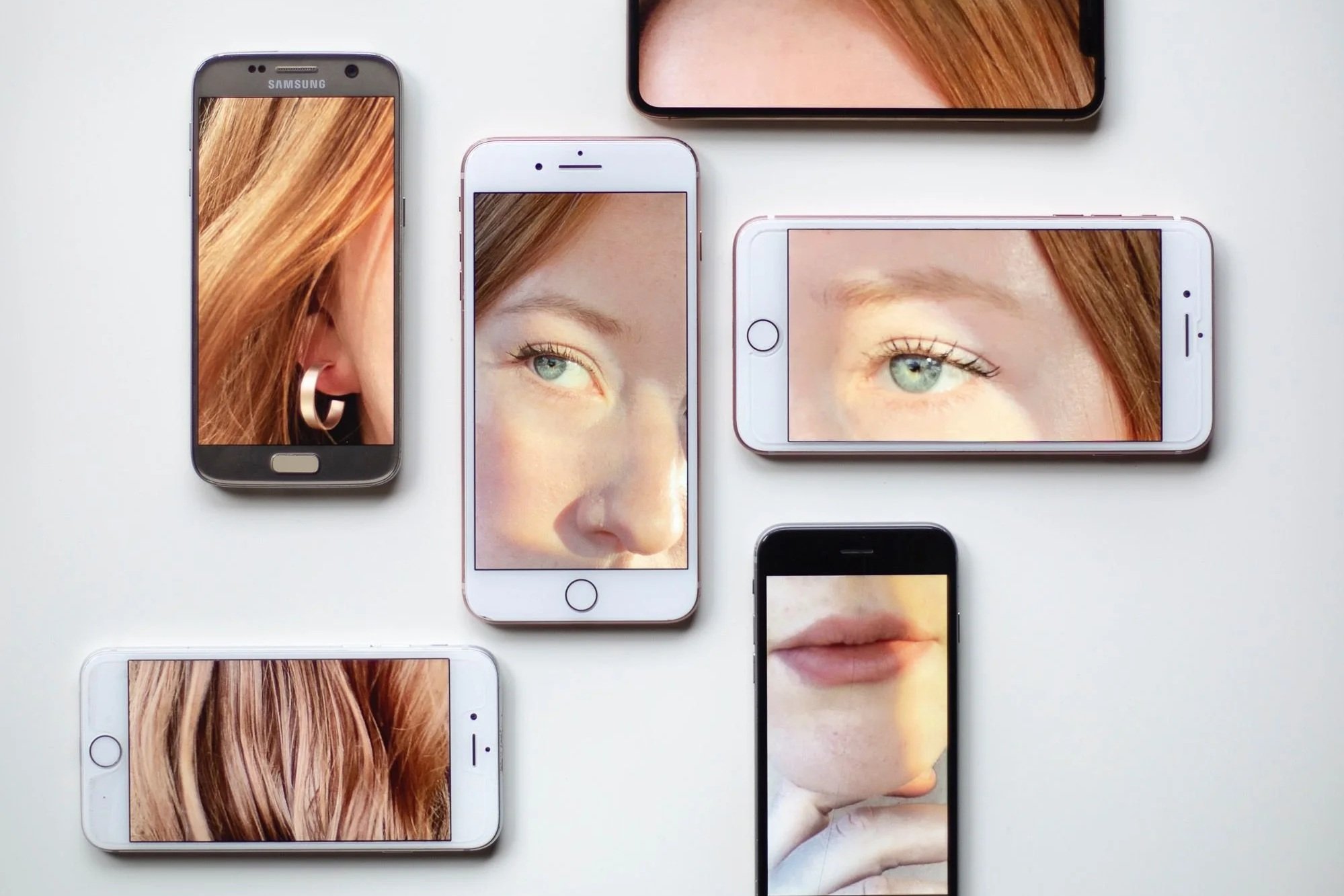
Most tools were trained on the whole internet, not on beauty. Regular ecommerce and SEO analytics AIs or LLMs can still be a useful tool in your belt. But when it comes to beauty-specific analysis and content, AI often guesses, and it guesses wrong in ways that cost you sales:
Skin tones. General image generators flatten the range of human skin, lightening deeper tones and smoothing away undertones. In beauty, where a customer is trying to see themself in your product, that's a dealbreaker.
Product accuracy. Ask a generic tool to "clean up" a product shot and it invents label text, swaps the cap, or adds a dropper you don't sell. The customer buys that image. The real thing arrives different. That's a return.
Texture. The slip of an oil, the whip of a moisturizer, the glow on real skin. Generic AI sands all of it into something flat and plasticky.
The word "AI" tells you nothing. What it was trained on tells you everything. The tools worth paying for learned on real skin, real shades, and real product libraries. The rest just borrowed.
The 9 Best AI Tools for Beauty Brands at a Glance
There's no single AI tool that does everything, and you don't need one that tries. The brands that win with AI are ruthless about it. They find the one job costing them the most right now, pick the tool that fixes it, and ignore the rest until that's working.
Stack every app you can find and all you've built is an expensive mess.
So we've grouped these nine niche picks by the job they do, from reading skin to rendering try-ons to making your content. Find the problem you're stuck on, then start there.
| # | Tool | Category | Best for |
|---|---|---|---|
| 1 | Haut.AI | Skin analysis | Deep, white-label skin diagnostics |
| 2 | Revieve | Skin analysis + personalization | Selling online and in-store at once |
| 3 | Perfect Corp (YouCam) | Virtual try-on + skin | Broad AR coverage from one vendor |
| 4 | ModiFace | Virtual try-on | Enterprise catalogs, finish-accurate shades |
| 5 | GlamAR | Virtual try-on | Small brands on Shopify |
| 6 | Banuba | AR try-on SDK | Teams building custom try-on |
| 7 | Octane AI | Quizzes + personalized copy | Shopify personalization and first-party data |
| 8 | Minami AI | Recommendations + support | Product recs and support in one agent |
| 9 | heyOZ | Product imagery + video | Beauty content and product shots |
AI Skin Analysis and Diagnostics
Skin analysis is the tool most likely to pay for itself. A customer takes a selfie, the tool reads their skin, and your catalog does the rest, matching concerns like dryness, texture, redness, and pigmentation to the right products. Done well, it turns a cold browse into a personal routine.
What "good" looks like in a skin tool: it reads the full range of skin tones, ties results to your actual products instead of generic advice, and drops into your store without developer help.
1. Haut.AI
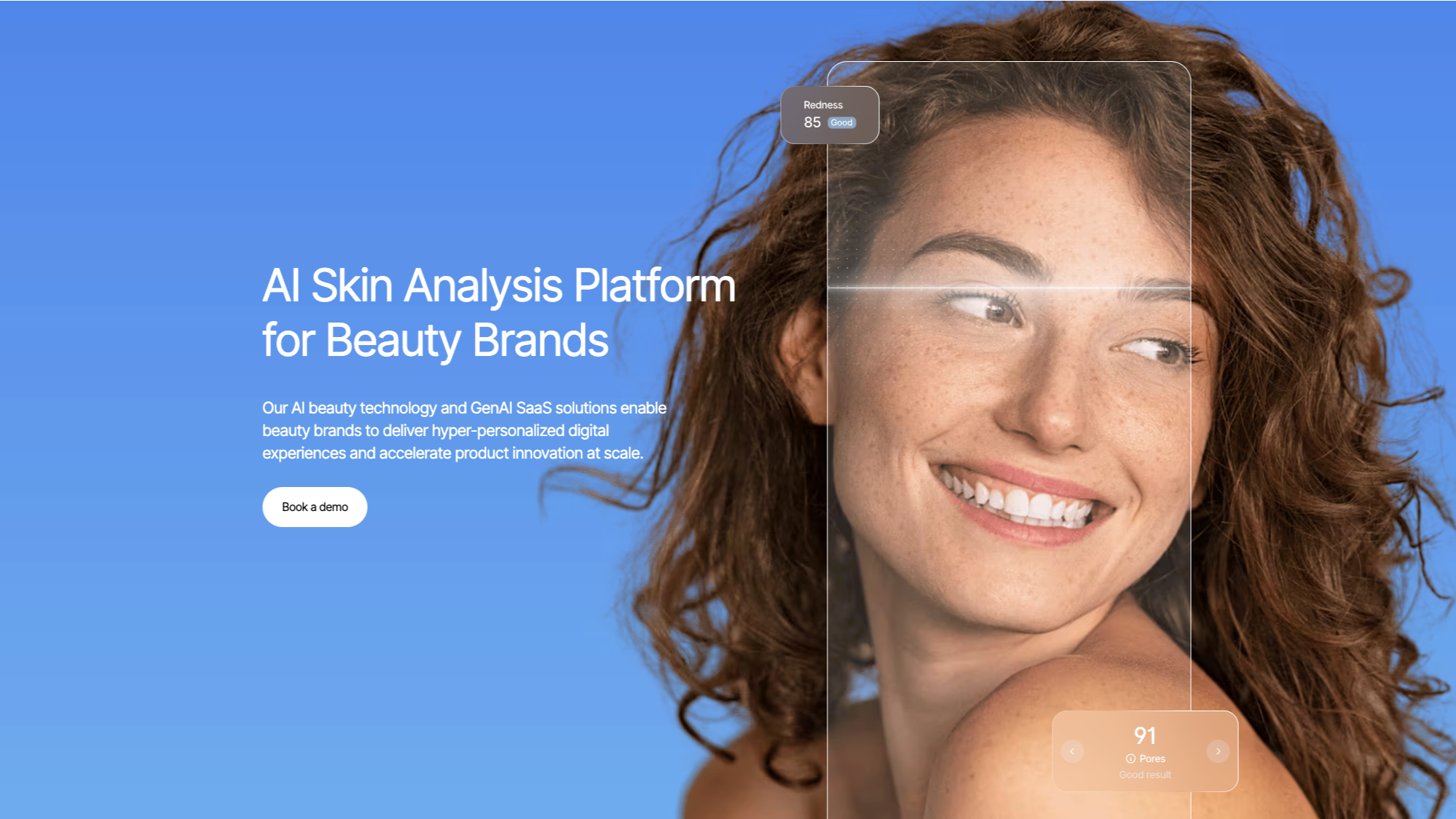
A skin analysis engine you run under your own brand. It reads a selfie across a range of skin metrics and maps the results to products in your catalog, on web or mobile. The analyzer is built to be customizable for beauty brands and reads well beyond a handful of surface metrics.
Best for: brands that want deep, science-leaning diagnostics they can white-label.
Note: it's developer-facing, so you'll want someone comfortable with an API or SDK to set it up.
2. Revieve
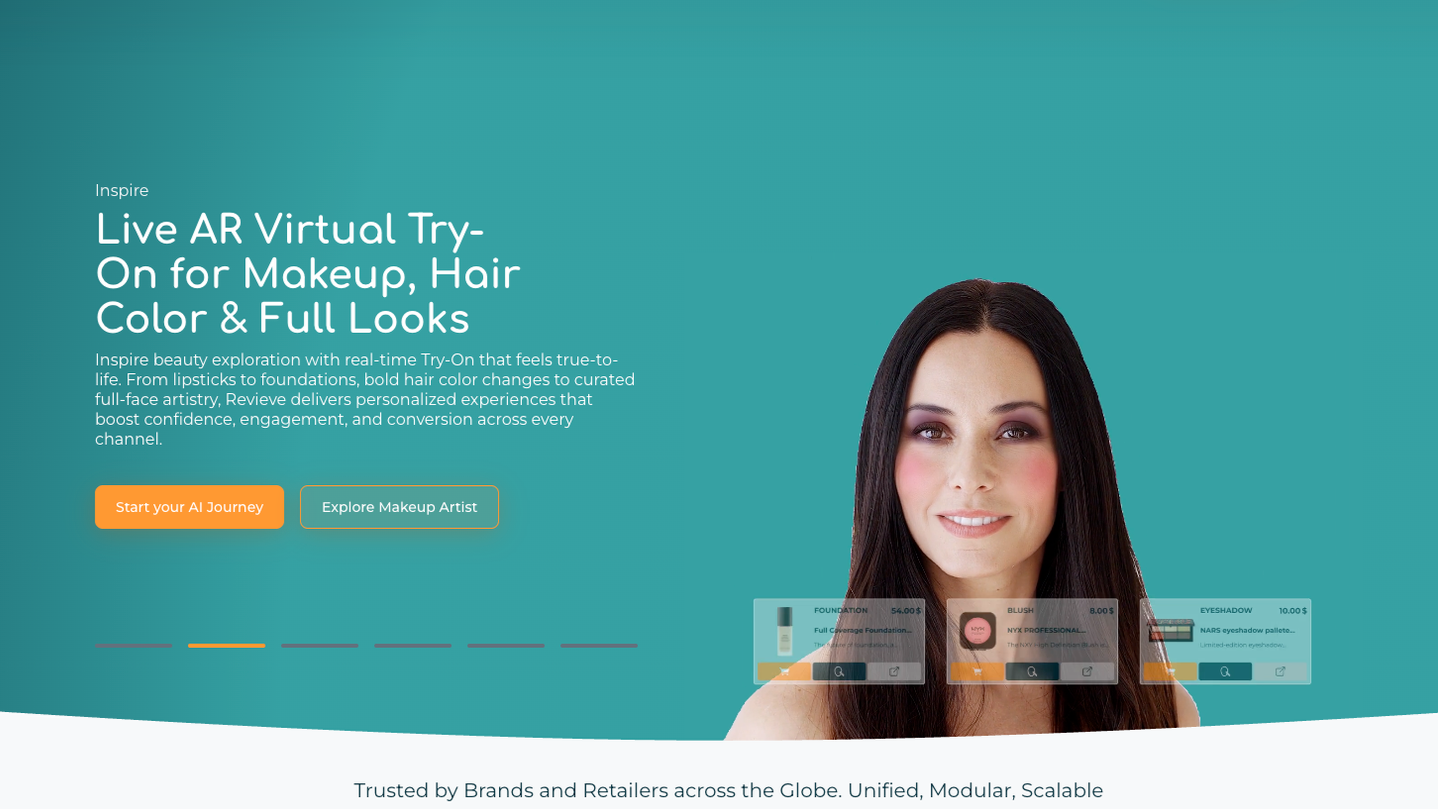
A digital beauty platform that pairs skin and face analysis with a recommendation engine. It's built to live anywhere, on your website, inside a mobile app, on a physical smart mirror in-store, and even as a white-labeled assistant.
Best for: brands that want analysis in any medium they need it, online or on the shop floor.
Virtual Try-On and AR
If skin analysis tells a customer what to buy, virtual try-on with augmented reality (AR) shows them what it looks like first. They point their camera, and a lipstick, foundation, or hair color lands on their own face.
The payoff is simple: fewer "the color didn't match the photo" returns, and less hesitation at checkout. It's the category big brands leaned into first, and it's now within reach for the rest.
The catch is accuracy. A try-on that fakes shades or ignores undertones does more harm than no try-on at all. So the differences between these tools come down to how they render color.
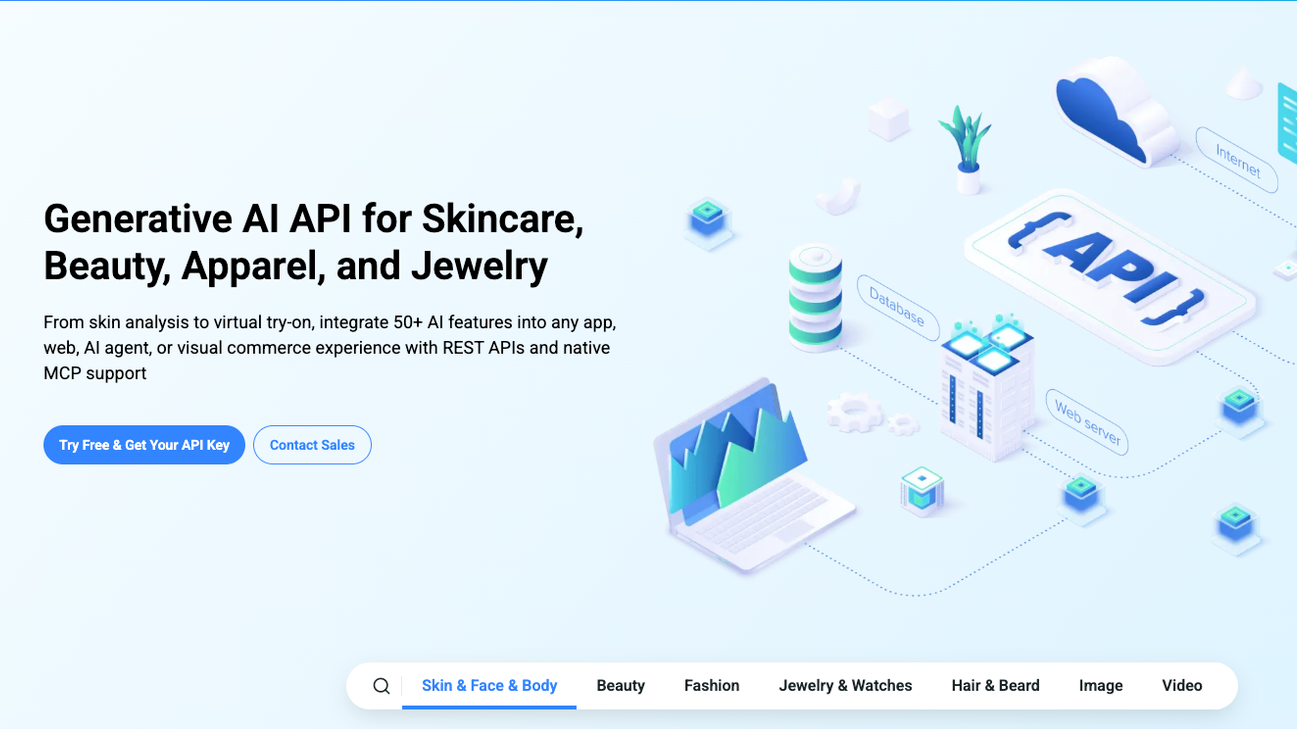
The most complete of the bunch. Realistic makeup try-on across the face, plus a conversational AI beauty agent that reads faces, tones, and textures, with a skin layer on top.
If you want try-on and light diagnostics from one vendor, this is it.
Best for: brands that want broad AR coverage and skin reading together.
4. ModiFace
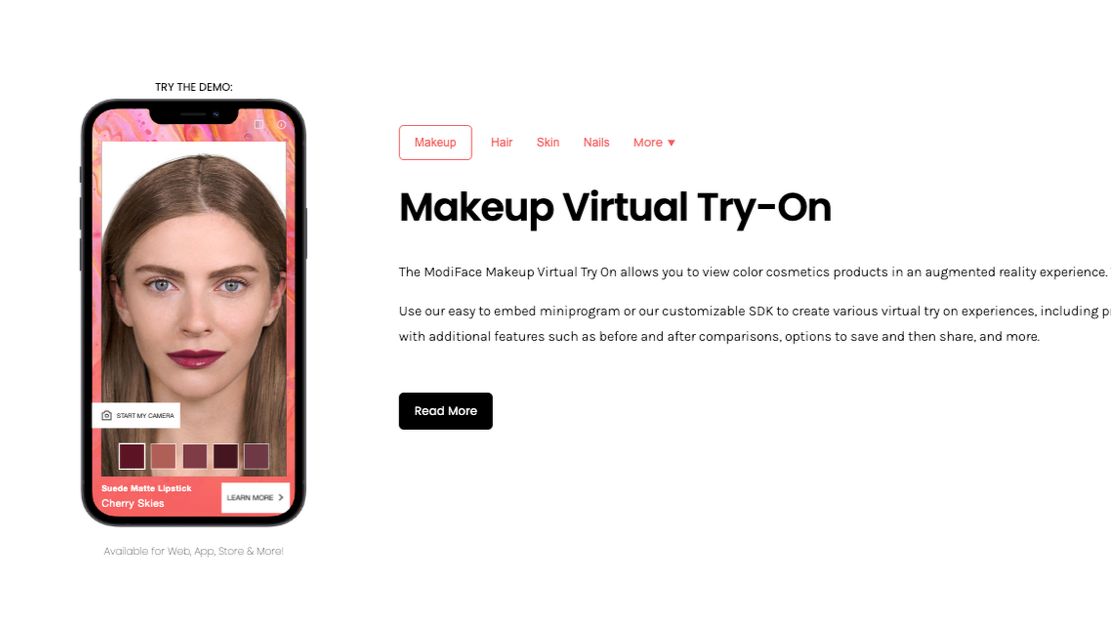
The enterprise heavyweight, owned by L'Oréal, with shade validation across finishes like matte, gloss, satin, shimmer, and metallic. Color accuracy is its whole reputation.
Best for: larger brands with big catalogs that need validated, finish-accurate shades.
Note: it's built for enterprise and sits inside L'Oréal. If you're a small indie brand, access and fit are the real questions, not quality.
5. GlamAR
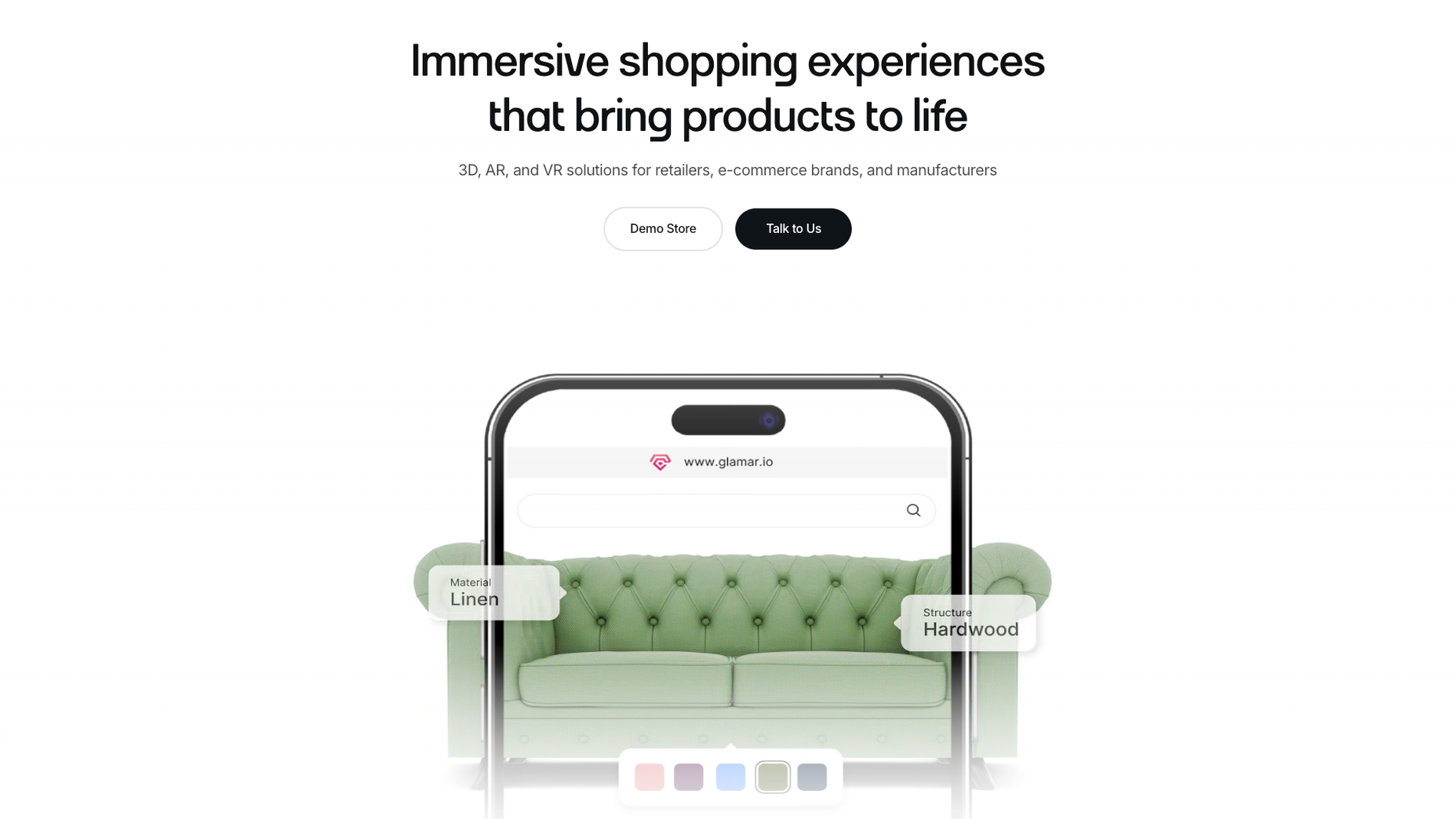
The approachable option. It's a friendlier choice for smaller brands with a native Shopify app, offering try-on plus shade matching, quick bulk product upload, and fast setup.
Best for: indie and growing brands on Shopify that want try-on live without an engineering project.
Note: lighter than the enterprise tools on deep customization. For most small brands, that's a fair trade.
6. Banuba

An AR try-on toolkit for teams that want to build their own experience rather than plug in a ready-made one.
Best for: brands with developers who want a custom try-on inside their own app. Watch out: it's a developer kit, not a switch you flip. Budget engineering time.
Not sure which fits? Quick version: enterprise catalog, ModiFace. Try-on plus skin from one vendor, Perfect Corp. Small brand on Shopify, GlamAR. Building something custom, Banuba.
Personalization, Recommendations, and Support
Analysis and try-on help a customer who already knows roughly what they want. These tools help the ones who don't. They ask a few smart questions, or read past behavior, and point each shopper toward the products that actually fit.
That's how you turn a browse into a basket, cut returns, and turn a first-timer into a repeat customer.
7. Octane AI
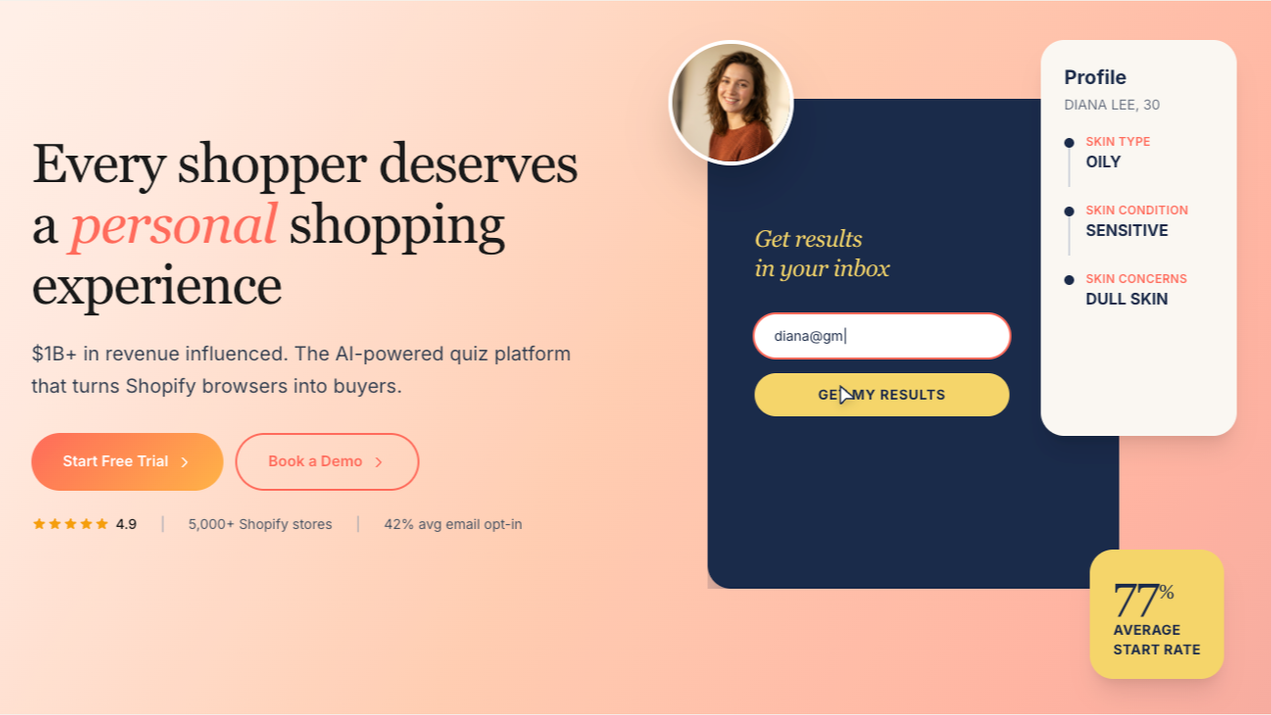
A Shopify quiz platform that guides shoppers to the right products with a few questions, then uses their answers to personalize both the recommendations and the results-page copy. It captures first-party data you can feed into email and SMS, and it includes photo-based shade matching. It's trusted by beauty brands like Jones Road Beauty and ILIA, and it's no-code.
Best for: Shopify brands that want recommendation quizzes and customer data without touching code.
Note: it's Shopify-centric. Off Shopify, look elsewhere.
8. Minami AI
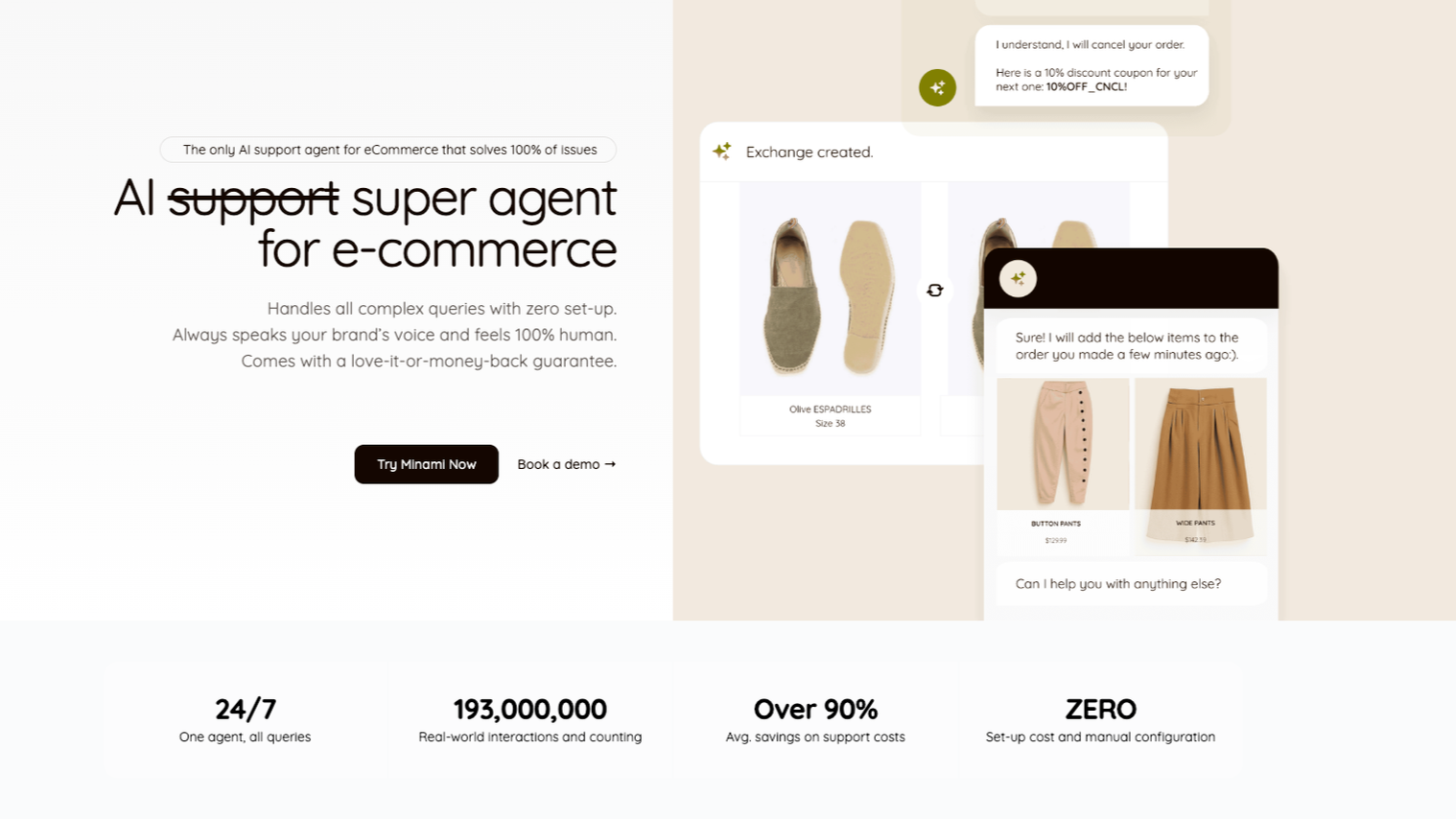
An AI agent that handles product recommendations and customer questions in one place, built to take routine support off your plate while steering shoppers toward the right products. Minami positions it around cutting support costs and raising customer lifetime value through autonomous recommendations.
Best for: brands buried in repetitive customer questions who want recommendations and support handled together.Note: it's a newer player and the headline numbers are its own. Trial it against your real support volume before committing.
AI Product Photography and Content
Every tool above means nothing if your product pages look empty. This last one makes the photos, videos, and content that fill them, fast, and without a rented studio. Just hold onto the rule from the top: with any generic AI image generators, check that what it makes matches what you actually sell.
9. heyOZ
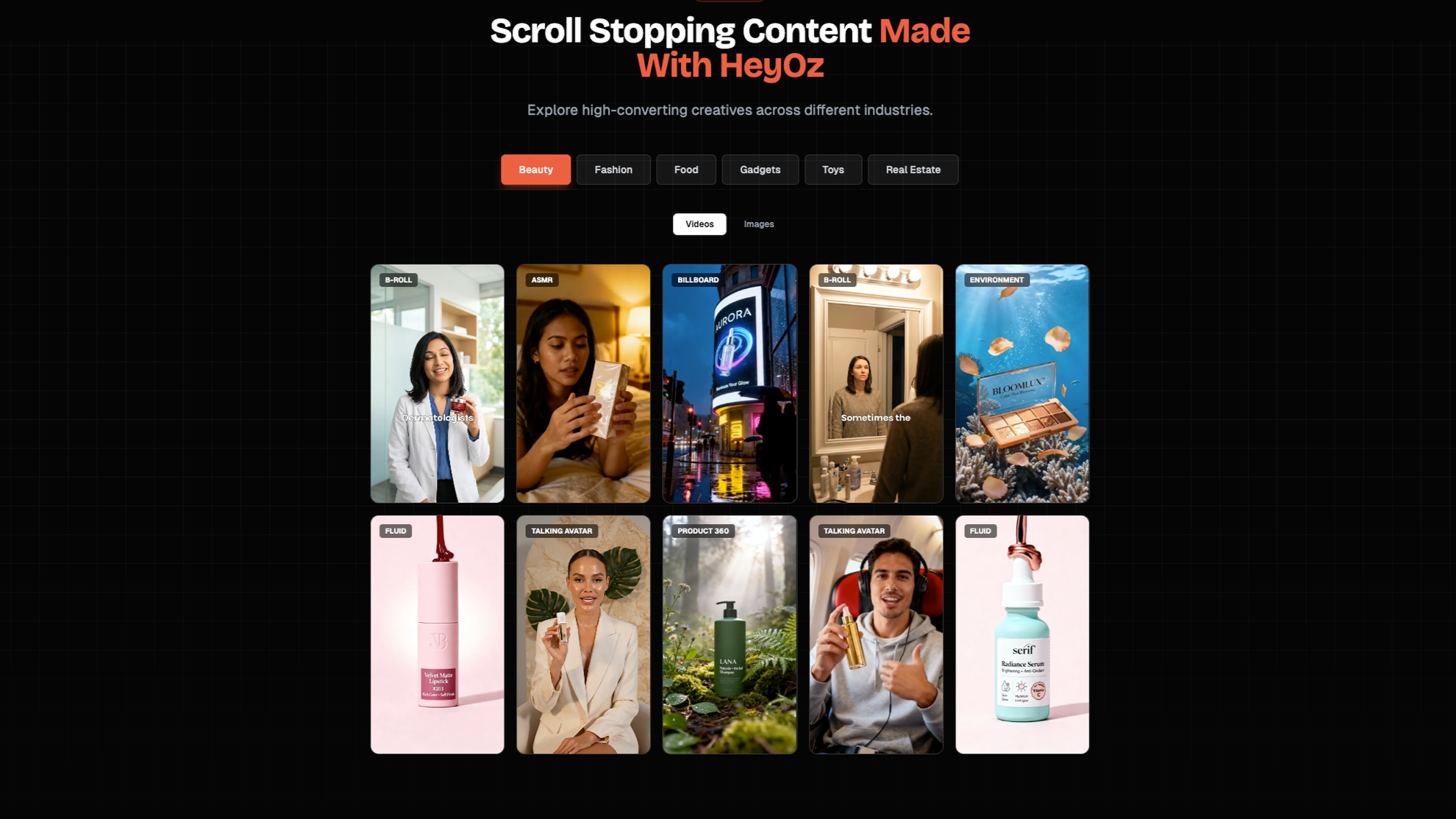
A content tool built for beauty. It turns product inputs into ad creative, UGC-style videos, and product photoshoots, so you can produce a steady stream of on-brand content at the pace social and ads demand.
Best for: brands that need regular product photos and video without booking shoots.
Note: it's generative, so the accuracy rules apply. Confirm every shot renders your real product before it goes live.
How to Choose the Right AI Tool for Your Brand
The temptation with any new wave of digital tools is to grab all of them. Don't. You need the right tool for the one job costing you the most right now, and the discipline to ignore the rest until it earns its place.

Here's how to narrow it down.
Start with your most expensive problem. Drowning in returns from mismatched shades? That's a virtual try-on job. Shoppers bouncing without buying? That's skin analysis or a quiz. Product pages looking bare? That's a content job. Pick the leak costing you the most and plug it first. One tool, one problem.
Check what it was trained on. We said it up top and it bears repeating: training data beats marketing copy. Generic AI tools that can't read the full range of skin tones, or can't render your products accurately, cost you more than they save.
Match the tool to your team. Some of these install before lunch. Others need a technical team and real API integration work. Be honest about which you are. A small brand without developers should skip the SDK-heavy options, and there's no shame in that. The best tool is the one you'll actually use.
Look past the feature list. Every vendor's key features page reads like magic. What matters is fit: does it cover the categories you sell, plug into your store, and make sense at your price? Most beauty businesses need depth in one area, not a shallow tool that claims to do everything across most categories.
Quick check before you commit:
Does it fix my single most expensive problem, or just sound impressive?
Was it trained on real beauty data, across real skin tones?
Can my team actually run it, or will it sit unused?
Will it save me time and money I can measure in 90 days?
If a tool can't clear those four, it isn't the right tool yet. Find where your customers would actually feel the improvement.
Where Selfnamed Fits
Here's the honest part, and the reason we can write this guide without a horse in the race: Selfnamed doesn't sell any of the tools above. We make the beauty products they help you sell.
Every tool on this list solves a front-of-store problem: reading skin, showing a try-on, writing a quiz. None of them make the serum, the cream, or the lipstick that lands on your customer's doorstep. That part is us, and it’s the basis for some of the fastest growing beauty brands.
Selfnamed is a private-label beauty platform. You design the brand, we handle the rest:
200+ ready-made products you brand as your own, from skincare to makeup, with no minimum order.
Most of our formulas are COSMOS certified by ECOCERT, and the vast majority are vegan-friendly.
Pre-registered with the FDA and CPNP, so you start on compliant ground in the US and EU.
Built to plug into your store, with native integrations for Shopify, WooCommerce, Squarespace, and Wix.
20 years of formulation heritage behind every product, with decades of cosmetics R&D to bring you the best in modern skincare and makeup.
The fastest path from idea to market: formulas that already work, mockups you build per product in our Design Studio, and none of the overhead that used to make starting a beauty brand a rich person's game. And when you’re ready to grow into larger order volumes or custom formulas, we can take you there too with our custom development service for enterprise businesses.
So use the AI tools to understand and win your customer. Use Selfnamed to make the thing they buy. Smart tools out front, real products behind them, your name on both. And joining us is free.


The Bottom Line
AI won't build your brand for you. It can't choose your name, write your story, or care about your customer the way you do. That part stays human, and it should.
What the best AI tools for beauty brands do is clear the busywork, the shade guesswork, the studio bottleneck, the same 200 support emails, so you can spend your energy where only you can. Pick the tools built for beauty. Skip the ones that just borrowed the word.
Then, put your name on products worth all that effort with Selfnamed.
Frequently Asked Questions
-
Across the beauty and cosmetics industry, AI now reads skin, matches shades, personalizes recommendations, makes content, and answers customer questions. It's a mix of artificial intelligence techniques, mostly machine learning and computer vision, plus generative AI models trained on beauty data. The AI beauty market is growing fast, and marketers are increasing their spend on it every year as brands treat it as a form of experimentation.
-
AI skin analysis reads a selfie or video and assesses skin concerns like texture, redness, and pigmentation, then matches them to products for that skin type. Accuracy depends entirely on training data. A tool trained on a wide range of real skin gives an accurate analysis across tones; a generic one doesn't. Good skin diagnostics should feel closer to a consultation than a guess.
-
Often, yes. When a customer sees a shade on their own face before buying, there's less guesswork and less purchase hesitation, which tends to mean fewer shade exchanges and returns. It won't rescue a genuinely bad color match, but for reducing purchase hesitation among the fence-sitters, it's one of the most direct nudges you can add to a purchase decision.
-
Yes, and it can save you time and a studio setup entirely. AI tools now generate product images, product photos, and product video, and some double as an image editor for quick fixes. The one rule: AI generated visuals still need a human check against your real product, because real photography and human models set the bar for accuracy. Content creation at speed is the win; hallucinated bottles are the risk.
-
By turning data into relevance. AI reads purchase history and on-site behavior to guide product discovery, so each shopper sees what fits them instead of a generic catalog. Done well, personalized skincare and product recommendations raise time spent on site, win new customers, and build the customer loyalty that brings people back.
-
Nearly all of them, at every size. The biggest brands (and newly leading brands) built the first virtual try-ons and skin tools, and most brands now use AI somewhere in the funnel. It's no longer just an enterprise game: some of the fastest growing beauty brands are small, indie beauty brands using these same tools to compete above their weight.
-
Start with one tool that fixes your most expensive problem, and make sure it fits your setup. Check the key features you'll actually use, confirm it runs without a big technical team, and skip anything needing heavy API integration if you don't have developers. The honest answer is that most small brands need one tool done well, not five half-used.
Must read