Private Label Cosmetic Companies: Which One Fits Your Brand?
Table of Contents
Choosing between private label cosmetic companies gets tricky for one simple reason: almost everyone promises the same things. High-quality products. Fast turnaround. Easy customization. Everything you need to launch your beauty brand, promoted front and center.
But those promises can describe very different businesses.
One company might let you test a few skincare products without filling your spare room with inventory. Another may expect a serious production commitment but give you access to custom formulations and deeper packaging options. Some handle fulfillment for you. Others manufacture the products and leave everything after production in your hands.
Those differences become real very quickly when you’re working with an actual launch budget and timeline. Your choice affects how much cash gets tied up in inventory. How much you can customize. Where you can sell. And what happens when orders start growing.
Before comparing prices, learn what kind of partner you actually need. We’ll look at MOQs, product selection, packaging, compliance, fulfillment, pricing, and how well each option can grow with your business.
Most private label cosmetics companies make it possible to start relatively small and build through ecommerce. If you’re planning larger production runs or custom formulations, you’ll need a different type of partner. Because of different shipping rates and delivery times, choosing between US and European private label skincare manufacturers also presents a major factor.
The right choice starts with knowing which of these different paths actually fits your brand.
Key Takeaways
Private label cosmetics companies range from dropshipping platforms to traditional manufacturers.
MOQs, product selection, packaging, compliance, and fulfillment are crucial metrics to track before the price alone.
Low-MOQ options let sellers test beauty products for their brand without a large inventory commitment.
The full costs include packaging, shipping, platform fees, and compliance, not just the price per product.
Long-term planning matters, especially business growth demands larger production runs or custom formulations.
Private Label vs. Manufacturing: What Kind of Company Are You Actually Looking For?
Not all private label cosmetic companies offer the same kind of partnership. A useful place to start is with one question: do you want to create the formula, or start with one that already exists?
Traditional manufacturers give you more say in the product itself. You can develop custom formulations, adjust ingredients, explore different packaging, and produce at a larger scale. That takes more time, more expertise, and usually means committing to bigger orders upfront.

Location matters here too. Brands focused on the US market may prefer working with US private label skincare manufacturers, while European skincare manufacturers can suit brands that want quality European production and compliance. The same goes for UK manufacturers.
Ecommerce-friendly private label platforms give you a shorter route to launch. The formulas are already developed. That way you can focus on choosing the right skincare products or cosmetics, then add your branding, and get them ready to sell in days, not months. Low MOQs and dropshipping can also make it easier to test an idea before investing in a large stock.
The private label model is a practical fit for most brands that want flexibility before commitment, such as first-time founders, salons adding retail, and ecommerce sellers that want room to test.
The choice comes down to what you need most: deeper product development or a simpler, faster route to market.
What to Look for When Comparing Private Label Cosmetics Companies
Before comparing individual names, look at six things: your real entry cost, product selection, customization, compliance, fulfillment, and how quickly you can get to market.
Entry Costs and Minimum Order Quantities
Start with the amount of money you actually need to place your first order. A low unit price can look attractive until you discover the manufacturer requires 1,000 units.
Higher MOQs can unlock better pricing and more customization, but they also tie up more cash in inventory.
Low MOQs give a new beauty business room to test products and learn what customers actually buy.
Look beyond the MOQ too. Add samples, label or packaging costs, setup fees, shipping, storage, and any platform subscription to understand the real cost of launching.
Product Catalog
A big catalog is useful only when it contains products your customer actually wants.
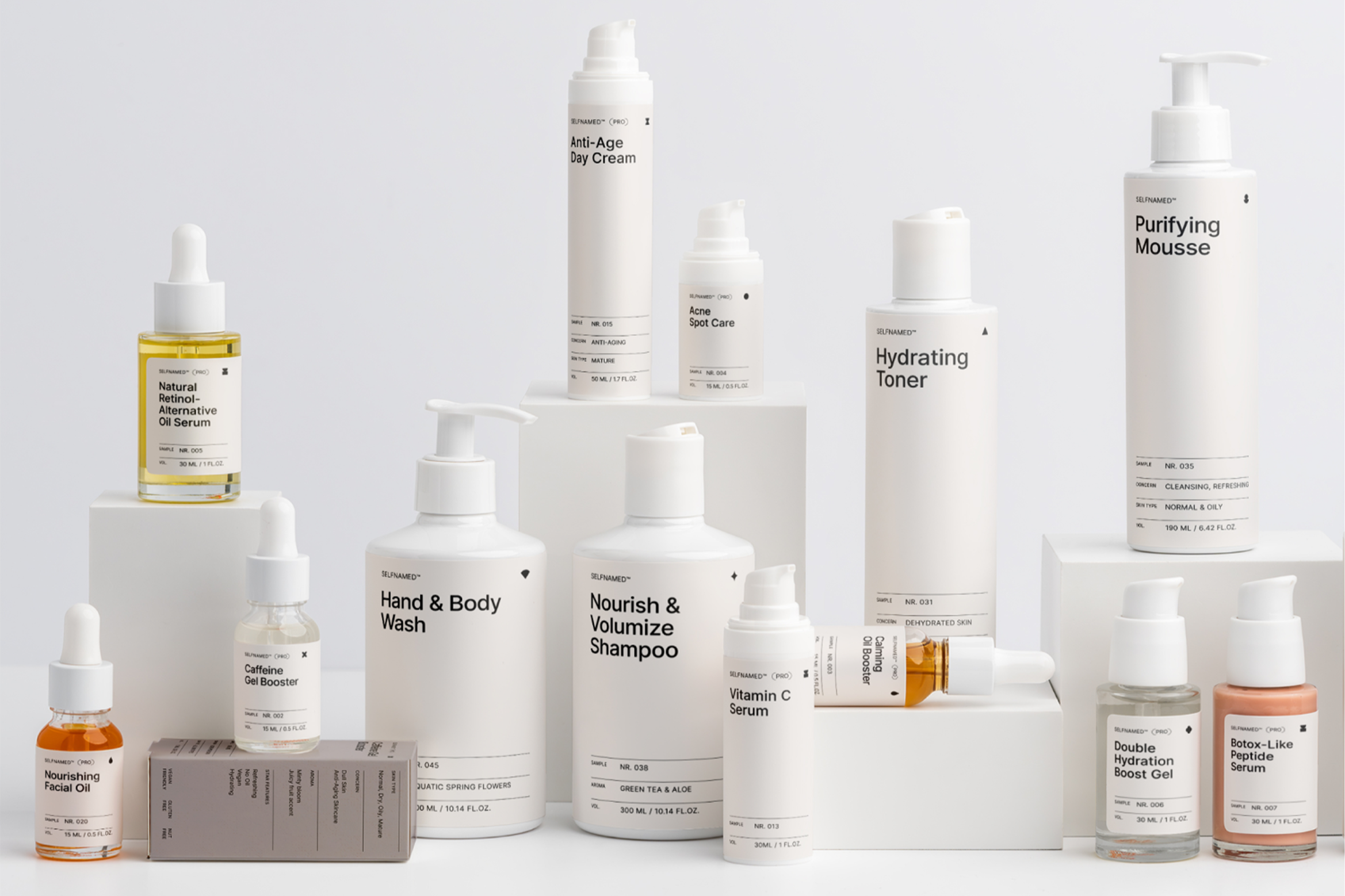
Start with your niche. A skincare brand might need cleansers, serums, and moisturizers that work together as a routine. A makeup artist launching a retail line will care much more about the depth of private label makeup shades and formats.
Then think one step ahead. If your first three products sell well, can the same partner support the next five?
That matters in a market where shoppers are paying close attention to performance. McKinsey’s 2025 beauty research found that product quality is the top reason consumers repeatedly purchase beauty brands. Your product range needs to give the brand somewhere meaningful to grow.
Certifications and Compliance
Compliance should match the markets where you plan to sell.
For the USA, ask or research how the manufacturer handles requirements under the Modernization of Cosmetics Regulation Act (MoCRA). The FDA requires applicable cosmetic manufacturing and processing facilities to register and renew that registration every two years.
For Europe, check whether products meet EU cosmetics requirements and whether the necessary product documentation and market notification are handled.
Claims deserve the same attention. If vegan private label cosmetics, cruelty-free positioning, organic ingredients, or other certifications matter to your business concept, ask what documentation supports them rather than relying on the wording on a product page.
This is increasingly relevant for product positioning. NIQ reported in 2025 that attributes including cruelty-free and vegan were growing faster than the overall beauty category.
Packaging Customization
Check exactly what “customizable” means before you commit. It can describe very different levels of brand control.
At the simplest level, you may only be able to add your logo to a standard label. Other customization options can include full-label design, branded boxes, different packaging components like branded inserts, and custom finishes.
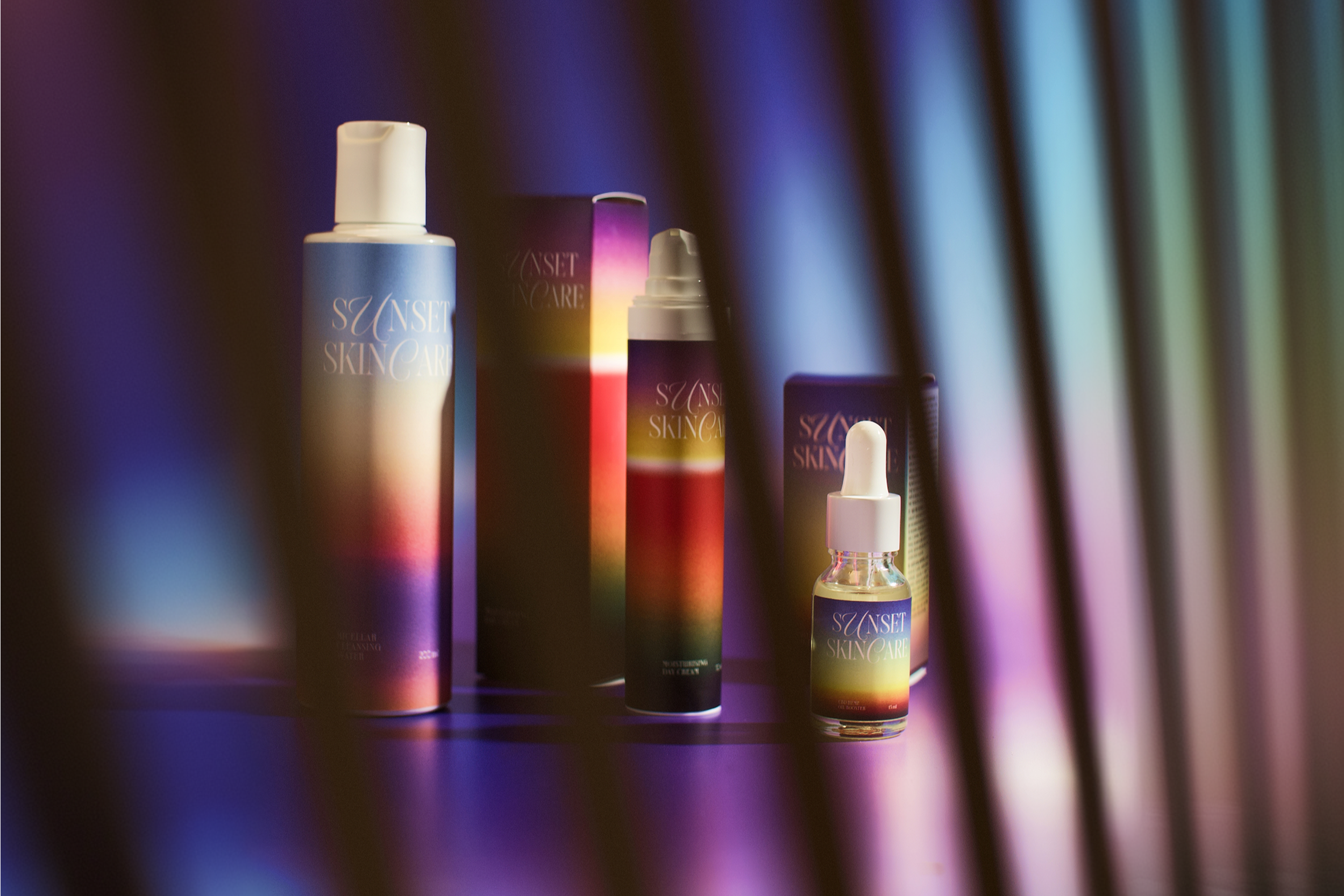
Packaging also has a practical job. McKinsey’s 2025 US research found that consumers increasingly inspect labels to make choices around quality, price, health, and wellness. Suppliers with transparent labeling practices can help customers understand what they’re buying while reinforcing your brand.
Think about what your beauty brand needs for its first launch, but leave yourself room to customize further as it grows.
Fulfillment Model
Your fulfillment model determines when you pay for inventory and what happens after a customer clicks “buy.”
Wholesale means ordering stock upfront. You store it and fulfill orders yourself or through a logistics partner. It can unlock volume pricing and broader customization, but you need cash and somewhere for the products to go.
Dropshipping works differently. The private label company holds or produces the product and ships individual orders to your customers. That can reduce the initial inventory commitment and make testing easier.
Some platforms sit between the two, offering both bulk production and dropshipping. That flexibility can be useful if you want to start selling online and later move your bestsellers into larger production runs.
Time to Market
Finally, ask how long it takes to go from choosing a product to having something customers can actually buy.
Ready-made formulations can shorten that process because much of the product development is already complete. A unique formula, custom component, or complex packaging concept naturally adds more steps to production.
Ask for the timeline in stages: samples, design approval, production, packaging, and fulfillment setup. That gives you a much more useful launch date than a general promise of “fast turnaround.”
For a new beauty brand, speed has value when it lets you test a concept while demand is there. The goal is a launch timeline that works without compromising quality, compliance, or the product you actually want to create.
Top Private Label Cosmetic Companies Compared
The private label cosmetic companies below solve different problems. Some are built around on-demand ecommerce and dropshipping. Others make more sense when you want larger production runs or a traditional manufacturing relationship.
Here’s what each company offers, who it suits, and what to keep in mind.
Selfnamed
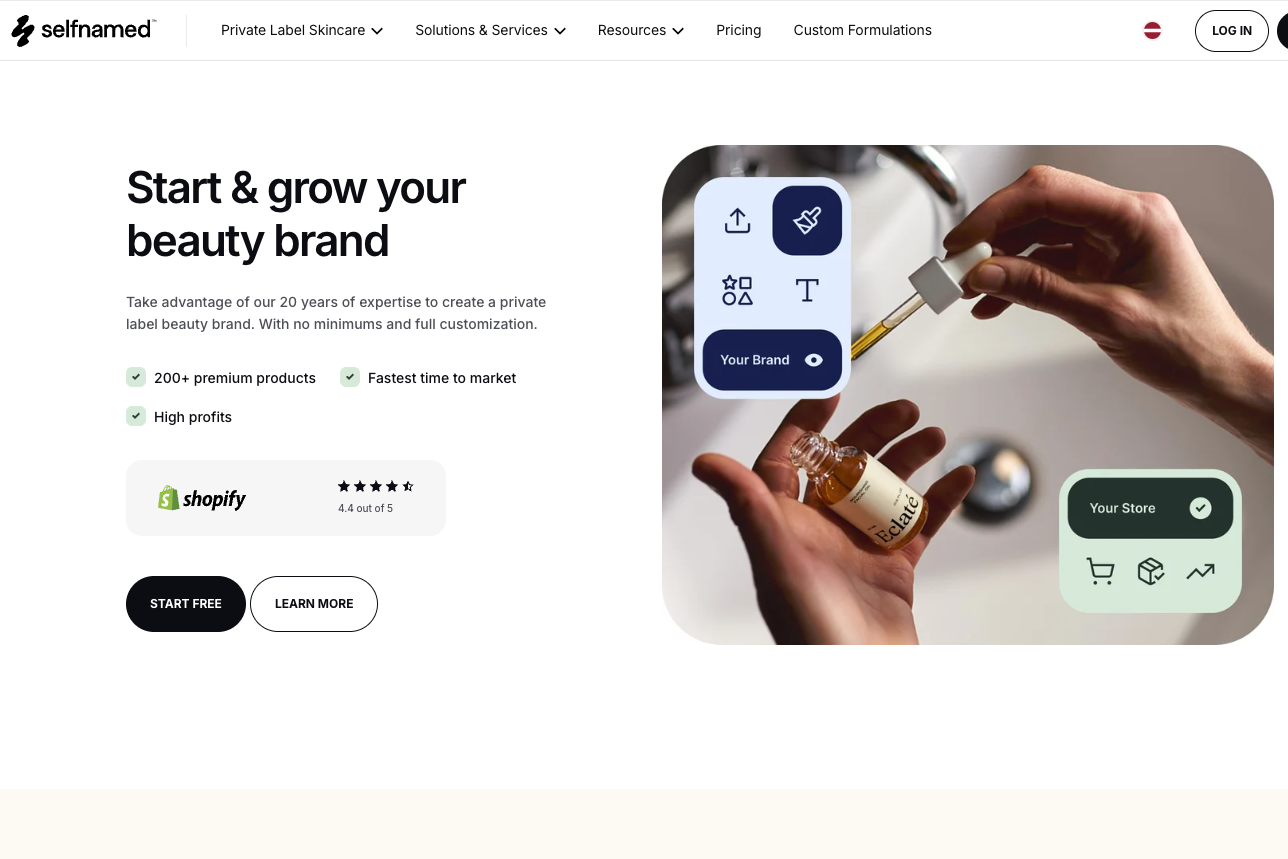
Best for: founders who want to launch a polished beauty brand with low upfront commitment and room to sell across markets.
Selfnamed sits in a useful middle ground. You get the speed and flexibility of an ecommerce platform, while still having plenty of control over how the finished products look and feel. Its catalog includes 200+ skincare, body care, hair care, and makeup products, with low entry requirements and the option to dropship.
For a first launch, that takes a lot of pressure off. You can test products, create your labels and custom packaging in the Design Studio, and see what customers respond to before investing heavily in inventory. EU-compliant products also give brands interested in international growth a useful foundation.
Key differentiators:
200+ ready-to-brand beauty products;
low entry requirements;
dropshipping and bulk ordering;
Design Studio for labels and packaging;
EU-compliant products for brands with international ambitions.
What to keep in mind: Selfnamed’s sweet spot is building a distinctive brand around formulas that are already developed. If your concept depends on creating a completely unique formula from scratch, a traditional manufacturer with deeper R&D capabilities may be a better fit.


Blanka
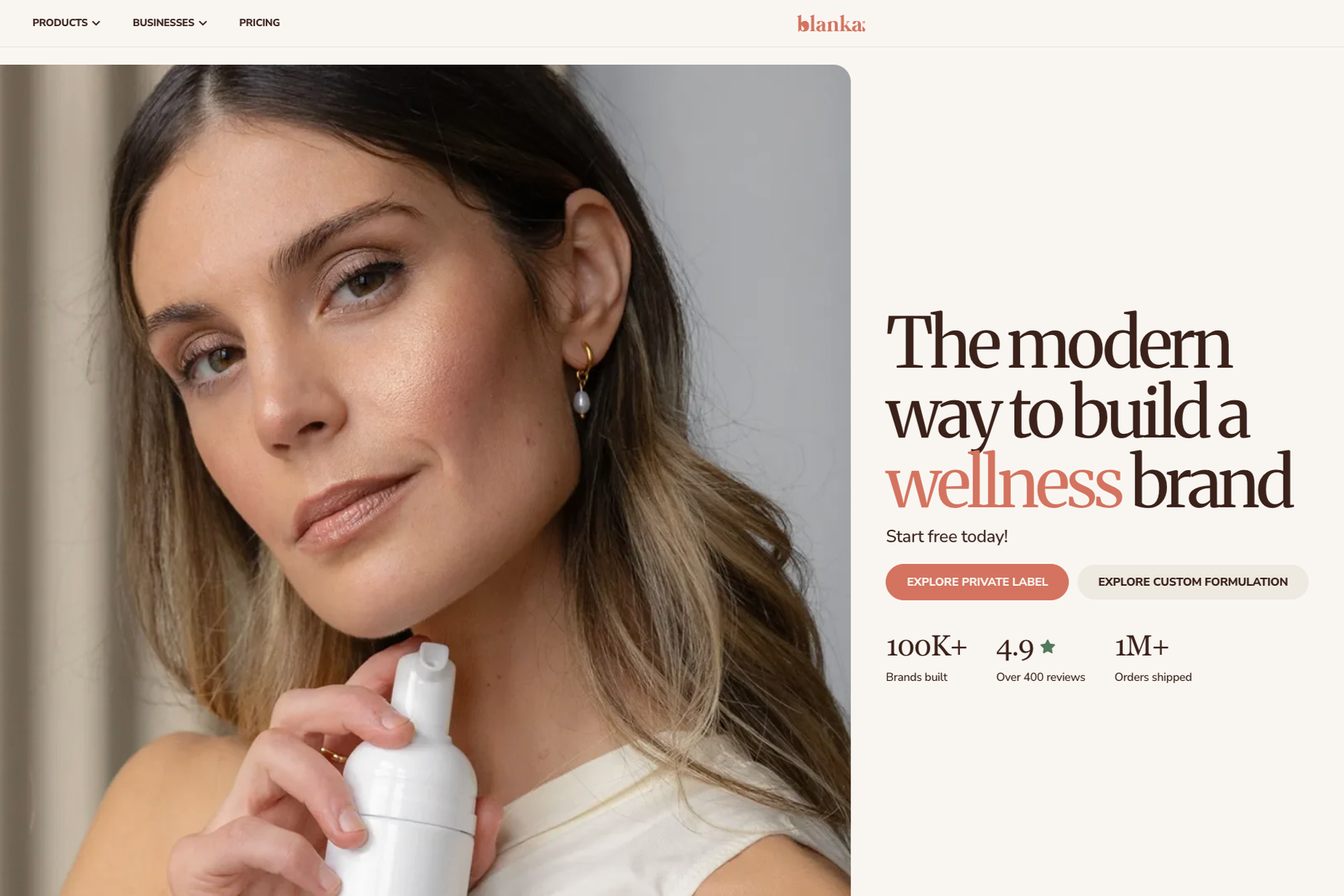
Best for: Canadian and North American founders who want a Shopify-friendly beauty platform with dropshipping built in.
Blanka launched in Canada and has grown into a beauty-focused private label platform covering skincare, makeup, hair care, body care, fragrance, and wellness. Its product range now includes 450+ ready-to-brand products, up from the 300+ referenced in earlier versions of this comparison. Products can be dropshipped individually or purchased wholesale.
The appeal is convenience. Connect your Shopify store, add your branding, and Blanka handles fulfillment when customers order. Its products are cruelty-free, and the majority are vegan, giving clean and conscious beauty concepts plenty to work with.
Key differentiators:
450+ ready-to-brand products;
zero minimum orders;
cruelty-free products, with a majority of vegan options;
Shopify and other ecommerce integrations;
dropshipping and wholesale;
custom formulation available through Blanka Labs.
What to keep in mind: Blanka says the majority of its products are vegan, rather than every formula being certified vegan. If vegan positioning is central to your beauty brand, check the ingredients and status of each product you plan to sell.
viaGlamour
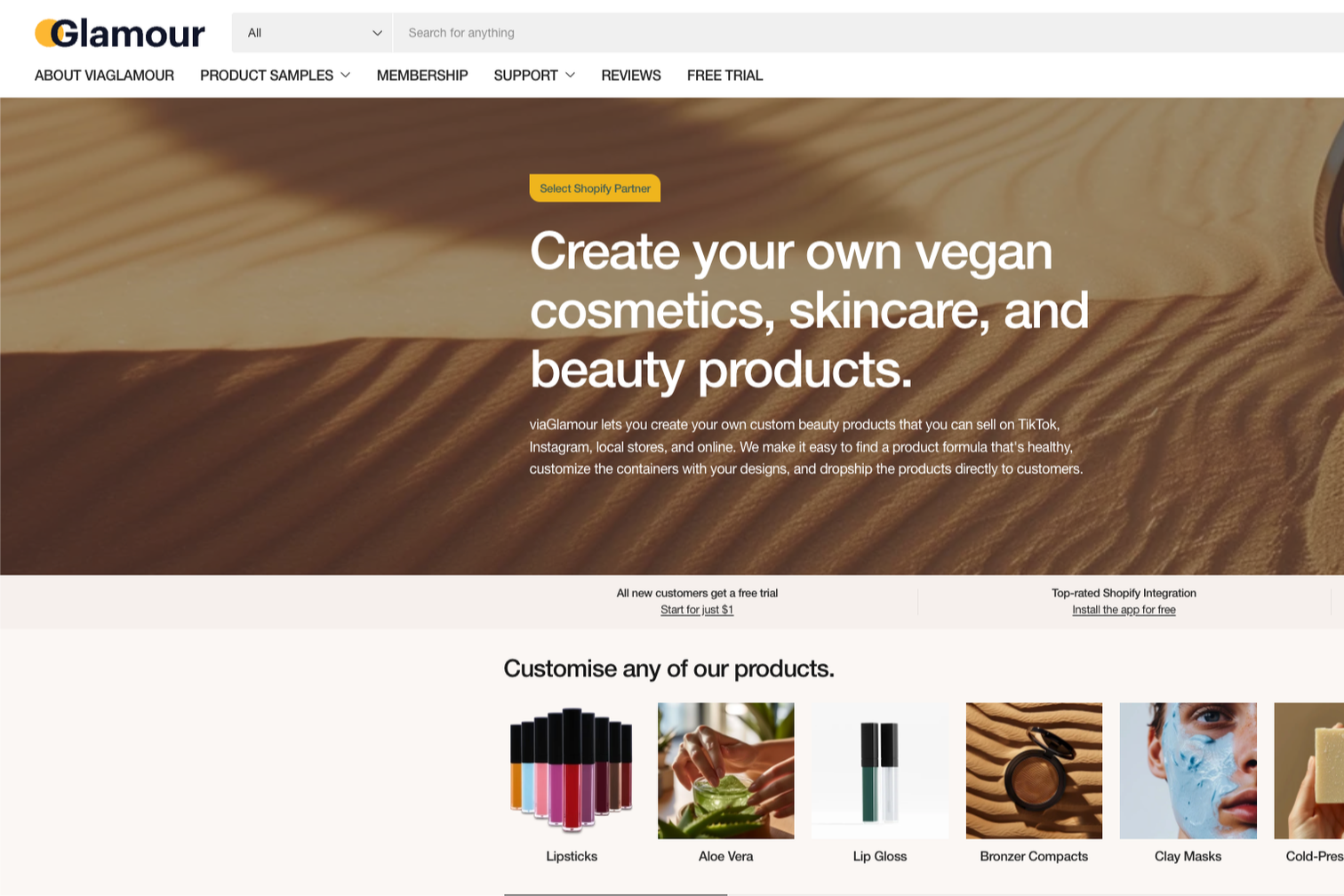
Best for: founders interested in Canadian-made, natural beauty products and a Shopify-first way to launch.
viaGlamour is especially interesting if private label makeup is a big part of your idea. The Toronto cosmetics lab specializes in organic, natural, and cruelty-free beauty products, with options across cosmetics, skincare, men’s skincare, and other beauty categories.
There’s plenty of room to experiment here. You can start with samples, build a focused makeup or skincare collection, and use its Shopify-focused workflow to get products online. viaGlamour also works with stores outside Shopify, so you aren’t completely tied to one platform.
Key differentiators:
Canadian cosmetics lab;
strong makeup and color cosmetics selection;
organic, natural, and cruelty-free positioning;
Shopify-focused private label workflow;
samples available before building your range;
customizable beauty and skincare products.
What to keep in mind: viaGlamour makes the most immediate sense for founders who connect with its Canadian-made, clean-beauty positioning. If you’re building around a very different concept, compare the catalog carefully instead of choosing it for the size of the selection alone.
Supliful
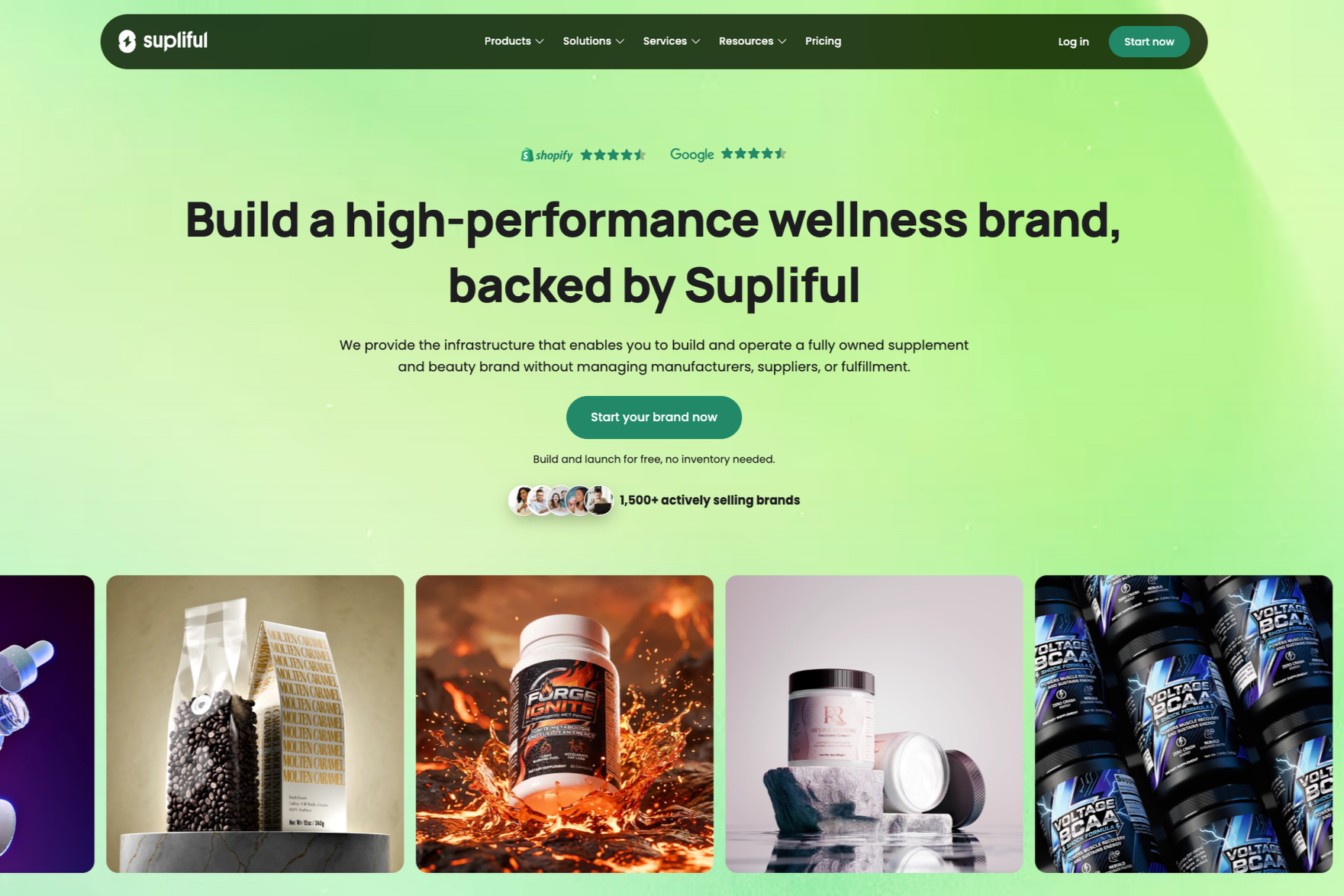
Best for: founders building at the intersection of beauty and wellness.
Supliful takes a broader route into private label. Its 190+ product catalog covers supplements, skincare, coffee, pet products, and other wellness categories. You add your branding and connect your store, while Supliful handles sourcing, inventory, packaging, and US-based fulfillment.
That mix opens up concepts a cosmetics-only partner may not cover. A founder could build a skincare range alongside supplements or other wellness products and keep them under the same brand. There are no minimum order requirements across its 190+ on-demand products, which also makes testing easier.
Key differentiators:
190+ health and wellness products;
no minimum orders across its on-demand catalog;
supplements and beauty under one platform;
US-based fulfillment;
private label dropshipping;
ecommerce integrations.
What to keep in mind: Supliful is a wellness platform first. If your goal is a specialist skincare or makeup business, compare its depth in cleansers, serums, moisturizers, and cosmetics with dedicated private label beauty companies before deciding.
Printify
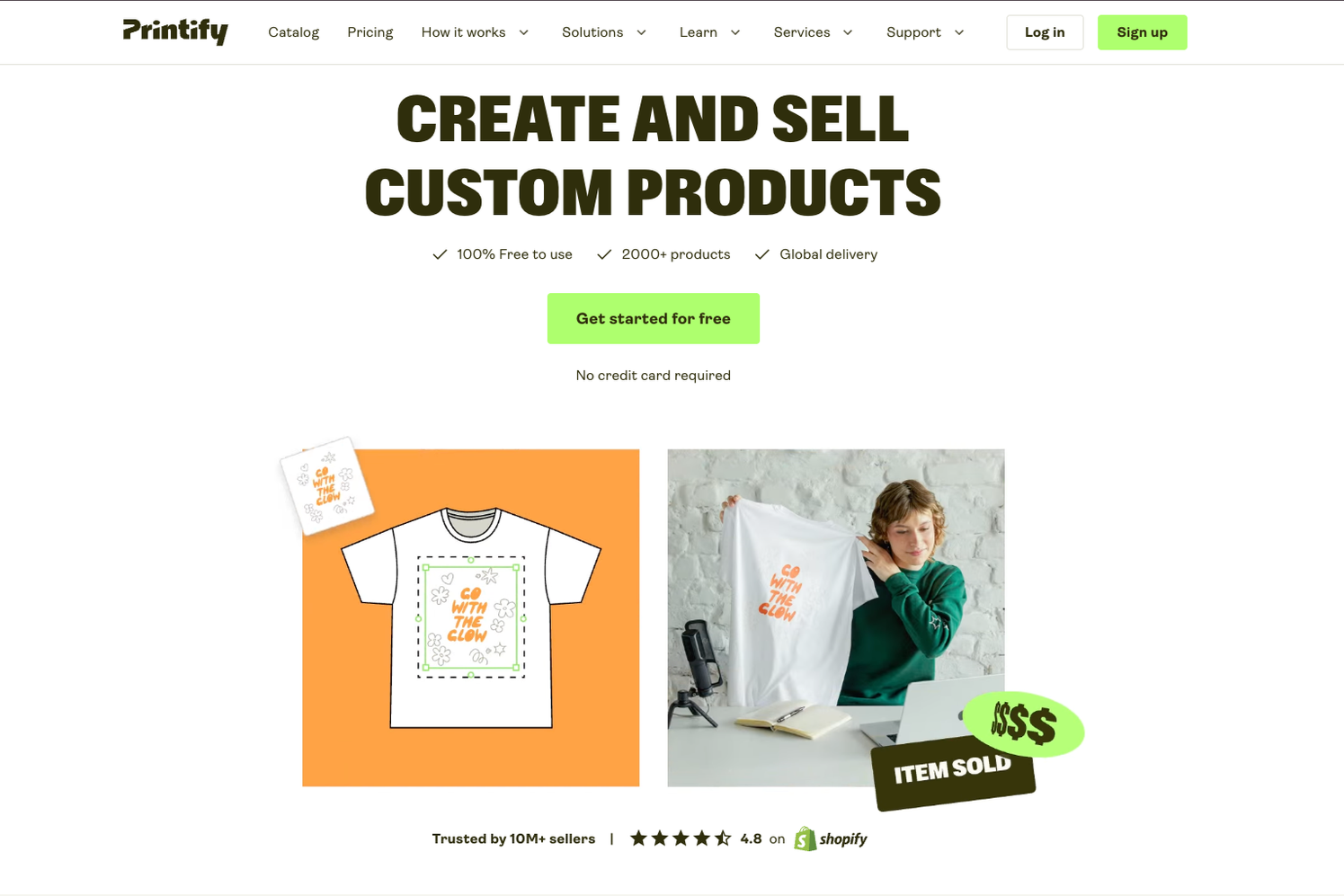
Best for: creators and ecommerce businesses already selling merchandise who want an easy way to add a few beauty products.
Printify is the odd one out here, and for the right founder that can actually be useful. It is a print-on-demand platform rather than a specialist private label cosmetic manufacturer, with more than 2,000 white-label products across apparel, homeware, accessories, and other categories.
Beauty and personal care make up a much smaller part of that world. Imagine a creator already selling T-shirts, candles, and accessories who wants to add a moisturizer, hair product, or other self-care item. Keeping everything within a familiar print-on-demand setup can be appealing.
Key differentiators:
more than 2,000 white-label products overall;
print-on-demand fulfillment;
no minimum orders;
large network of production partners;
integrations with major ecommerce platforms;
easy to combine beauty with merchandise.
What to keep in mind: beauty isn’t Printify’s specialty. If cosmetics are going to become the heart of your business, a specialist platform gives you a deeper beauty catalog and more industry-specific capabilities to build around.
MANA Private Label
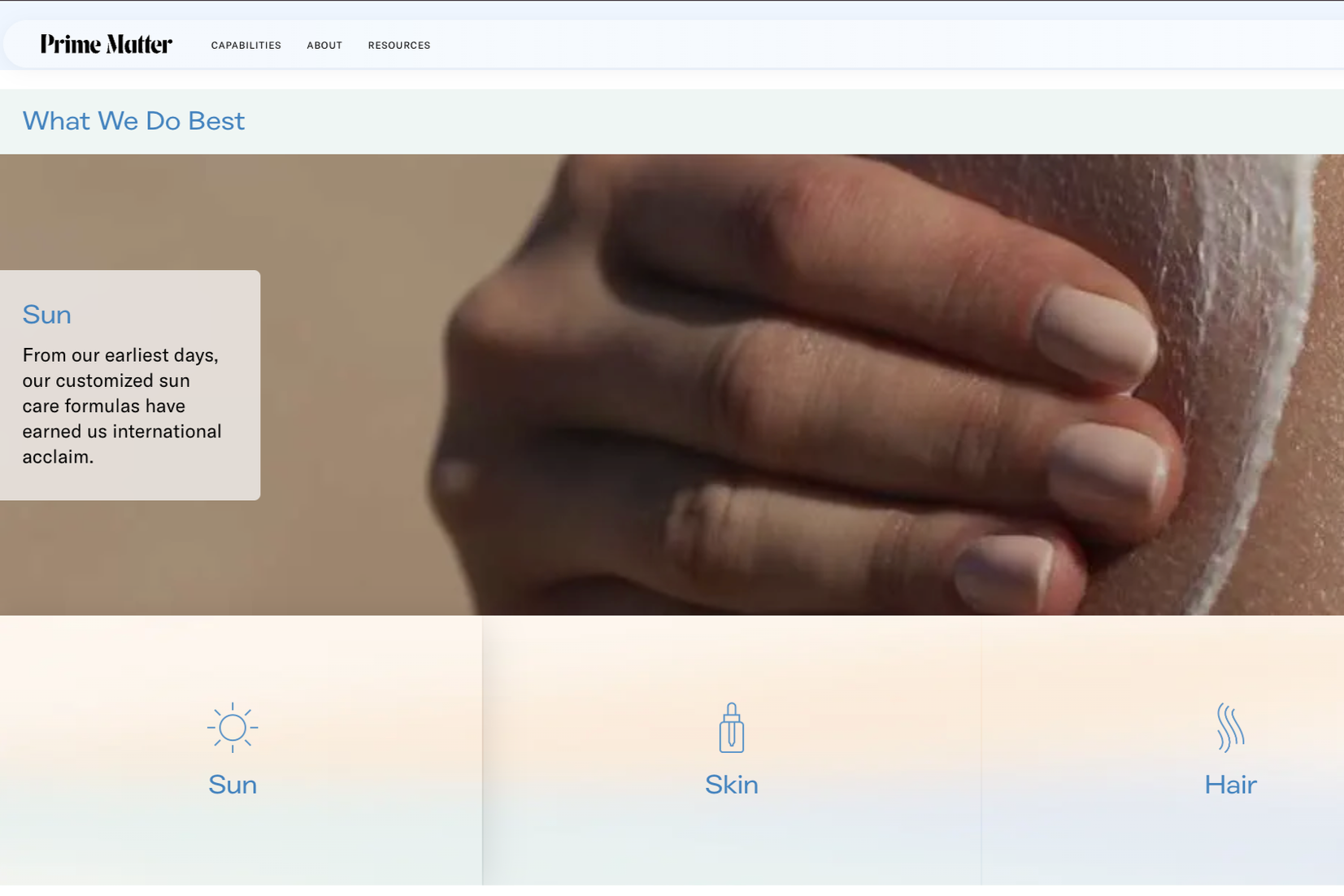
Best for: scaling beauty brands ready for higher-volume production and a more traditional manufacturing relationship.
MANA is where this list shifts gears. Founded in 1975, it comes from the traditional cosmetics manufacturing world rather than the newer on-demand model. Its expertise spans makeup, skincare, and personal care, making it relevant for established brands that have moved beyond simply testing whether an idea will sell.
This route starts to make sense when production capability, packaging, formulation expertise, and scale become bigger priorities. MANA offers ready-developed products as well as manufacturing capabilities for brands that want to take a more hands-on approach to product development.
Key differentiators:
established US cosmetics manufacturer;
founded in 1975;
strong makeup and skincare expertise;
traditional manufacturing capabilities;
packaging and decoration services;
better suited to larger-scale production needs.
What to keep in mind: MANA isn’t built around the instant, inventory-free experience of a dropshipping platform. Expect a more traditional supplier relationship and greater investment in inventory. That trade-off becomes easier to justify when your beauty business already has demand and needs a manufacturing partner that can support the next stage.
ONOXA
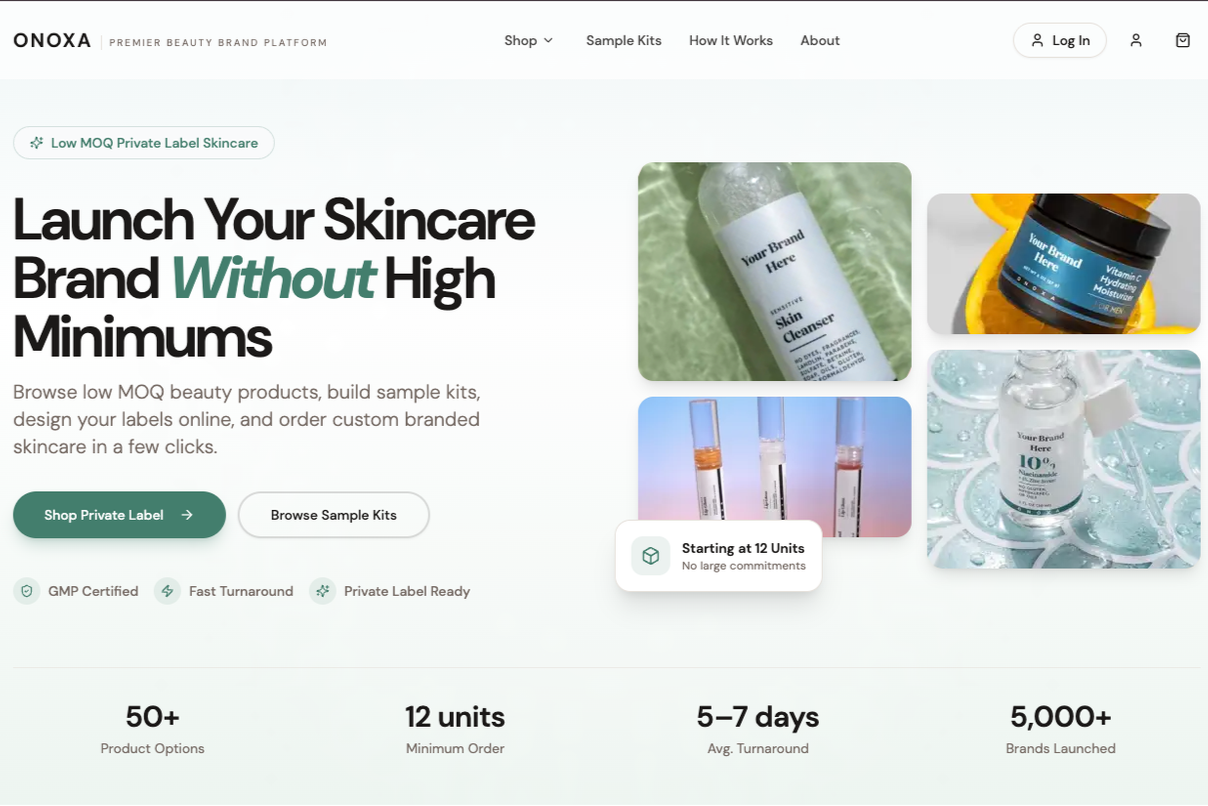
Best for: US founders, beauty professionals, and salons that want US-made products backed by established cosmetics R&D experience.
ONOXA combines something newer founders often want, small starting orders, with decades of industry experience behind the products. The Florida-based company says its team brings more than 50 years of R&D and quality-assurance experience to skincare, hair care, and body care.
That makes ONOXA particularly easy to picture for an existing beauty professional. A salon, esthetician, or spa can put its logo on a focused retail range, test it with existing clients, and increase orders as demand grows. Current orders can start at 12 units per product.
Key differentiators:
more than 50 years of R&D and quality-assurance experience;
US-based production;
small starting orders;
ready-to-brand skincare, hair care, and body care;
online label customization;
established cosmetics manufacturing background.
What to keep in mind: ONOXA works around ordering branded stock instead of direct-to-customer dropshipping. That makes it a good fit for salons and professionals who already have customers or a physical place to sell. While a pure ecommerce startup may prefer a platform that handles each customer order for them.
The right partner depends on where your business is starting from. A creator adding one beauty product, a salon building a retail line, and a growing cosmetics company ready for larger production runs should end up with very different shortlists.
Private Label Cosmetics Companies Side-By-Side
Once you put the details next to each other, the differences between private label cosmetic manufacturers become much easier to see.
Use this table as a shortlist, then visit each company’s website, order samples, and contact the team with questions about your exact products, market, and launch plans.
| Company | MOQ | Catalog | Packaging | Certification / compliance | Dropship | Best for |
|---|---|---|---|---|---|---|
| Selfnamed | No MOQ on most products | 200+ | Full labels, boxes and advanced print options | CPNP registered; FDA compliant; ECOCERT; ISO 22716 | Yes | Founders who want strong customization, low entry costs, and room to expand internationally |
| Blanka | No MOQ | 450+ | Labels, branded packaging and inserts; deeper custom options available | FDA & EU compliant manufacturing, vegan and cruelty-free formulas | Yes | North American founders who want a beauty-focused ecommerce setup with fulfillment built in |
| viaGlamour | No MOQ | 1,000+ | Logo branding and custom product packaging | ISO 9001, ISO 22716, ISO 14001; Health Canada certified; vegan and cruelty-free formulas | Yes | Shopify-first founders who want a deep makeup and skincare selection |
| Supliful | No MOQ on 150+ products | 190+ overall | Custom labels and packaging options | Markets products as FDA-standard / market-ready; requirements vary by product | Yes | Founders combining skin care with supplements and wellness |
| Printify | No MOQ | 2,000+ overall; limited beauty depth | Depends on product and print provider | Compliance depends on the product and manufacturer | Yes, print-on-demand | Creators already selling merchandise who want to test a few beauty SKUs |
| MANA Private Label | Varies: some decorated skincare starts at 48 units | Makeup, skincare and personal care | Decoration and packaging services | Compliance varies by formula and target market | No | Expanding beauty brands ready for traditional manufacturing and larger production runs |
| ONOXA | 12 units per product | 50+ | Online label design, selected packaging options | GMP-certified manufacturing; products include vegan, cruelty-free and EU/USA-compliant options | No | US salons and founders who want small-batch, US-made products |
A huge catalog can look impressive, but you only need the right products for your brand. Pay attention to the quality, packaging, and support behind them too.
And think a little ahead. If you eventually want unique formulations, make sure your partner can help you get there.
How to Choose the Right Private Label Cosmetics Partner for Your Brand
Your budget and business stage can narrow the list pretty quickly. Start with where you are now:
You’re launching your first brand with under $5,000. Keep the commitment small. Look for low MOQs, dropshipping, ready-made formulas, and simple packaging customization so you can test what sells before buying inventory.
You’re adding products to a salon or service business. You already have customers, which is a big advantage. Focus on healthy margins, fast turnaround, easy reordering, and products that make sense alongside the services people already come to you for.
You’re scaling an existing beauty brand. Your priorities start to change. Volume pricing, flexible packaging, reliable production capacity, and a path toward custom formulations become much more important.
If you fit in the first two groups, seeing how the private label process works can help you picture the steps from choosing products and creating the design to placing your first order.
Build Your Beauty Brand With the Right Partner
There isn’t one private label cosmetics company that wins for every founder. And after comparing all these options, that’s probably the most useful thing to know.
A first-time founder testing three products needs flexibility and a small starting investment. A salon already has clients to sell to, so margins and easy reordering may matter more. An established beauty brand preparing for its next stage might be ready for larger production runs, custom formulations, and more control over packaging.
Start with the business you’re actually building. Look at your budget, how you plan to sell, how much inventory you’re comfortable holding, and where you want the brand to go next. Then shortlist the companies that fit those needs.
Before committing, order samples. Put the products on your skin. Look at the packaging in person. See how quickly the company responds when you have a question. A promising catalog means much less if the product or working relationship doesn’t feel right once you experience it yourself.
If you want to start with ready-made formulas while putting plenty of thought into the brand around them, Selfnamed is one option worth exploring. You can begin small, customize the look, and choose between dropshipping and bulk as the business develops.
The right partner should make the next stage of your brand feel possible. Even if it means launching your first three products or preparing for your next 30.
Frequently Asked Questions
-
A private label cosmetics company provides ready-made or customizable beauty products that you can sell under your own brand. Depending on the partner, they may also handle packaging, labeling, compliance, production, and fulfillment.
-
Look for a company that lets you start small. Low MOQs, ready-made formulas, simple customization, and dropshipping can make your first launch much easier. Selfnamed and Blanka are two options built around this kind of model.
-
The terms often overlap. White label cosmetics are typically existing products sold by multiple brands with different branding. Private label cosmetics can offer more room for customization, from packaging and labels to formulas in some cases.
-
Selfnamed, Blanka, viaGlamour, Supliful, and Printify all offer ways to start without large bulk orders. ONOXA starts at 12 units per product. Always check the MOQ for the exact product and customization you want, as requirements can vary.
-
Yes. Some private label beauty companies, including Selfnamed, Blanka, viaGlamour, and Supliful, can fulfill orders directly to your customers. This lets you start selling without keeping a large amount of stock yourself.
-
There’s no single number. Your cost depends on samples, MOQs, packaging, branding, your website, marketing, and whether you buy inventory upfront. Starting with dropshipping or low MOQs can keep that first investment much smaller.
Must read