Certification for Beauty Products: Everything You Need to Know
Starting a skincare brand is exciting until the compliance confusion begins.
If you're stepping into the world of skincare to create your own brand, you'll soon realize there’s a lot to learn about product compliance and certification for beauty products.
Between regulations, labeling laws, and ingredient requirements, it can feel like you suddenly need a law degree just to launch a moisturizer. But getting compliance right is essential for building trust, ensuring product safety, and meeting consumer expectations.
In this guide, we’ll simplify CPNP, ECOCERT, COSMOS, and FDA guidelines so you can better understand the key regulations and certifications behind every compliant skincareproduct.
What Certification for Beauty Products Actually Means

Many founders tend to confuse compliance with certification. But they are not the same.
Compliance is the legal side of things. It means your cosmetic products meet market requirements around ingredient safety, packaging, product testing, labeling, documentation, and registration. In other words, it’s what lets you legally sell products in markets like the European Union (EU) or the United States (US).
Certification is different. Most certifications are voluntary and act more like proof that a brand follows certain standards around sustainability, ingredient sourcing, ethics, or environmental responsibility.
To put it simply:
Compliance gets your product on the market, but certification helps customers trust it.
And this becomes especially important when talking about “clean beauty.” Despite showing up in what feels like every second skincare campaign these days, the term has no official definition in the cosmetics industry and isn’t legally regulated worldwide.
That’s exactly why “clean” has become such an easy marketing buzzword. Brands use it to make products sound safer, purer, or more natural. Even when there’s no measurable standard behind those claims.
No wonder consumers are getting increasingly skeptical and confused, since no one really knows what “clean beauty” actually means anymore.
This is where third-party certifications start to matter.
Standards like the NATRUE Standard, COSMOS Organic, and COSMOS Natural help bring more transparency to the cosmetics industry by verifying things like:
organic content;
raw materials sourcing;
sustainable palm oil usage;
supply chain transparency;
manufacturing processes;
packaging standards;
environmental and social responsibility practices.
For skincare brands, beauty certification is often less about legal obligation and more about building trust. It’s also a way to prove transparency and stand out in an increasingly conscious beauty market.
Why Certification Matters for Skincare Brands

Certification has become a major trust signal in the beauty industry. It can influence everything from customer confidence to retailer acceptance and international expansion.
And honestly, consumers are paying a lot more attention now than they did a few years ago. People want to know where ingredients come from, how products are made, and whether brands actually stand behind their sustainability claims.
Builds Trust and Credibility
Consumers are far more ingredient-conscious than they used to be, with many checking labels and researching what goes into their products.
That’s where third-party certification becomes valuable. Certifications like COSMOS Organic or the NATRUE Standard help brands support claims around organic ingredients, sustainability, ethical sourcing, and product quality.
Instead of relying on marketing language alone, these certifications provide recognised standards that consumers can actually trust.
Supports International Selling
Selling skincare products across different markets comes with different expectations and compliance requirements.
Recognised certifications can make it easier for brands to enter new retail channels and expand internationally. This is especially important within the EU.
For retailers, certification can also act as an extra layer of reassurance when deciding which brands to stock.

Responds to Changing Consumer Demand
Skincare shopping now comes with almost as much research as booking a holiday.
Demand for organic cosmetics, vegan skincare, and natural personal care products also continues to grow worldwide. Many consumers are now actively looking for:
organic certification;
vegan certification cosmetics;
natural certification;
fair trade ingredients;
sustainable packaging;
reduced carbon footprint initiatives.
And it’s no longer just about product performance. Consumers increasingly care about ingredient sourcing, ethical production, and overall environmental impact, too.
Helps Brands Stand Out
The beauty industry is crowded, and consumers are becoming more selective about the brands they support.
Certification helps skincare companies build stronger credibility, communicate transparency more clearly, and show real commitment to responsible production practices.
For many brands, certification is becoming part of how companies demonstrate quality, sustainability, and long-term trustworthiness in a competitive market.
Types of Certification in the Cosmetics Industry
There are several major certifications used in skincare and personal care products today. Each certification focuses on different criteria related to ingredients, production methods, environmental management, or ethical sourcing.
Natural Certification Cosmetics
Most natural certification standards focus on ingredients sourced from nature and limited use of certain synthetic materials.
However, there is no single global legal definition for “natural cosmetics.” That’s why certification bodies developed their own independent standards and criteria.
Natural certification often evaluates:
raw materials;
production processes;
environmental impact;
packaging;
restrictions for genetically engineered organisms;
green chemistry principles.
Many standards also limit petrochemical ingredients and require traceable supply chain documentation.
Well known standards like COSMOS Natural, ECOCERT, and NATRUE are commonly used across the industry. While each has its own criteria, they all aim to bring more transparency to natural cosmetics.
Organic Certification Cosmetics
Organic certification goes a step further than natural certification.
Organic cosmetics aren’t just about adding a few plant-based ingredients to a formula. To qualify, products need certified organic ingredients produced through approved organic farming practices.
Organic standards usually look beyond the ingredient list alone.
Most also assess things like:
organic content percentage;
ingredient sourcing;
agricultural production methods;
processing standards;
environmental responsibility;
supply chain transparency;
Many certifications also prohibit genetically engineered organisms and encourage more sustainable resource management practices during production.
Certifications like COSMOS Organic, ECOCERT Organic Certification, and the USDA National Organic Program are commonly used to verify organic cosmetic products and ingredients.
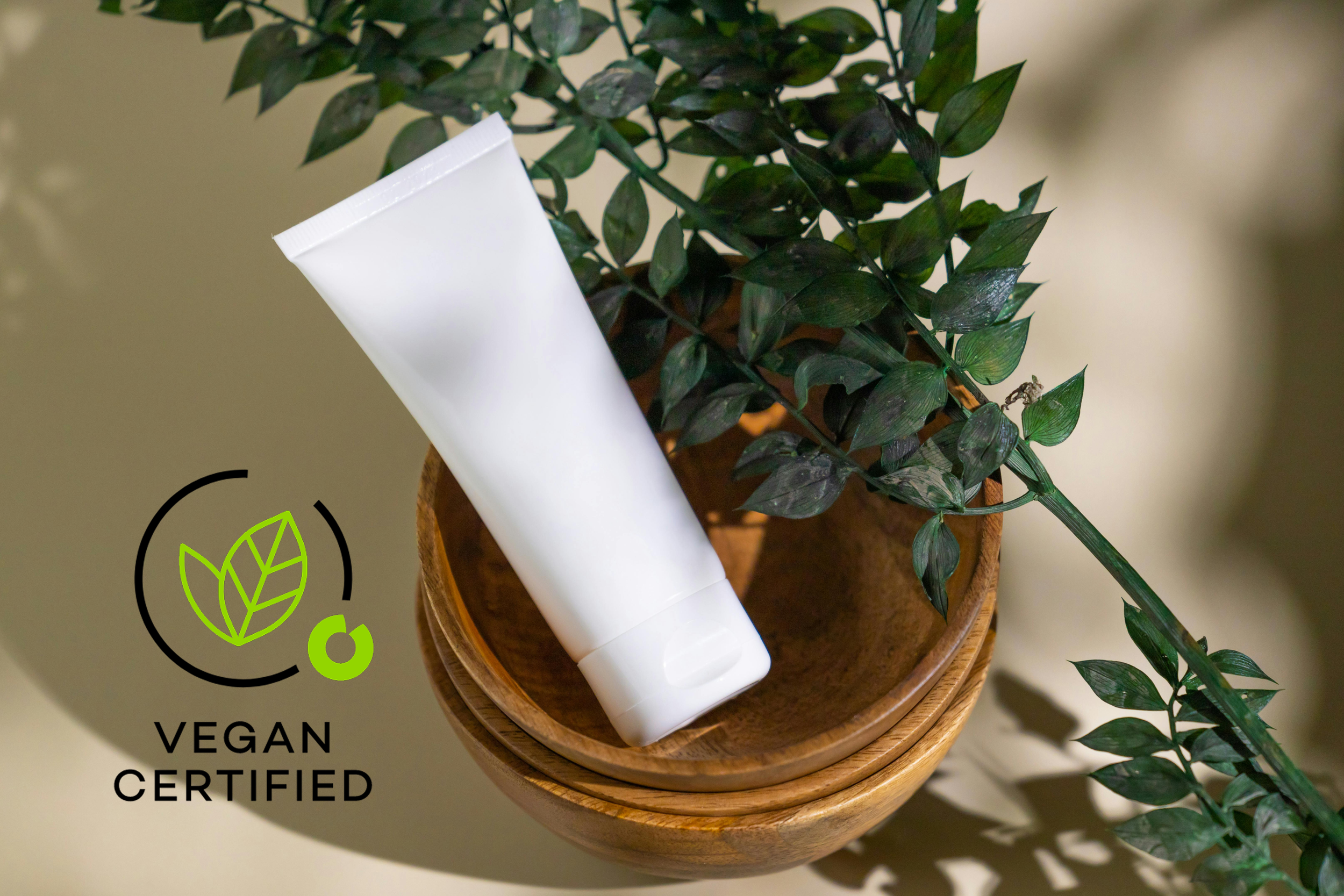
Vegan Certification Cosmetics
Vegan certification cosmetics are products made without animal-derived ingredients. That means no beeswax, collagen, lanolin, carmine, honey, or other ingredients sourced from animals.
A lot of people still mix up vegan and cruelty-free certification, but they’re not the same thing.
Vegan certification focuses on the formula itself and whether it contains animal-derived ingredients. Cruelty-free certification, on the other hand, focuses on animal testing practices during product development and production.
Technically, a product can be vegan without being cruelty-free – and cruelty-free without being vegan.
For skincare brands targeting more conscious consumers, vegan certification often goes hand in hand with natural and organic certification.
ECOCERT & COSMOS Certifications

If you’ve been digging around the Selfnamed website and product catalog, you may have already noticed ECOCERT and COSMOS here and there.
Both of these names represent different certifications on the product packaging, proving they have met the high standards for natural and organic cosmetics. These symbols are understood and appreciated by the industry and its consumers worldwide.
ECOCERT
Founded in France in 1991 by a group conscious of the growing need to develop environmentally friendly agriculture, and who wanted to offer recognition to those who adhere to best practice production. The ECOCERT body specialises in the certification of organic products for sustainable development.
ECOCERT assists stakeholders in the implementation and promotion of sustainable practices through certification, consulting and training services. Committed to organic farming since its creation, ECOCERT has now extended its efforts to many other sectors. Like, home care, textiles, forestry, and others.
COSMOS
Launched in 2010, the COSMOS standard is a quality standard for cosmetics or raw materials intended for cosmetics. It was launched to harmonise the various cosmetic certifications and labels, creating one cohesive standard to be internationally recognised for natural and organic cosmetics.
There are two types of COSMOS certifications for cosmetic products:
COSMOS Natural: all the product ingredients are from natural origin except a restrictive approved ingredient list (including preservatives) authorised in small quantities.
COSMOS Organic: a product is certified with this label only if a minimum of 95% of the plants it contains are organic and at least 20% of organic ingredients are present in the total formula (10% for rinse-off products).

The words “COSMOS Natural” or “COSMOS Organic” appear below the logo of the responsible certifier, letting you recognise the organisation that participates in the COSMOS standard.
How to Get Organic Certification for Cosmetics

Selfnamed Performance Skincare Product Set
Getting organic certification for cosmetics might feel overwhelming, but the process is actually quite structured.
Here’s a simplified step-by-step overview:
1. Choose a Certification Body
First, decide which certification body is the right fit for your brand.
You’ll often come across names like ECOCERT, COSMOS, the USDA National Organic Program, and NATRUE. They all have their own approach to organic content, sourcing, and production. The best option depends on your target market and how you want to position your brand.
2. Verify Organic Ingredients
Once you’ve picked a certification body, it's time to make sure your ingredients meet their requirements.
This usually involves gathering proof that your raw materials come from approved organic sources. It’s not enough for ingredients to sound natural – they also need to be properly documented and traceable.
3. Audit the Supply Chain
Certification isn’t just about the formula. You also need to show how your product comes together from start to finish.
That means looking closely at where your ingredients come from, who your manufacturing partners are, how your packaging is sourced, and whether your processes meet environmental standards.
It’s really about the full journey of your product, not just what’s inside it.
4. Ensure Compliant Manufacturing
Your production process needs to meet certification requirements as well.
Depending on the standard, this can involve things like waste management, responsible sourcing practices, and the use of green chemistry principles.
This is often the stage where things get more technical, especially if your manufacturer isn’t familiar with certification requirements.
5. Submit Documentation
Expect paperwork. And a lot of it.
You’ll need to pull together everything from ingredient lists and safety data to packaging details and supplier certificates. If something is missing or unclear, it can slow things down quickly.
It’s not the most exciting step, but it’s one you can’t really skip.
6. Pass Inspection and Review
Finally, once everything is submitted, the certification body reviews your documentation and may carry out inspections before final approval.
The whole process can take a few months, depending on how complex your product range and supply chain are.
EU Compliance: CPNP Explained
The Cosmetic Products Notification Portal (CPNP) is an online platform used to register cosmetic products before they are placed on the EU market. It was introduced under Regulation (EC) No 1223/2009 to standardize requirements across EU member states.
The Responsible Person (RP) must submit product and safety information through the CPNP and update it if anything changes.
To stay compliant and properly registered, here's what's needed:
Notification: every product must be registered in the CPNP before entering the EU market, including details about ingredients and the manufacturer.
Product Information File (PIF): each product must have a PIF with formula details, safety assessment, manufacturing information, and proof of claims. It must be kept for 10 years after the last batch is sold.
Labeling: products must meet EU labeling requirements, including ingredient lists, expiration dates, and usage instructions.
Responsible Person: an EU-based RP must ensure compliance and act as the main contact for authorities.
US Regulations: FDA & MoCRA
In the US, skincare and cosmetic products are regulated by the Food and Drug Administration (FDA) to ensure they are safe for consumers.
Unlike the EU, there is no centralized pre-market registration system like CPNP. Instead, companies in the cosmetics industry are responsible for ensuring their products are safe, properly labelled, and compliant before they reach the market. The FDA can take enforcement action if products fail to meet these requirements.
This highlights a key difference between the two systems. While the EU focuses on stricter pre-market control and mandatory registration, the US places more responsibility on brands to ensure compliance themselves.
In practice, this means:
No mandatory pre-approval for most cosmetic products;
Brands are legally responsible for product safety;
The FDA can take action against products that violate regulations.
What changed with MoCRA?
The Modernization of Cosmetics Regulation Act of 2022 (MoCRA) introduced more structure to cosmetic regulation in the US.
MoCRA brings new requirements for cosmetic companies, including:
Facility registration;
Product listing;
Adverse event reporting;
Increased focus on safety documentation.
In simple terms, MoCRA makes the US regulatory system more structured and closer to global standards. While it still isn’t as centralized as the EU system, it significantly increases transparency and accountability across the cosmetics industry.
These changes reflect the growing demand for stricter regulation and transparency across the global beauty industry.
In short, the EU focuses on stricter upfront control, while the US puts more responsibility on brands – with MoCRA now starting to close that gap.
The Responsible Person (EU, UK, US Explained)
The “Responsible Person” (RP) is a key concept in cosmetic regulation, but what it means, and where that person must be located, depends on the market.
If you're selling across regions, understanding these differences is essential.
Here’s how the RP role differs across key markets:
| Region | Who is the Responsible Person? | Location Requirement | Key Responsibilities |
| European Union (EU) | A legal entity or individual designated for each cosmetic product. | Must be based in the EU. | Ensures compliance with Regulation (EC) No 1223/2009, submits CPNP notification, maintains documentation (PIF), acts as authority contact. |
| United Kingdom (UK) | Same concept as EU Responsible Person | Must be based in the UK | Ensures compliance with UK cosmetic regulations, acts as local contact. EU and UK RP must be separate. |
| United States (FDA / MoCRA) | Manufacturer, packer, or distributor listed on the product label | Can be located anywhere globally | Responsible for product safety, compliance, and adverse event reporting. May appoint an authorized agent. |
If you're selling in multiple markets, you may need different Responsible Persons depending on where your products are sold.
Common Mistakes Brands Make With Certification
Getting certification right isn’t just about ticking boxes. Many brands run into the same avoidable mistakes, and they can slow down launches, create compliance risks, or damage trust.
Misusing “Natural” Claims
Using terms like “natural” without backing them up is one of the most common mistakes. Without proper natural certification cosmetics standards, these claims can be misleading. In some cases, even legally risky.
If you’re going to use terms like “natural” or “organic,” make sure they’re supported by recognized certification.
Ignoring Documentation
Certification is built on documentation. Missing supplier certificates, incomplete ingredient data, or unclear safety records can delay the entire process.
We know, it’s not the most exciting part. But skipping it now usually means dealing with it later, just with more stress. And usually on a deadline.
Choosing the Wrong Manufacturer
Not all manufacturers are equipped to support certified cosmetic products. If your manufacturing partner isn’t familiar with certification requirements, you’ll start to feel it across sourcing, compliance, and documentation pretty quickly.
Working with someone experienced can save you time, money, and a lot of back-and-forth emails.
Label Mistakes
Incorrect or incomplete labeling is a common issue, especially when selling across multiple markets.
Things like missing ingredient lists, incorrect claims, or non-compliant formatting can lead to delays or even product recalls. Sometimes for something as small as a missing line of text.
Most of these mistakes are avoidable, but only if you know what to look for early on.
How Selfnamed Simplifies Certification for Beauty Products
By now, it’s probably clear that compliance and certification can get complicated fast. Between regulations, documentation, product registration, and multiple markets, there’s a lot to keep track of.
This is where having the right partner really helps.

Anete Vabule, CEO of Selfnamed
With Selfnamed, much of the process is already handled, so you can focus on building your skincare brand instead of dealing with complex compliance requirements.
What’s already handled for you
CPNP registration: products are already registered for the EU market, so you don’t have to manage the CPNP process yourself.
Responsible Person coverage: Selfnamed acts as the Responsible Person in the EU, UK, and US, helping ensure products meet regulatory requirements across key markets.
Certifications included: most Selfnamed products are certified by ECOCERT, All products within our face care line come with COSMOS Natural certification, as well as a few hair care and body care products. A few of our products are proudly labelled with the COSMOS Organic certification. These certifications cover everything from formulation to packaging.
Regulatory compliance: products are developed to meet both EU and US regulatory standards, including FDA requirements and evolving MoCRA regulations.
What this means for your brand
You don’t need to spend months trying to figure out certification processes, supplier documentation, or registration requirements. Instead, you can focus on product development, branding, and marketing.
If you want to explore things further, you can learn more about our formulas and ingredients, explore different concerns and claims, or read our guide on skincare product development.
One thing to keep in mind: if you decide to relabel products under your own name and address, you take on the role of the Responsible Person yourself. In that case, existing certifications tied to Selfnamed may no longer apply.
Frequently Asked Questions
-
A certification for beauty products is a voluntary verification process that confirms cosmetic products meet specific standards related to ingredients, sustainability, environmental impact, or ethical production.
-
No. Regulatory compliance is mandatory, but certifications such as organic certification, vegan certification, or natural certification are usually optional.
-
Natural certification focuses on ingredients derived from natural sources, while organic certification requires verified organic ingredients produced through approved organic farming practices.
-
Vegan certification cosmetics contain no animal-derived ingredients and often align with cruelty-free practices.
-
The certification process can take anywhere from several weeks to several months depending on the certification body, supply chain complexity, documentation quality, and manufacturing setup.
Must read