Self Customer Service Best Practices and Their Importance for Business

Table of Contents
You can lose a sale before a customer even hits checkout, and never even realize it. For this reason, decisions and responses must be immediate. If customers can't quickly find details about shipping, product ingredients, or a promo discount within minutes, they'll simply close the tab. Just like that :(
So, what do you do when maintaining a large contact center heavily impacts your budget, but the volume of inquiries keeps growing? Endless emails and chat messages overwhelm your team, increase support costs, and hurt customer satisfaction.
Take a breath, no need to panic. In this article, we'll explore customer self-service best practices: which service options truly work, how they impact customer satisfaction, and how to build a lean service strategy without overspending.
What Is Customer Self-Service?
Customer self-service is a support approach that enables communication between clients and businesses, empowering the former to find information, resolve issues, and perform tasks independently without requiring human support.
You can see it in different forms: FAQs or more advanced features like knowledge bases, AI chatbots, or Interactive Voice Response (IVR).
It looks like the self-service idea creator was very tired of talking to people, listening to the music on hold, and repeating the same info to different agents.
But the concept turned out to be a success! 81% of customers agree on that. They expect businesses to provide more self-service options, but almost half of businesses think they're doing enough. Can you feel the gap?
Sure, there are moments when clients still want to speak to a real person. For instance:
someone buys a new face cream and gets irritation. That's urgent, not the best moment to scroll through help articles.
or a more advanced request, like ordering a private label product with a custom formula or asking about wholesale terms.
But for everything else (order status, return rules, skincare routine tips) that's prime self-service territory. And it’s useful not just for classic support, but also for first-time use, when customers need a quick guide.
Take Amazon, for example.
Previously, if customers had questions about an order, they needed to call/email and wait. The usual process – familiar, but to be honest, not really loved.
Now, everyone has a self-service experience alternative. Amazon implemented a customer self-service portal 👇
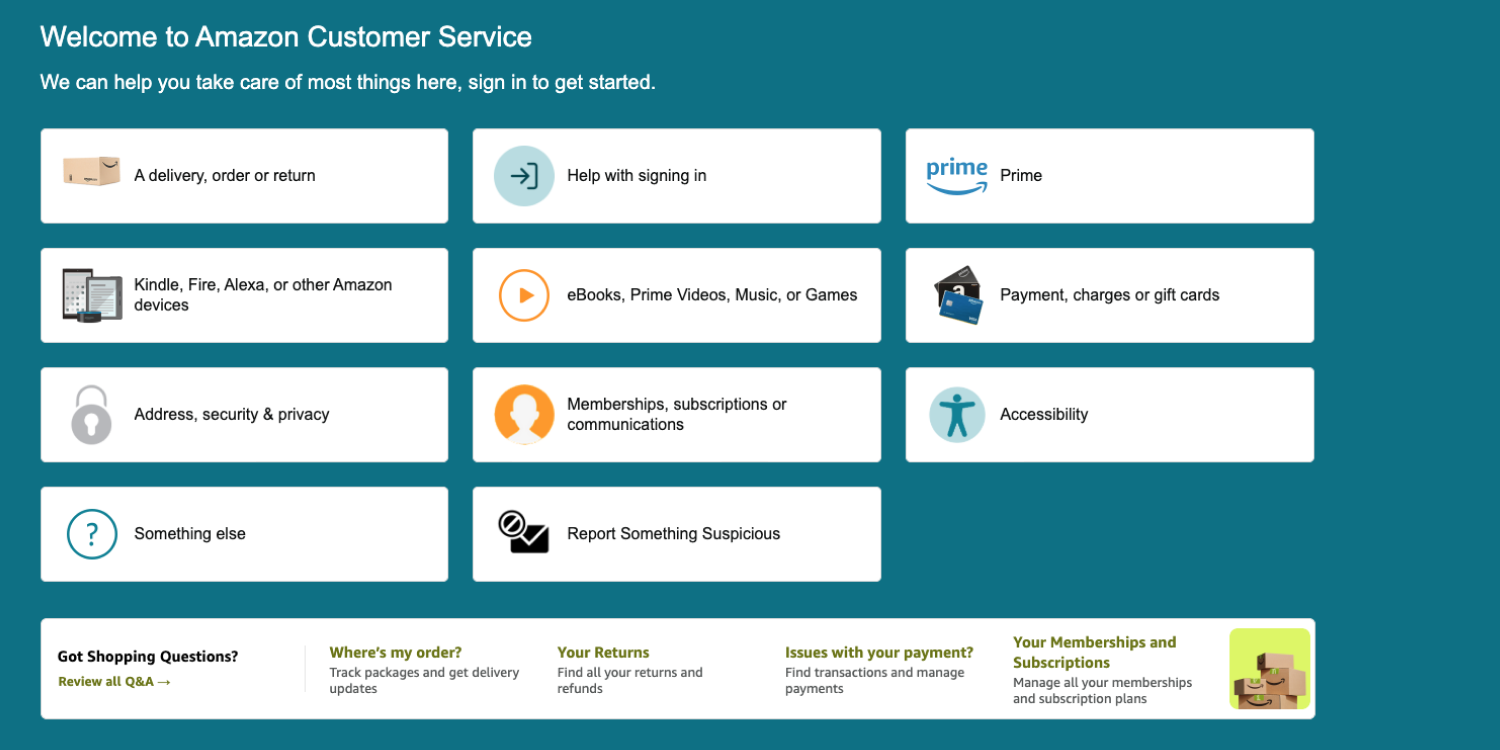
This is a place where clients can resolve their issues just by typing them into the search bar. In a matter of seconds, they receive a list of articles on the topic. Everything is quick and easy.
However, this is not the only reason for implementing customer self-service. There is much more below. 👇
The Benefits of Customer Self-Service Options for Businesses
For customers, self-service is about time and control. The first is straightforward – nobody likes waiting on hold for long. The second is more profound. Some people hate being dependent. That's why resolving easy issues like chatbot design independently satisfies people.
From a company's point of view, there is a list of benefits as well:
Cost-efficiency. Even one self-service channel, like an FAQs chatbot, reduces the number of routine queries. Imagine, instead of 60 client calls during a day, you have 40. The logic is simple: the fewer customer requests you get, the fewer support agents you should hire.
Faster reply time and issue resolution. With self-service tools, customers receive answers here and now, not hours or days, as is usually the case.
24/7 support. Clients can use your product even at night. Unfortunately, your customer service team is available only for fixed hours. That's when FAQs, help pages, and chatbots become your night shift.
Increased sales. Quick and quality issue resolution makes clients feel happy and confident about the product. The better customer experience you provide, the happier your users are and the higher chance they will buy your product and recommend it to others.
How to achieve that? Start by choosing a customer self-service format 👇
The Best Examples of Customer Self-Service Support
Multiple innovative ways exist to offer customers self-service support, such as IVR or an AI chatbot. But it is better to start with a classic. Let's take a look at this list of customer self-service examples.
Powered chatbot
Chatbots handle basic requests really well. They gather data, send inquiries to the right departments, and drop useful links, so that you don't need a live agent.
NYX is a great example. Its bot doesn't just greet you, but finds your perfect foundation shade, suggests products for your skin type, and offers a virtual try-on as well as provides ecommerce payment options.
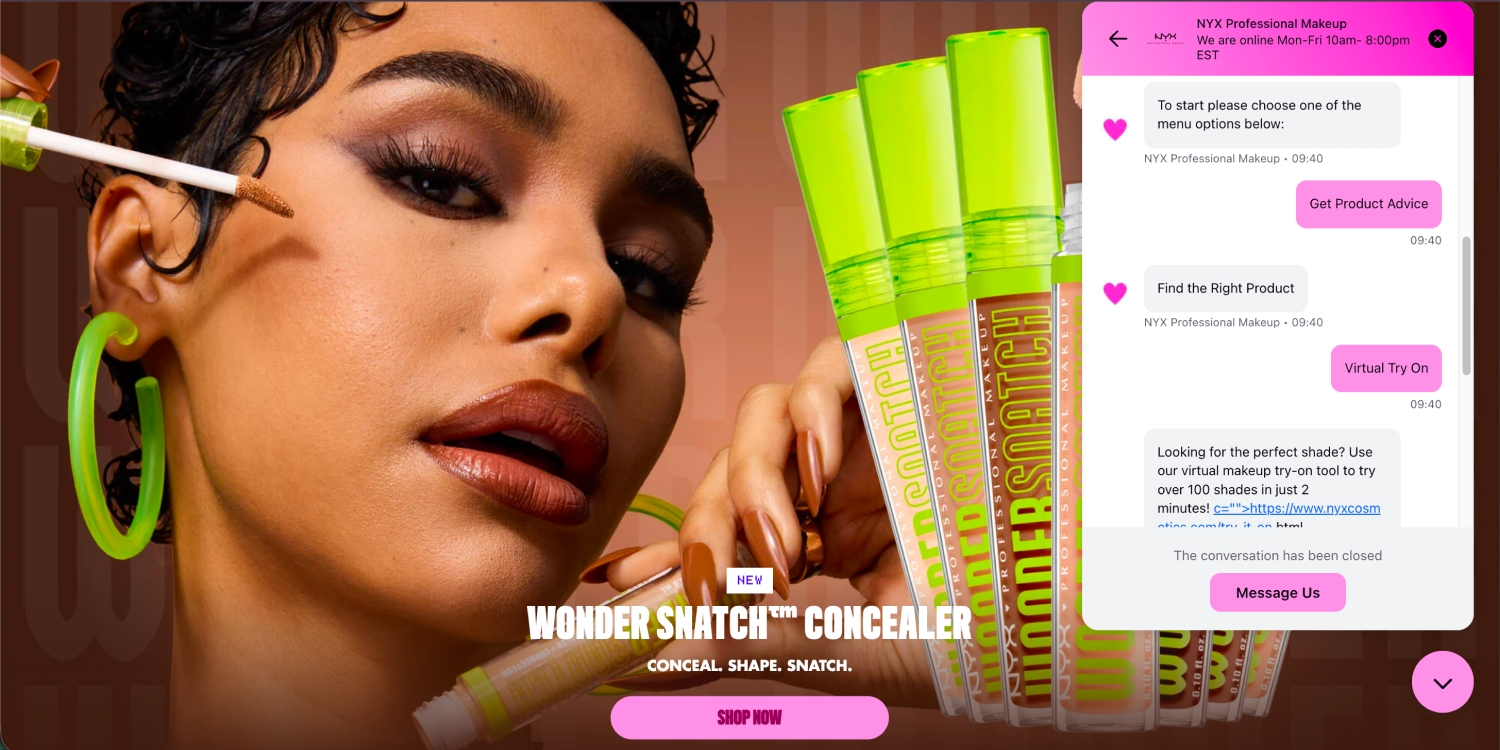
Yeah, I know that chatbots aren't mind-blowing anymore. We're used to them. But, for example, seeing bookings jump by 11% after Sephora launched its chatbot assistant? That makes you think for a second.😏
Self-service knowledge base
From the customer perspective, a help center, also known as a knowledge base, is a collection of information about a company, its products and services, processes, etc. It usually contains step-by-step guides with screenshots or documentation, but it can also include video tutorials.
For better navigation, a search bar and topic categories are always presented on the first page. Sometimes, they are complemented with FAQs, like in the Fenty Beauty case:
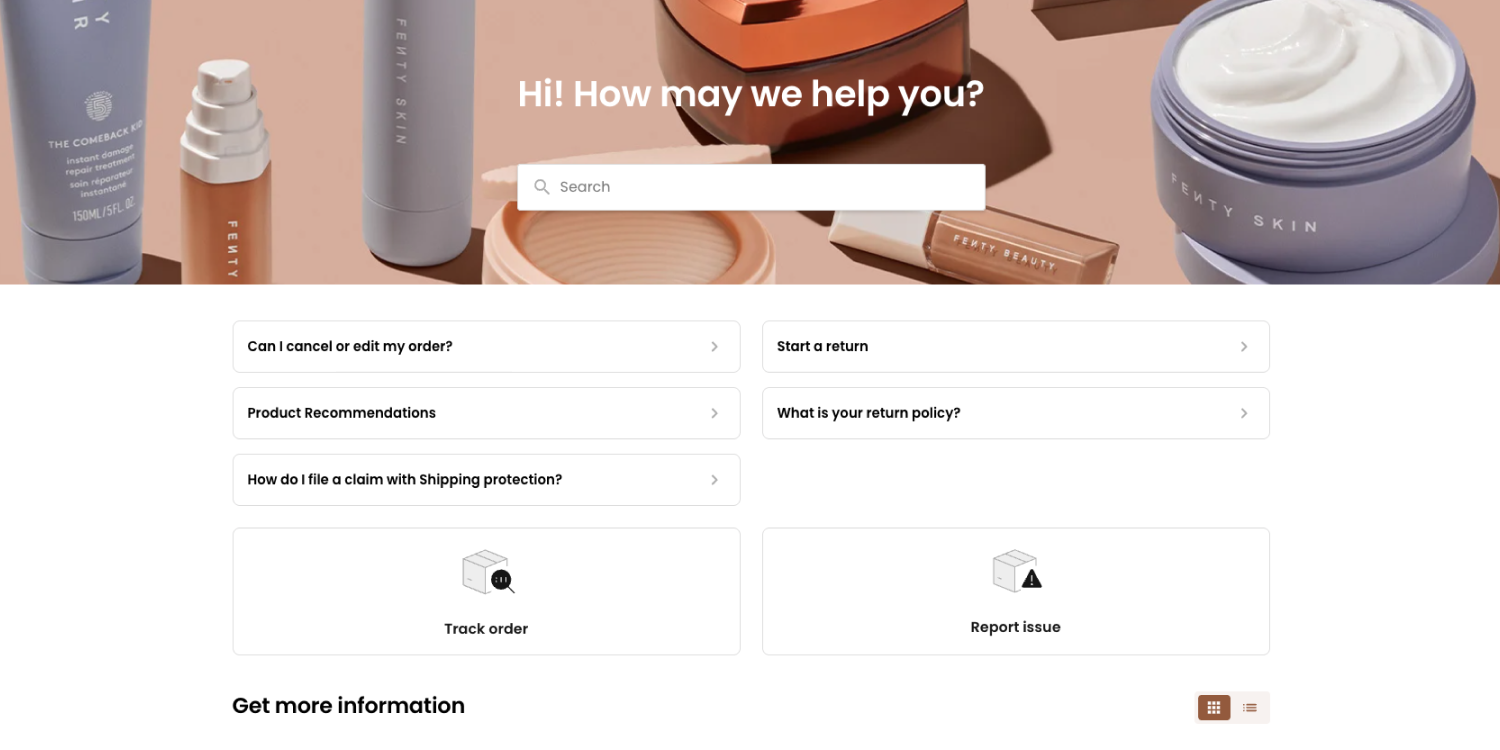
I really like how this is implemented at Fenty Beauty. They follow all the key best practices for knowledge base structuring: clean architecture, no clutter, and every article leads either to a clear answer or to contacting support. On top of that, businesses can also streamline customer support by integrating email APIs, which automate responses and ensure users receive timely updates on their inquiries.
How-to videos
This is the next level stuff, everyone talks about it, but not everyone implements it. A how-to video is a great alternative to a knowledge-based article, especially for people who better understand information visually.
In the screenshot, you can see that Selfnamed has a dedicated Resources section that include all the necessary self-service options, including video guides covering topics from ingredient selection to building a skincare brand.
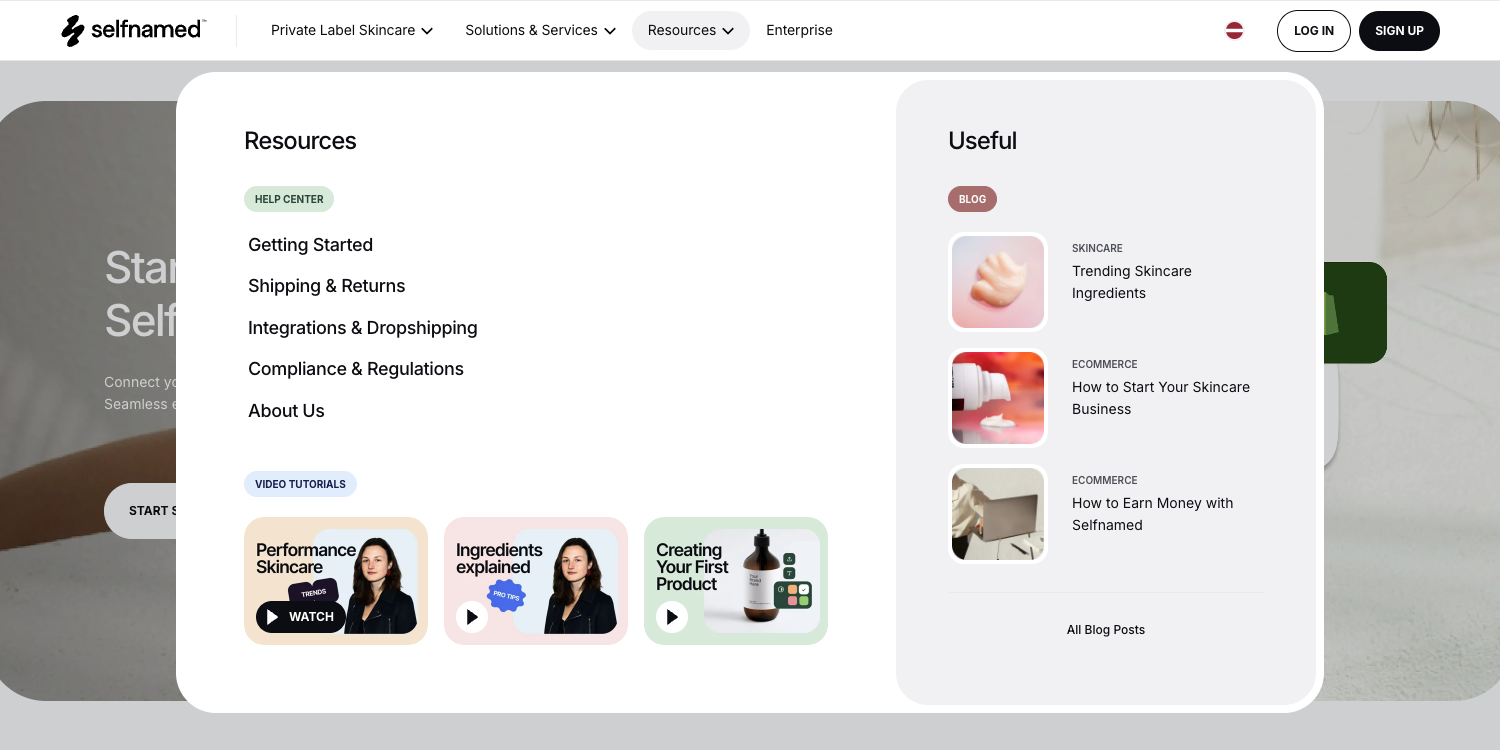
There's also separate Video How-To Series section, which not only shows "how to use the product” tutorials, but a total educational base for customers. It is much more effective for product feature demos, feature setup, and tech issue troubleshooting.
Community or online forum
The idea is simple: customers share experience, ask questions, and help each other, while the team steps in when necessary. The best part about customer community is that usually you don't even have to ask anything. Just type your question into the search bar, and someone already asked it year ago
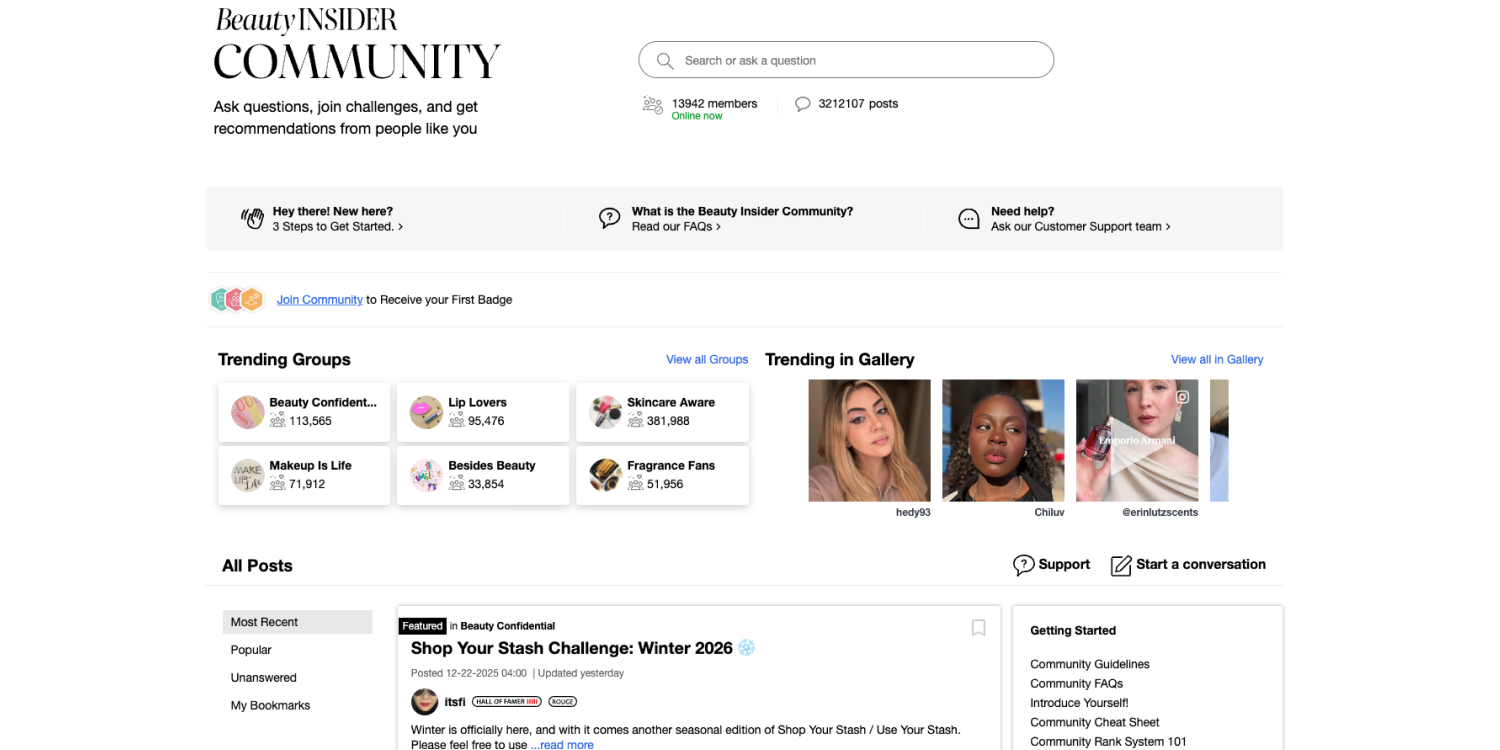
The Sephora Beauty Insider Community is one of the strongest examples in the beauty industry. It's a forum where people get advices, share their experience with real Sephora customers – with photos, videos, reviews, and even live chat before purchase. Clients feel a sense of belonging, the brand receives customer feedback. Win-win situation.
FAQ page
The Frequently Asked Questions page or section is the first place users search for information. It usually consists of 5-10 blocks, each with a common customer question and a short answer.
Spotify FAQ page.
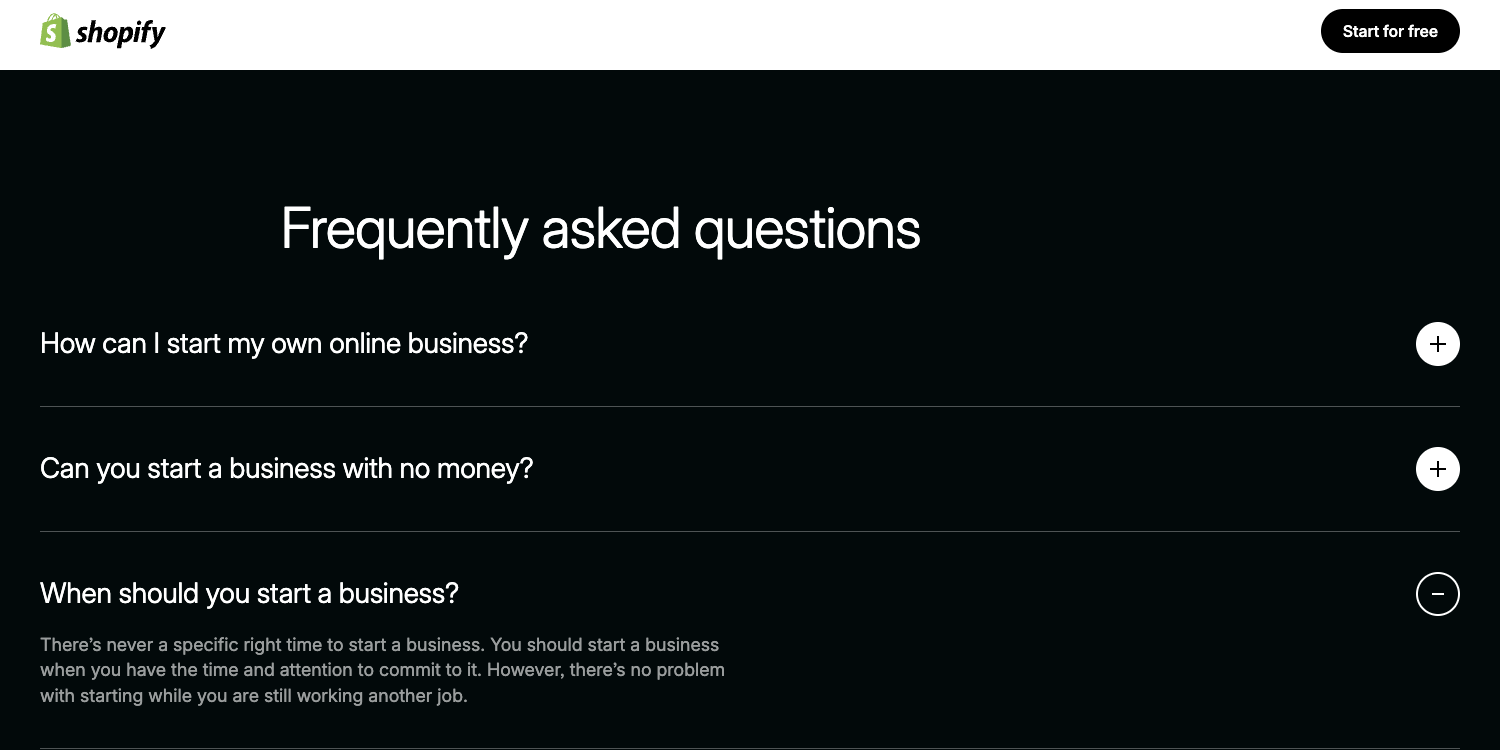
If you want to provide the best customer experience, each answer text should include a link to a relevant guide or customer support contact.
Sounds easy. But is it so? Find out below 👇
Top 5 Customer Self-Service Best Practices To Improve Customer Satisfaction
There are common issues like difficult navigation, generic responses, broken links, or software bugs that can hinder the user experience. How to avoid it? Follow the best strategies businesses use to skyrocket customer satisfaction and drive growth.
Here are some of them:
1. Ensure you provide a user-friendly interface
A self-service knowledge base or community is always about a ton of info. Without proper organization and design, it may feel so overwhelming and difficult that users would contact live agents.
You definitely know about things like the menu, font color, or search bar. Here is a thing businesses tend to miss when designing an interface: limit the options you provide on a page.
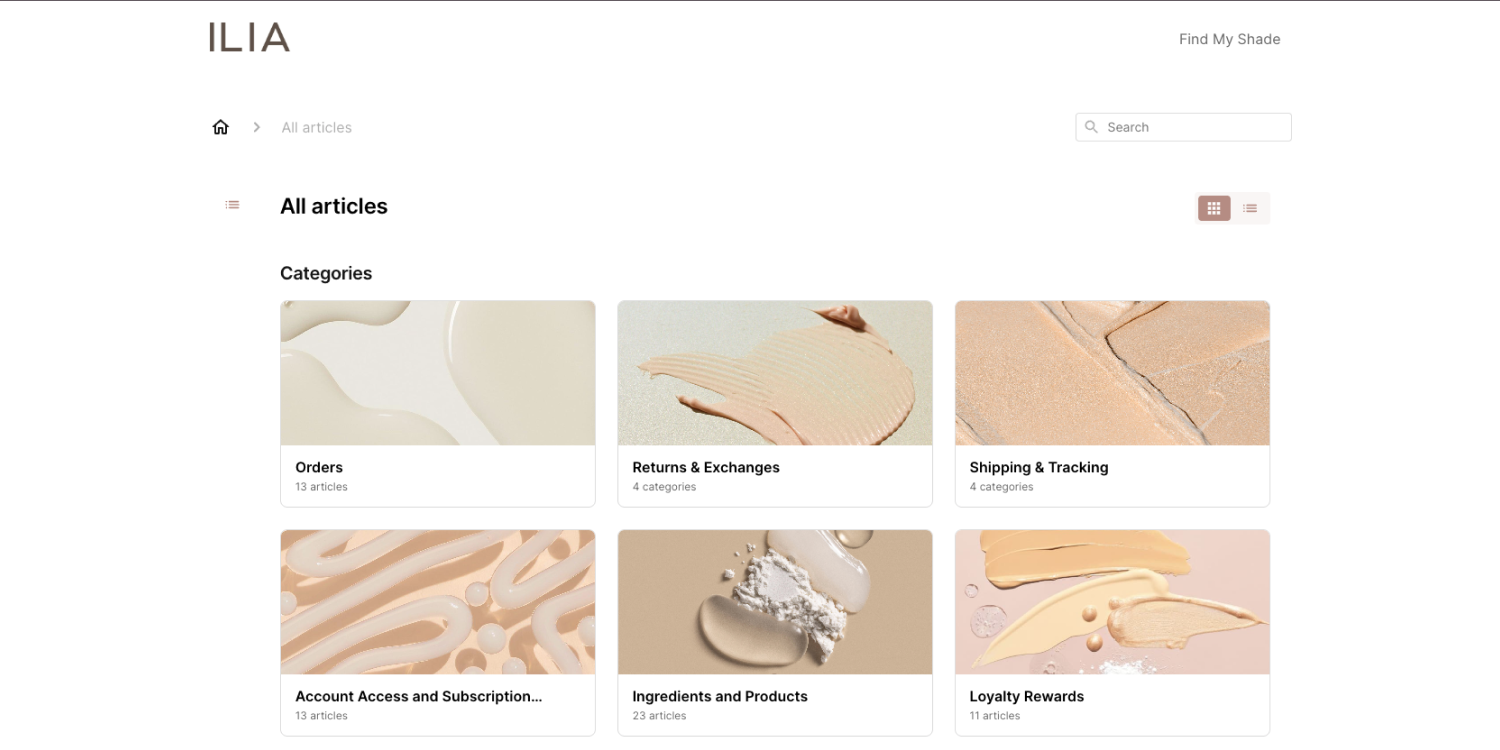
Look at how ILIA implemented this principle. Their customer portal shows a limited number of sections, and within each, a small set of grouped articles and guides. Finally, no overload and endless scrolling. The structure is clear, so you don't even need a search bar, just pick a section, and you are already there.
2. Create a multichannel self-service strategy
Providing self-service and live support options on websites, social media, messengers, email, and phones sounds expensive. So start with implementing this choice where your customers are, like a website, WhatsApp, or Facebook, email, and a website.
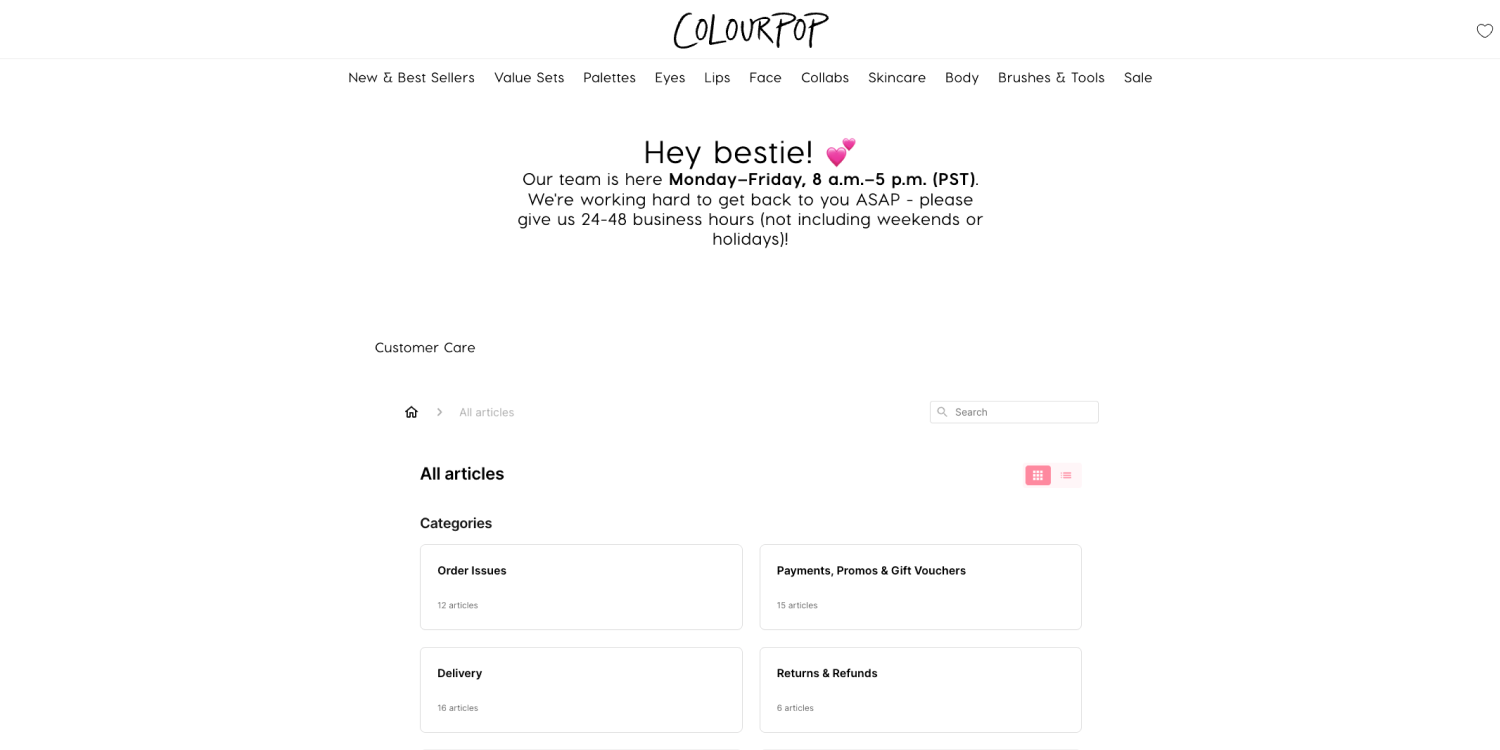
ColourPop shows how self-service and human support can actually complement each other. In every article, you instantly see how to reach a real person, and each guide ends with a contact form link.
As an option, you can offer your website visitors the option to scan the dynamic QR code to join a company forum on Slack or Discord.
Here is how an ideal customer journey looks: the majority of website pages should have an FAQ section, and each Q&A should link to a relevant knowledge base post. If this doesn't resolve the customer's issue, the customer can contact support via live chat, phone, email, or messenger.
3. Help users find self-service easily
Here are the basics every company should remember when implementing a service channel:
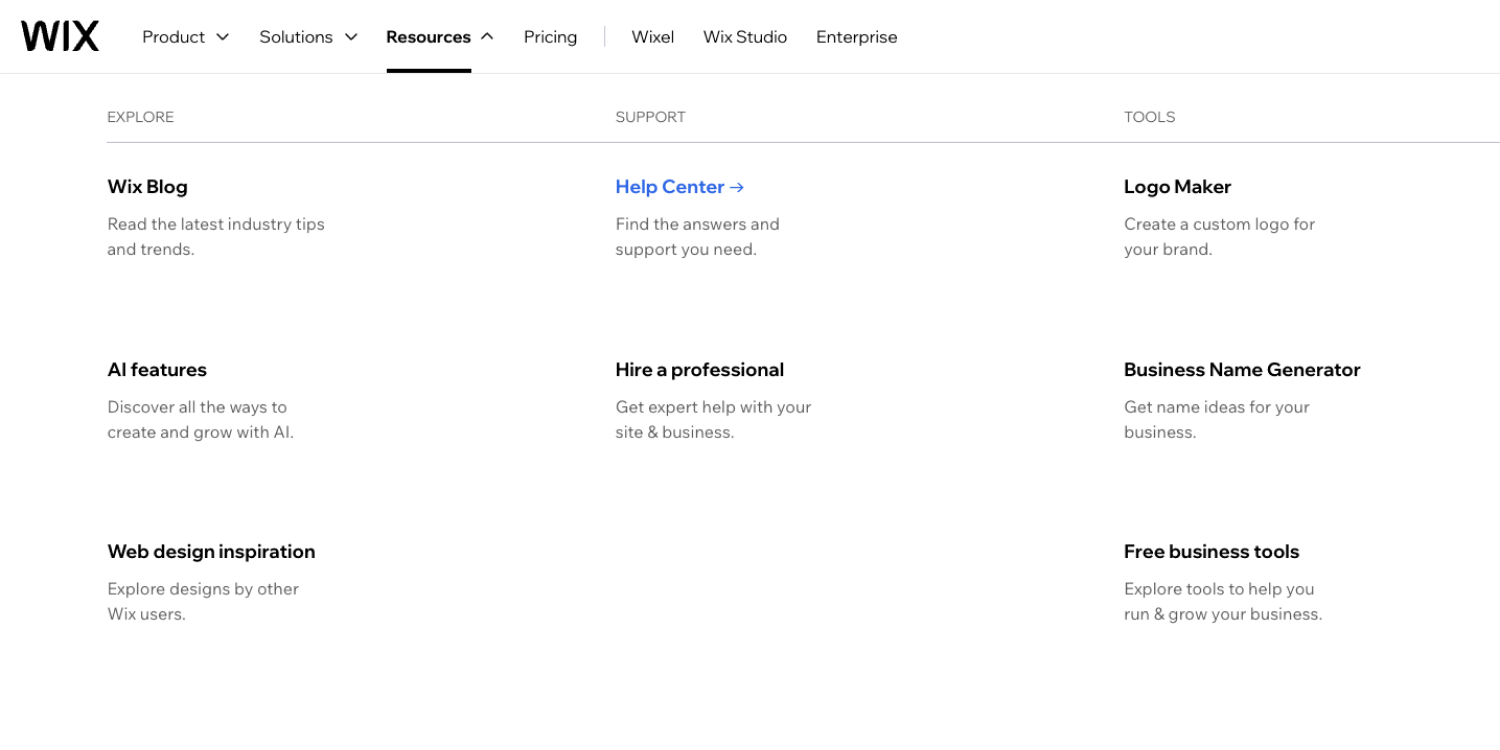
Add a help center link to the header menu of your website, so it can be visible from any page. For example, look at how the Wix website builder did it:
Make a live chat/chatbot widget icon that is always available in the right corner of your website pages. A good example of how this benefits both the brand and the customer: MacKeeper, a Mac security and performance tool, has its support chat built in a visible place.
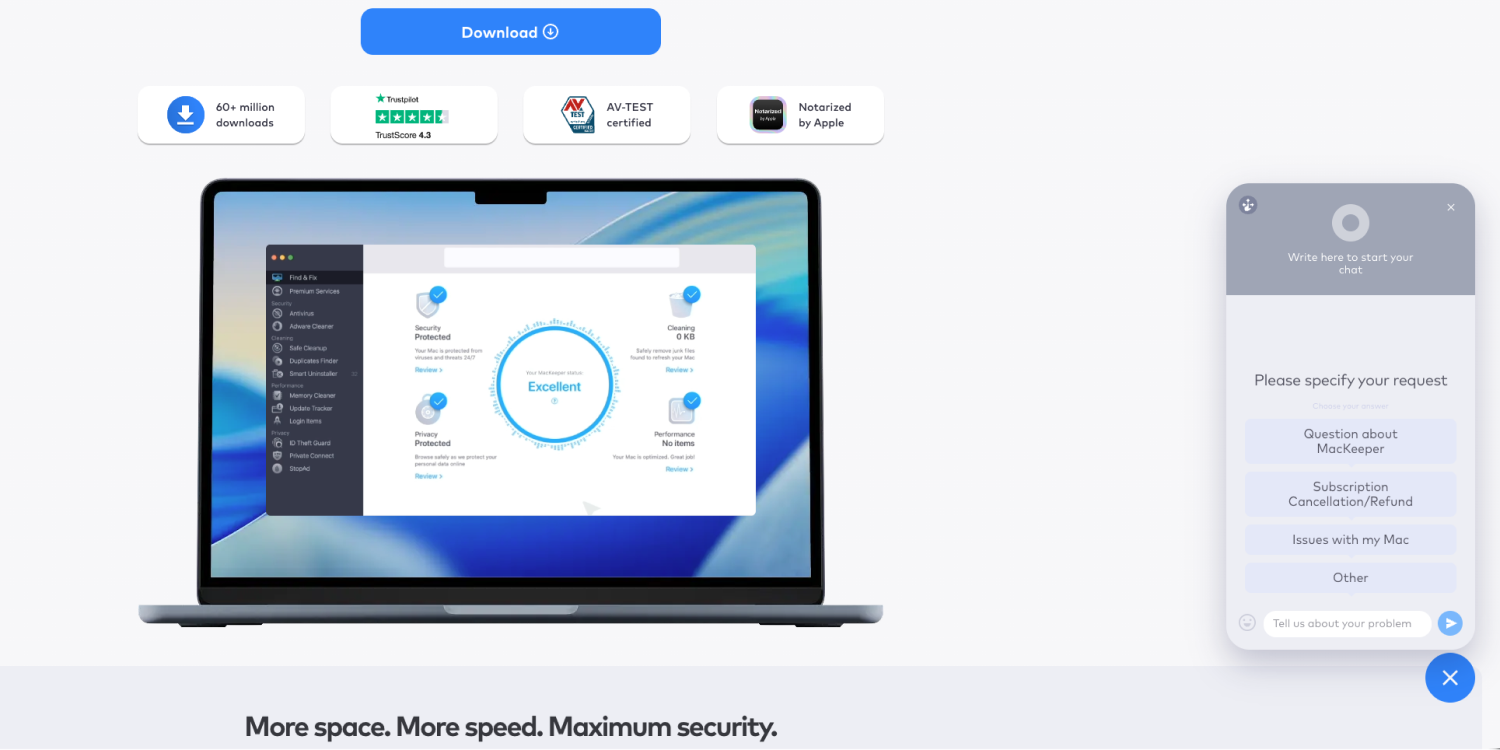
It can be reactive, starting a dialog after visitors click on it, or proactive, with pop-up messages engaging in a conversation like in the example above.
Implement SEO techniques when writing knowledge base articles. Thus, your information will show up in search results.
4. Make the service experience feel personal
Yes, that isn't just about marketing communications. The more personalized customer experience you provide during the issue resolution process, the happier your users will be.
Here are a few ideas to implement first:
Ensure customers don't have to re-enter customer data they mentioned somewhere on your website. It can be logins, issue descriptions, personal data, etc.
Personalize contact options and knowledge base posts on your website or app according to the user's SLA.
Welcome authorized users by name or email.
5. Track customer satisfaction metrics and improve your service content
You can only improve something by measuring its current efficiency. So start by setting up key metrics to track. It can be:
Number of knowledge base visitors.
Percent of users who interrupt the dialog with a chatbot and those who end it.
Number of phone calls, emails, or live chats your team has during a week/month.
Positive or negative customer feedback.
There are so many service tools to measure all these metrics that you can easily get lost. I’d advise starting with Intercom alternatives research. This is the best way to find an affordable and full-fledged solution for effective self-service customer support that meets your customer expectations without breaking the budget.


Let’s Recap
Providing users with an opportunity to resolve issues on their own is one of the basics lying in the core of business success. This customer support approach, from self-service channels and service content to AI-powered service solutions, makes people happy and loyal, which inevitably leads to revenue growth.
You definitely read about the impressive customer self-service results highlighted in the statistics. Impressed, some businesses dive into self-service implementation. But here is a thing – it doesn’t work without audience research. What are their typical issues? What questions do they ask support agents?
Building an effective self-service customer support starts with understanding your customers. In-depth knowledge of the client’s needs and preferences (what kind of assistance they need, which service channels they use, etc.) should be your first step, implementing self-service practices with tips from this article – second 😉
Good luck!
Must read