Private Label vs White Label: What’s the Real Difference for Your Skincare Brand?
Table of Contents
So, you’ve got the dream. You want to source products, curate a beauty line, and set up a business without enormous capital. You want to see your brand on someone’s bathroom vanity.
But then you start Googling.
Suddenly, you’re drowning in industry jargon. White label. Private label. OEM. Custom formulation. It’s enough to make you reconsider whether to launch or scale your brand.
If you’re feeling a bit lost, don’t worry. You’re in the right place.
Today, we’re breaking down the white label vs private label debate. We’ll look at the pros, the cons, why they’re often interchanged, and which solution actually makes sense for your brand.
Let’s dive in.
What Is White Label?
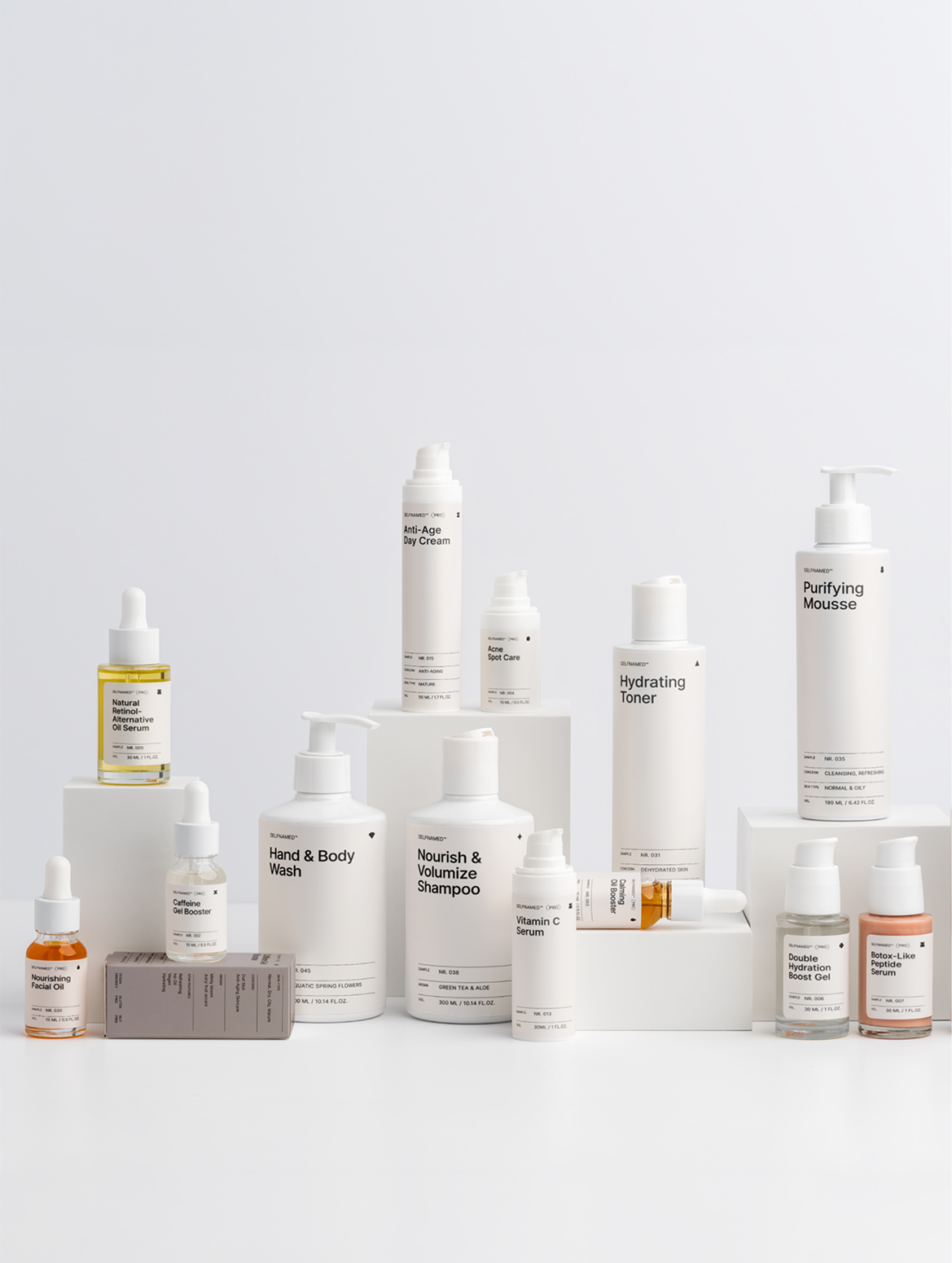
White label is the ready-to-wear version of skincare product sourcing.
A manufacturer creates a product – let’s say, a Vitamin C serum. They’ve already done the research and development. They’ve sourced the ingredients. They’ve tested the stability.
Dozens (or even hundreds) of different brands source the exact same high-quality serum from the manufacturer, using the product as a base for their own branding and customization.
As a brand owner, your job is simple. You pick the product, slap your label on the bottle, and start selling. You aren't changing the formula. You aren't tweaking the scent. You’re buying a finished product and focusing entirely on the marketing and brand development.
Pros of white label
Speed to market: Since the product is already made, you don't have to wait months for lab samples. You can often go from "idea" to "shipping orders" in just a few weeks.
Low barrier to entry: White label is usually the most affordable way to start. You don’t have to pay for expensive formulation fees or multiple rounds of testing.
Simplicity: You don’t need to be a chemist. The manufacturer handles the complicated stuff. You just focus on building your community and making sales.
Cons of white label
Limited differentiation: Since the formulas are pre-developed, your branding and storytelling have to do the heavy lifting. While customers rarely notice shared formulas, your unique brand identity is what will truly set you apart.
Manufacturer dependency: You rely on your partner for consistency and availability. If they update a formula or retire a product, you’ll need to adapt, so choosing a reliable long-term partner is key.
Pricing competition: When similar products exist on the market, there can be pressure to compete on price. Successful brands avoid this by focusing on a premium experience that justifies their value.
What Is Private Label?
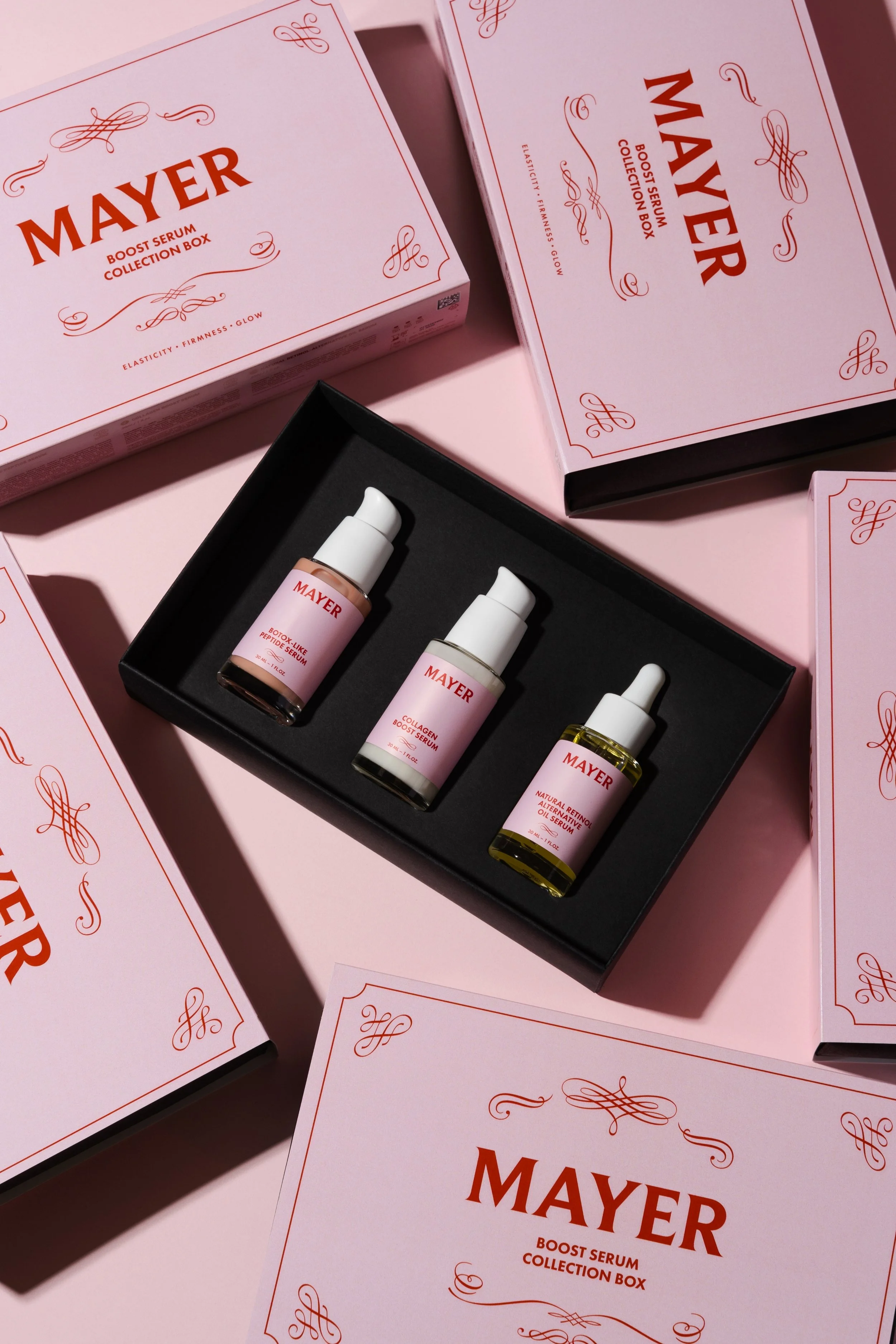
In a traditional private label vs white label comparison, private label is where you get more control. While both are product customization solutions and often refer to the same thing, private label implies a more bespoke service.
With private label, the manufacturer produces a product exclusively for your brand. While they might start with a "base" formula, you often have the option to modify it. Want to add a specific botanical extract? Change the fragrance? Affect the packaging construction?
That’s private label territory. If you want ways to make private label skincare that feels uniquely yours, this is the most straightforward way without physically mixing the ingredients in a lab.
Pros of private label
True brand differentiation: Your product isn't just a copy. You can talk about unique ingredients or your specific formulation tweaks, making your marketing more powerful.
Higher perceived value: You control the ingredient list, and can tailor the formula to match specific brand claims – like a trending ingredient or a niche skin concern. Exclusivity makes it easier to position your product as a premium solution.
More control: You have a say in the "story" of the product. From the texture to the ingredient list, you’re building an asset that belongs to your brand.
Cons of private label
Higher MOQs (minimum order quantities): Customization isn't free. Manufacturers often require you to buy thousands of units at once to justify the setup and production.
Longer timelines: Tinkering with formulas takes time. You’ll need to test samples, check stability, and wait for custom production. Expect months, not weeks.
More complexity: You’ll need a deeper understanding of your target audience and the ingredients they want. There’s more room for error if you don’t know what you’re doing.
Want to learn more? Check out our key tips to choosing a private label skincare manufacturer.
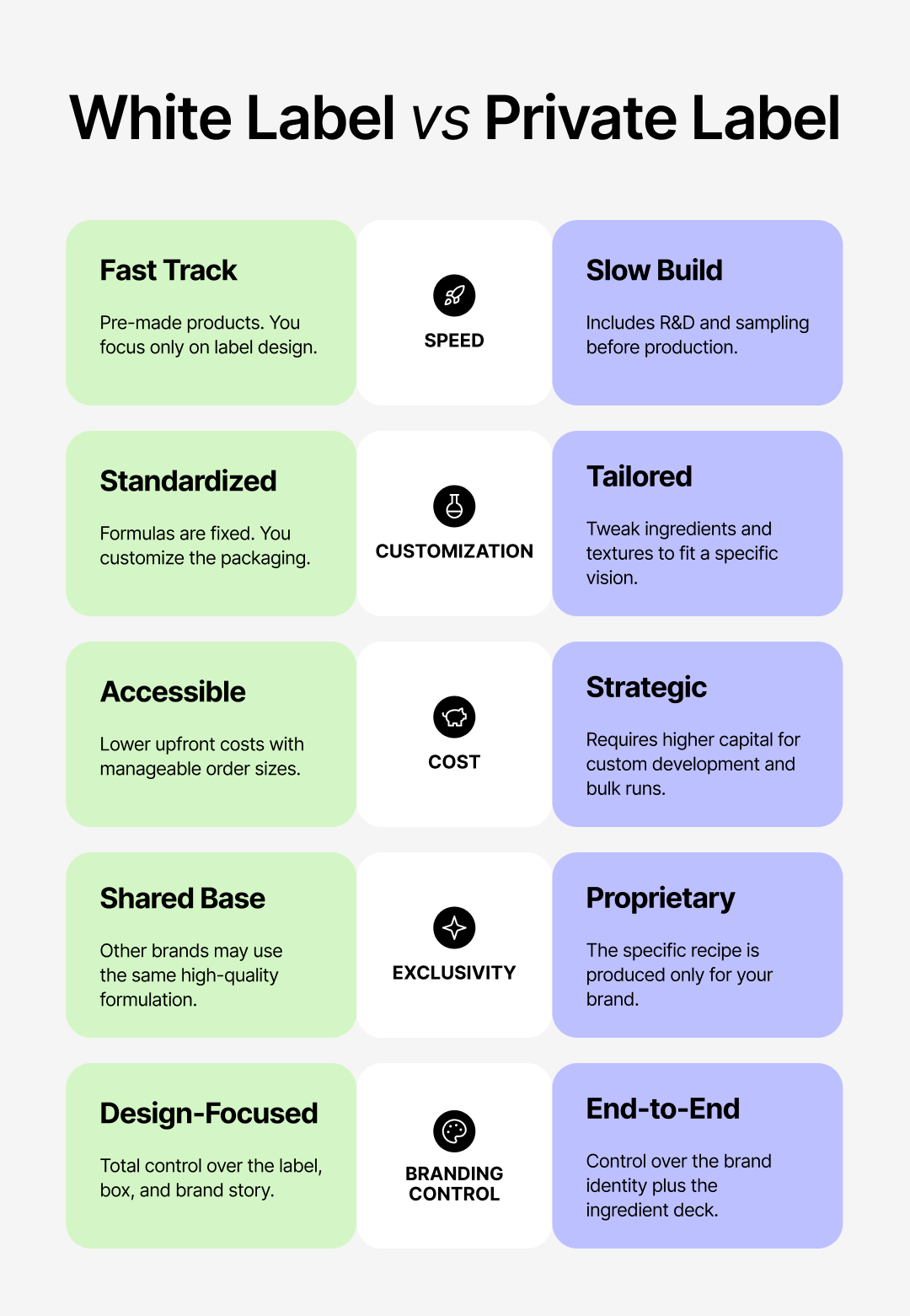
White Label vs Private Label: Key Differences at a Glance
Private Label vs White Label Dropshipping
If you’ve walked the rounds of ecommerce, you’ve probably heard of dropshipping. But how does it work when you actually want to build a "brand"?
Before we look at the branded options, let's talk about regular dropshipping. In a standard dropshipping setup, you list generic, unbranded products on your site. When someone buys, the factory ships a "no-name" bottle directly to the customer.

In skincare, this is a brand-killer. Nobody wants to put a mystery, unbranded cream on their face. To build trust, you need your name on the bottle. Here’s how that works:
White Label Dropshipping
This is the most common model for startups. You choose a manufacturer that holds the ready-made stock for you. When an order hits your store, they slap your brand label on the bottle – like packaging design, logo, colors, or specific templates – and ship it out.
When does white label dropshipping work best? When you’re looking to test the market without storage headaches and develop a profitable ecommerce brand without the huge investment.
Private Label Dropshipping
This is a more complex and involved business model. With a private label dropshipping model, you usually spend time developing a formulation with the manufacturer, and then pay for a bulk batch of your customized product upfront. You then ship that inventory to a 3PL (Third-Party Logistics) warehouse that handles the dropshipping for you.
Because private labels involve custom formulas, manufacturers are less likely to offer on-demand dropshipping for it. You own the inventory; they just handle the shipping.
White Label or Private Label: Which One Should You Choose?
There is no "wrong" answer here. It all depends on your budget, your goals, and your timeline.
Choose white label if:
You want to test fast. You have an audience and want to see if they’ll actually buy skincare from you before you invest.
You have limited capital. You’d rather launch without the risks of high investment costs. Perfect if you’re building a skincare line as a side business.
Differentiation is not your priority (yet). You just want a high-quality product that works, and you’re confident your branding will do the heavy lifting.
Choose private label if:
You want brand equity. You’re in this for the long haul and want to build a company that could eventually command a market niche or be acquired.
You care about ingredients. You’re a specialist or professional who has a specific vision for a "Hero Product" that doesn't yet exist on the shelf.
You plan to scale. You’re ready to invest in larger inventory runs to get a better price-per-unit.
Where Selfnamed Fits In
At Selfnamed, we realized that most founders feel stuck between these two worlds. You don't want generic white label that looks cheap, but you’re not ready to scale with private label.
We help you develop a brand around premium, ready-made formulations that deliver the certified organic quality your customers expect. Coupled with the low MOQs and speed of white label production, we’ve got all the resources you need to get started right away.
And once your idea lands and you’ve built a successful brand? We’re ready for the next step. For brands looking to scale, we offer private label options for custom formulations, helping you create a unique product for that bespoke and premium edge.
Low MOQs: Never pay for what you don’t sell – reduce risk with on-demand production.
Premium organic products: Our products are certified organic, natural, and high-performance.
Custom branding: We offer quality design tools and custom services for that high-end look.
Global fulfillment: Manufacturers in the EU and US (with private label options) ready to deliver to customers throughout the world.
Fast launch: Pick products, add your branding, set up with our sales channel integrations and start in days with automated order fulfillment.
Possible formulation adjustments: Unlike rigid white label, we’ve got solutions in place to change and transform products to your vision.
We’re the perfect middle ground for the young but serious brand. A high-quality design and fulfillment platform for white label with the room to grow with custom formulation solutions.
Curious how we compare to others? Read our Selfnamed vs Blanka comparison.


Frequently Asked Questions
-
Exclusivity. White label products are supplied to many brands who just change the label. Private label products are created exclusively for a single brand, often with formula modifications.
-
You can customize the label and packaging, but not the stuff inside. For formula changes, you need private label.
-
Neither is better – it's about your needs and stage of business. White label is better for speed, while private label is better for long-term brand value.
-
Yes, but you usually have to own the inventory first and use a fulfillment partner (3PL) to ship it for you.
-
For most, a hybrid approach – like Selfnamed – is best. It offers high-quality white label products with low risk and fast launch times, and the potential to scale with custom private label solutions in the future.
Must read