Anti-aging Skincare for Men: 2026 Ingredients & Routine Guide

Table of Contents
Most men were never handed a skincare routine the way they were handed a razor. So the category talks to them in the language of maintenance, when the truth is more encouraging: skin responds to good care, and men's skin responds well.
This guide skips the product roundups. It's ingredient-first. Learn what each active formulation actually does, and you can build an anti-aging routine that works, or curate a line and sell one.
No hype, no comparisons to an unrealized ideal. Just the ingredients that earn their place, and how they benefit you or your business.
Key Takeaways
Men's skin ages later but faster, so support started early pays off long-term.
Sunscreen is the single most effective anti-aging product, because UV damage causes most premature aging.
A working anti-aging routine is four steps: cleanse, treat, moisturize, and protect with SPF in the morning.
The same anti-aging skincare routine works for most skin types, with the products adjusted to how oily or dry the skin runs.
Retinol alternatives, vitamin C, hyaluronic acid, peptides, and niacinamide are the core anti-aging ingredients worth knowing for reducing wrinkles and fine lines.
The men's skincare market is growing, and Selfnamed makes launching a men's anti-aging brand possible without order minimums.
How Men’s Skin Ages, And Why It’s Different
Here's what nobody mentions to men: their skin doesn't age slower, it ages later and then seemingly all at once. Men tend to start with thicker skin and more collagen than women do, which buys a decade of not thinking about it. Then the account comes due. The good news is that most of what shows up isn’t fated, which means it can be repaired with the right ingredients.
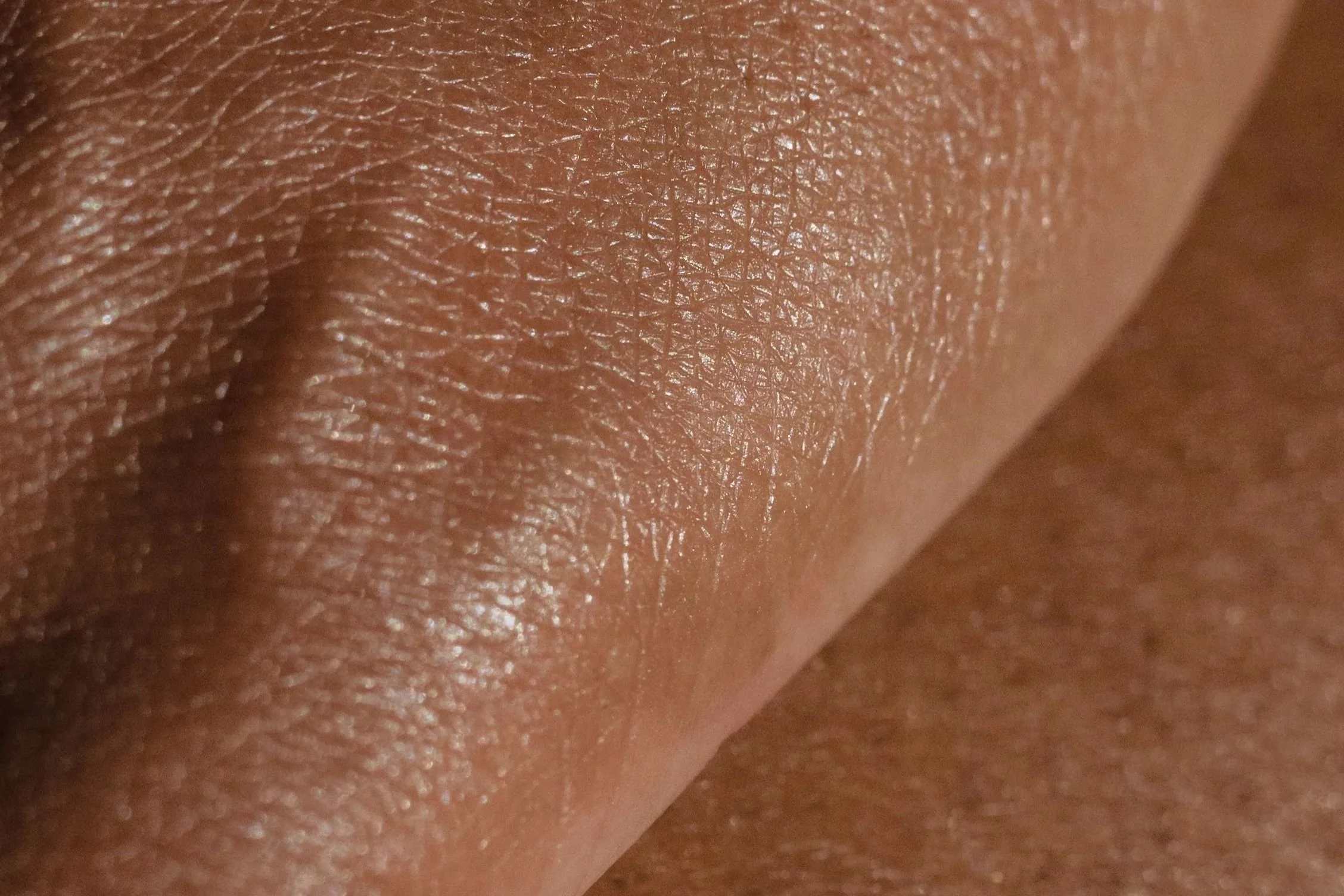
Aging itself is a natural part of life. Give skin what it needs and the aging process improves naturally, holding onto youthful looking skin for longer.
What Changes Under the Surface
Three things slow down as men’s skin gets older:
Collagen production drops, so skin loses its scaffolding and starts to sag.
Elastin production falls, so skin stops bouncing back the way it used to.
Cell turnover slows, so dead skin cells sit on the surface longer, leaving skin looking dull and rough.
The skin barrier also gets thinner and more porous with age. A weaker skin barrier means moisture escapes faster and irritation gets in easier, which is why dehydrated skin and sensitivity become more common the older a person gets.
The Signs Men Actually Notice
The early signs of aging in men usually show up around the eyes first. Think fine lines, crow's feet, and dark circles.
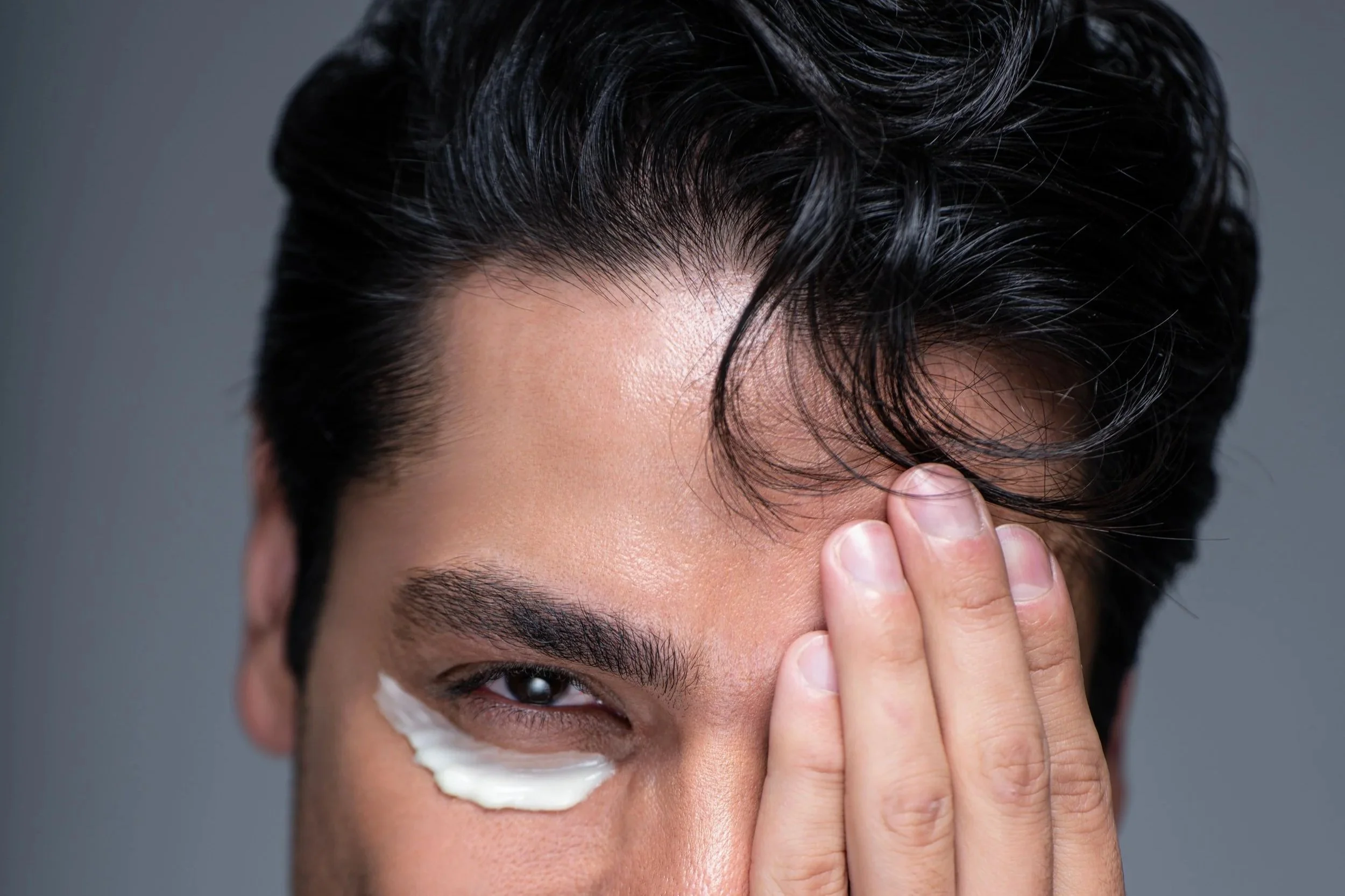
From there the common signs spread: deeper fine lines and wrinkles, forehead creases that stick around even at rest, a loss of skin firmness along the jaw, and a rougher texture overall.
Fine lines come before deep wrinkles. Surface dullness comes before either. Other visible signs include uneven skin tone, dark spots from sun exposure, and a general tired-skin look that no amount of sleep seems to fix. It's biology, and biology responds to the right skincare products.
What Causes Premature Aging in Men
Most premature aging is preventable, and one thing causes more of it than everything else combined. The sun.

The Skin Cancer Foundation attributes up to 90% of visible skin aging to the sun rather than the calendar.
Sun exposure is the leading cause of premature wrinkles, dark spots, and uneven skin tone. Everything else is a supporting actor.
Sun and UV damage.
UV rays break down collagen and elastin faster than time alone ever could. Dermatologists call this photoaging, and unprotected UV exposure is responsible for the majority of what people think of as "getting older."
Environmental stressors.
Pollution and daily grime generate free radicals that chip away at skin. These environmental factors speed up the visible signs of aging, especially in places like the city or workplaces with raw materials, which spread high pollutants.
Lifestyle.
Poor sleep, smoking, and heavy drinking all show up on the face. Alcohol dehydrates skin and leaves it looking tired. Smoking starves it of oxygen and dulls it.
No routine at all.
The most common cause is also the most fixable. Skin left uncleansed and unprotected ages faster because nothing is helping it repair or defending it from the elements.
The Anti-Aging Ingredients That Actually Work
You don't need twelve products. As a private-label manufacturer, we formulate with every active on this list, so here's the honest version of what each one does and where it gets oversold. These are the key ingredients that carry every good anti-aging routine, the ones that drive real skin renewal rather than a temporary glow. Learn these key ingredients once and you'll read any label in seconds.
Retinol and Retinol Alternatives
Retinol is the most proven anti-aging ingredient there is. It speeds up cell turnover, which helps fade dark spots, smooth rough texture, reduce fine lines, and soften wrinkles over time.
Few ingredients have as much clinical evidence behind them for reducing wrinkles and improving firmness. The catch is that a retinol serum can irritate skin that isn't used to it, causing flaking and redness for the first few weeks. That's where retinol alternatives come in.
Ingredients like bidens pilosa (a plant extract) and pro retinol deliver similar cell-renewal benefits with far less irritation, which makes them a smarter starting point for sensitive skin or first-timers. Look for a formula built around one of these if you want the smoothing effect without the peeling.

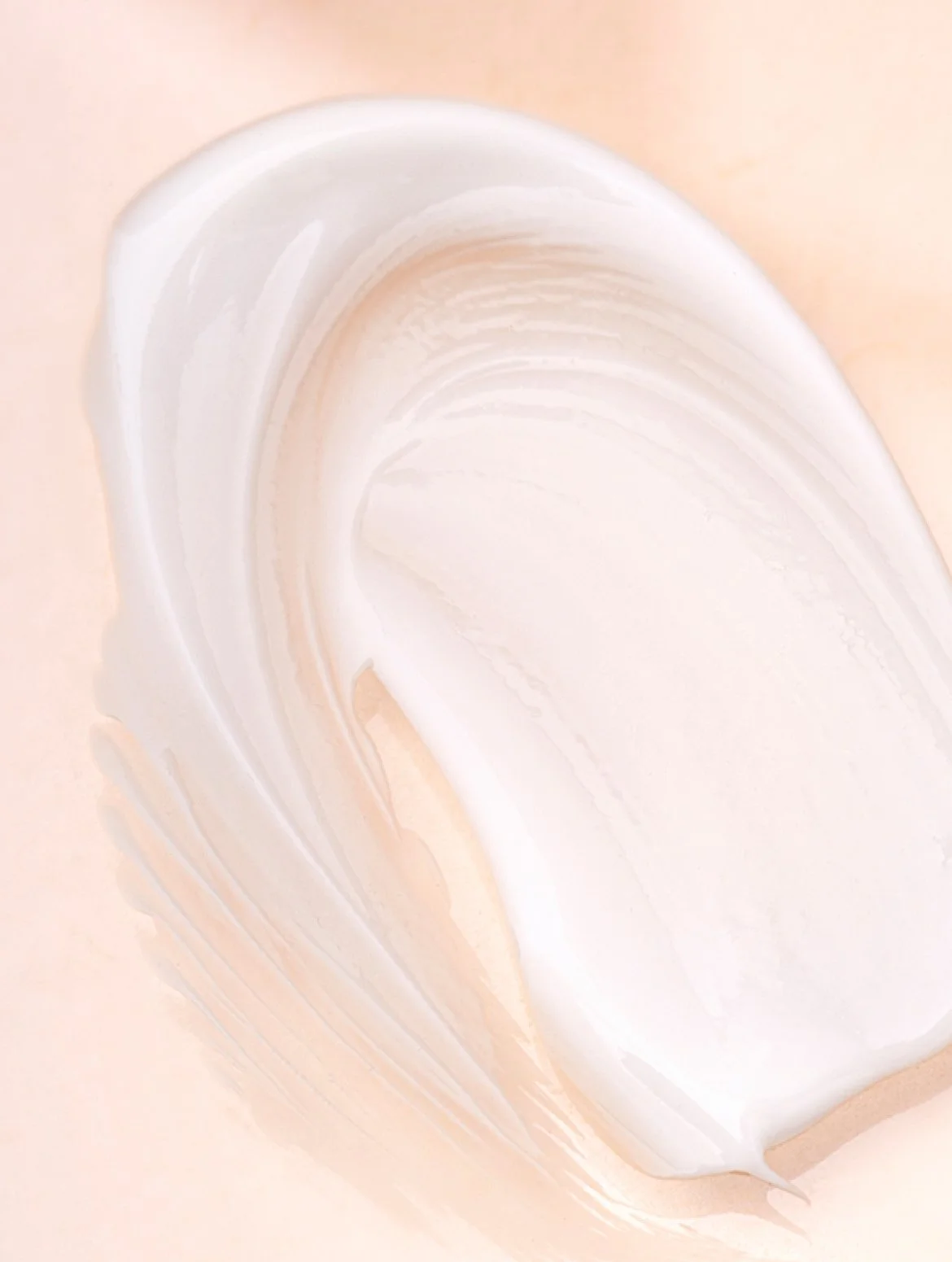
How to use it. Start with a pea sized amount at night, two or three times a week, then build up. Retinol and retinol alternatives both make skin more sun-sensitive, so this is a nighttime ingredient only.
Selfnamed's recommended products:
Vitamin C
Vitamin C is the daytime champion for promoting brightness and even skin tone. It's an antioxidant, so it neutralizes the free radicals from UV rays and pollution before they damage collagen.
It also fades dark spots and supports collagen production, which is why it's one of the most useful anti-aging ingredients for men dealing with dullness or an uneven skin tone.
Look for an anti-aging serum with stabilized vitamin C, and use it in the morning under sunscreen. The two work as a team: a vitamin C serum fights the damage, sunscreen blocks it.

How to use it. Apply it in the morning on clean skin, before your moisturizer and sunscreen. It can sting a little at first, so start every other day if your skin runs reactive.
Selfnamed's recommended products:
Hyaluronic Acid
Hyaluronic acid is the fastest way to make tired skin look better in a single use. It holds up to a thousand times its weight in water, so it plumps up the surface, keeps skin hydrated, and makes fine lines look softer almost immediately. It doesn't rebuild anything long-term, so treat it as hydration rather than repair, but as hydration it's hard to beat.
Dehydrated skin is behind a lot of what men blame on aging, and hyaluronic acid fixes that directly. You'll find hyaluronic acid running through most face care ranges, from serums to moisturizers, because it pairs well with nearly everything else.
How to use it. Layer a hyaluronic acid serum onto damp skin, then seal it with a face cream to trap the water in. On bone-dry skin it can pull moisture the wrong way, so dampen the face first.
Selfnamed's recommended products:
Peptides and Collagen
Peptides are the ingredient to reach for once you care about skin firmness. They signal your skin to ramp collagen production back up, which over months can improve firmness and reduce wrinkles at the source rather than just hiding them.
That makes peptides one of the best ingredients for reducing wrinkles caused by collagen loss, and for reducing wrinkles that creams can only mask. Peptides won't work overnight, but they're one of the few ingredients that address the actual cause of sagging.
A dedicated peptide serum or collagen-boosting serum is the format to reach for, and the gentler ones are fine for sensitive skin. For firmer skin a year from now, a peptide is where to start.

How to use it. Apply a peptide serum morning or night, after cleansing and before moisturizer. Peptides are mild and layer well, so they slot in at either end of the routine without a fuss.
Selfnamed's recommended products:
Niacinamide
Niacinamide is the quiet multitasker. It strengthens the skin barrier, calms redness, controls oil so pores are less likely to clog, and gradually evens out skin tone.
It plays nicely with every other ingredient on this list, which makes it an easy addition to almost any routine. The simplest way to get it in is a lightweight daily niacinamide moisturizer that lists it high on the label.
How to use it. A daily moisturizer with niacinamide works morning and night. It's one of the few actives that sits happily alongside everything else, including retinol and vitamin c, so you don't have to schedule around it.


Selfnamed's recommended products:
Glycolic Acid and Lactic Acid
Glycolic acid and lactic acid are exfoliating acids (AHAs) that dissolve the glue holding dead skin on the surface. Clearing away dead skin cells speeds up cell renewal, smooths rough texture, and gives skin a fresher look.
Glycolic acid is the stronger of the two and better for tough or oily skin, while lactic acid is gentler and adds a little hydration, so it suits drier or more sensitive skin. A glycolic acid exfoliator handles the tougher end, while a lactic acid serum can target dark spots more gently.
How to use it. Use an acid once or twice a week at night, and never on the same night as retinol. Always follow with sunscreen the next morning, since freshly exfoliated skin burns faster.

Selfnamed's recommended products:
Antioxidants and Natural Oils
Antioxidants are a defense layer against environmental stressors that drive aging. Vitamin E is the classic one, and it shows up across antioxidant-rich face and body formulas, often paired with vitamin C to protect skin through the day. Vitamin E also helps skin hold moisture, which is why it turns up in so many night creams.
Natural oils earn their place too. Aloe vera calms and hydrates, avocado oil is rich enough for very dry skin, and linseed extract brings soothing omega fatty acids.
One caveat: coconut oil is popular but comedogenic, meaning it can clog pores on the face, so keep it below the neck. For facial nourishment, a formulated facial oil blend is a safer bet than raw kitchen oils.
How to use it. A vitamin C serum each morning covers most of your antioxidant needs. When adding a facial oil, it should be the last step at night, patted over moisturizer to seal everything underneath.

Selfnamed's recommended products:
Ceramides and SPF
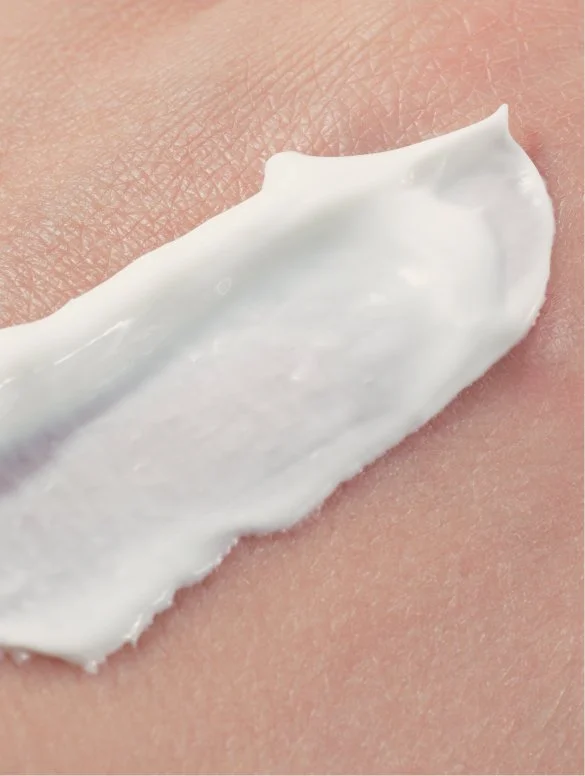
Ceramides rebuild the skin barrier itself. They're the mortar between skin cells, and topping them up keeps moisture in and irritation out, which matters more as that barrier naturally thins with age. A ceramide-rich night cream is the easiest way to use them.
And then there's sunscreen, the single most effective anti-aging product ever made. Nothing else on this list matters much if you skip sun protection, because UV damage undoes the work of every other ingredient. Daily SPF is non-negotiable. A broad-spectrum SPF30 belongs at the end of every morning routine, rain or shine.
How to use it. Ceramides go in night cream as the last step before bed. Sunscreen goes on every morning as the final daytime step, a full teaspoon for face and neck, reapplied if outside for hours.

Selfnamed's recommended products:
Caffeine (for the eye area)
The skin around the eyes is thinner than anywhere else, so it shows dark circles, puffiness, and crow's feet first. Caffeine is the ingredient that targets them: it constricts blood vessels to reduce puffiness and the look of dark circles, which is why it anchors nearly every eye cream and eye serum. Pair it with peptides or CBD for crow's feet and fine lines.
How to use it. Pat a small amount of eye cream or eye serum around the orbital bone, morning and night, and never drag the skin. An eye cream isn't essential, but it's the most targeted fix if the eye area is your main concern.

Selfnamed's recommended products:
Anti-Aging Ingredient Cheat Sheet
Here's every ingredient above in one place, so you can match an active to a concern:
| Ingredient | Fine Lines & Wrinkles | Dark Spots & Tone | Hydration | Firmness | Barrier | Texture | Dark Circles |
|---|---|---|---|---|---|---|---|
| Retinol / retinol alternatives | ✓ | ✓ | ✓ | ✓ | |||
| Vitamin C | ✓ | ✓ | |||||
| Hyaluronic acid | ✓ | ✓ | |||||
| Peptides and collagen | ✓ | ✓ | |||||
| Niacinamide | ✓ | ✓ | ✓ | ||||
| Glycolic and lactic acid | ✓ | ✓ | |||||
| Antioxidants (vitamin e) and oils | ✓ | ✓ | |||||
| Ceramides | ✓ | ✓ | |||||
| Sunscreen (SPF) | ✓ | ✓ | |||||
| Caffeine (eye area) | ✓ |
Simple Anti-Agin Skincare Routine for Men
A good anti-aging skincare routine is four steps: cleanse, treat, moisturize, and protect with SPF. Run all four every morning, and the first three at night with a richer treatment. The simplest anti-aging skincare routine beats an elaborate one that’s too tough to repeat.
Morning routine:
Wash and cleanse.
Vitamin C serum.
Moisturizer, ideally lightweight and fast absorbing.
Sunscreen.
Night routine:
Wash and cleanse.
Treat with retinol alternative, or an exfoliating acid on alternate nights.
Night cream. This is where the richest anti-aging creams belong, and a day cream with SPF plus one night cream are the only anti-aging creams most men need.
Eyes (optional):
An eye cream or eye serum for fine lines and wrinkles, patted on morning and night.
For dark circles and crow's feet, reach for a caffeine or peptide eye cream, the most targeted eye cream option.
How to Build a Routine for Different Skin Types
The principle stays the same across every skin type. While all skin types age, wrinkles and dryness can appear differently, so matching products to the right skin type is what makes a men's anti-aging routine actually work.
Dry or dehydrated skin. Go richer. Lean on hyaluronic acid, ceramides, and a heavier night cream. Choose lactic acid over glycolic acid for gentler exfoliation, and avoid anything stripping.
Oily skin. Go lighter. Gel moisturizers and oil-free formulas keep skin hydrated without adding grease, and niacinamide helps control shine and stops pores from clogging. You still need moisturizer, so don't skip it.
Sensitive skin. Go slow. Retinol alternatives beat straight retinol, fragrance-free formulas reduce reactions, and you should add one new product at a time. Ingredients like niacinamide and ceramides calm and protect sensitive skin rather than provoking it.
Combination skin. Mix and match. Lightweight products where oily (usually the forehead and nose), richer ones where dry (usually the cheeks).
The Opening in the Men's Skincare Market
Somewhere in reading this, one of two things happened. Either you now know how to look after your own skin, or you noticed how few brands talk to men like adults and started wondering what it would take to be one that does.

If it's the second one, the timing is on your side. The men's skincare market is projected to grow from about $16.9 billion in 2024 to $23 billion by 2030, and yet most anti-aging products with these exact ingredients are still packaged and marketed solely to women.
Very little is specifically formulated and specifically marketed for men's anti-aging concerns. That's a real gap in men's anti-aging, and gaps are where brands are built.
Start Selling Anti-Aging Skincare for Men With Selfnamed
Here's the part that used to be impossible: the formulas in this article already exist, and you can put your own label on them and curate a men’s skincare line that works for your customers.
Create a free Selfnamed account, and you're on a private-label platform with no order minimums. It’s the fastest way to take a men's anti-aging line from idea to market. Three steps:
Pick your formulas. Our catalog runs 200+ clean, ready-made products, most COSMOS certified by ECOCERT. The peptide serums, retinol alternatives, vitamin C, and niacinamide formulas from this guide are all there.
Design your label. Use the free Design Studio to upload your logo, set your colors, and generate a product mockup in minutes.
Sell. Launch under your own brand, backed by fulfillment hubs in the EU and US that ship to 30+ countries. Every formula is pre-registered with the FDA and CPNP, so you focus on the brand, not the paperwork.
Test first. Order a single bottle to try the formula and packaging before you commit. From there, how you sell is your call: connect a storefront and dropship products on-demand as customers order them, or buy in bulk once you know what moves. There are no minimums either way.
Browse the face care range to see which of these anti-aging formulas could carry your brand.


The Bottom Line
Nobody teaches men skincare. Learning the main steps on an ingredient level is the best way to start and teach others. Now you have the part that actually matters: a short list of ingredients that work, a four-step routine, and the one habit, daily sunscreen, that outperforms every cream on the shelf. Pick a few actives, stay consistent, and give it a few months. The skin will show it.
And if the bigger gap caught your eye, the one where almost nobody makes anti-aging skincare for men, that's a brand waiting to happen. The formulas already exist. The business is yours to make with Selfnamed.
Frequently Asked Questions
-
The honest answer is their twenties, mostly by adding daily sunscreen and a moisturizer. Prevention is far easier than reversal, and the early signs you head off in your twenties are the deep wrinkles you won't be trying to soften in your fifties.
-
Not really. Men's skin is thicker and oilier on average, so lighter textures and oil control often suit it better, but the active ingredients that fight wrinkles and aging are identical. A peptide works the same regardless of who applies it, and the anti-aging creams sold to men contain the same actives as the ones sold to women. Most anti-aging creams marketed to men differ in packaging and scent, not formulation.
-
Hydration from hyaluronic acid is immediate. Brightness from vitamin C takes a few weeks. Real change in fine lines, wrinkles, and skin firmness from retinol or peptides takes two to three months of consistent use. No product reduces wrinkles overnight, so anything promising it is selling you something.
-
Retinol is the stronger, more studied ingredient, but it commonly irritates skin at first. Retinol alternatives like bidens pilosa and pro retinol give you gentler cell renewal with less flaking and redness, which makes them the better choice for sensitive skin or anyone starting out.
-
The best anti-aging creams for men contain proven key ingredients: retinol or a retinol alternative, peptides, niacinamide, or ceramides, plus hyaluronic acid for hydration. A day cream with SPF and a richer night cream cover most needs, and a separate eye cream handles the delicate eye area.
Price rarely tracks quality here, so judge anti-aging creams by their key ingredients, not their packaging. If an eye cream lists peptides or caffeine near the top, it's worth a look. You don't need a shelf of them either: two well-formulated anti-aging creams beat six mediocre anti-aging creams every time.
-
Only if the eye area bothers you. The skin there is thin and creases first, so a dedicated eye cream reaches fine lines and dark circles that a regular face cream can't treat as gently. Look for an eye cream with peptides or caffeine. Skip it if your under-eyes look fine, since an eye cream is a targeted extra, not a core step.
-
Yes, and it's the least optional part of the whole routine. UV rays cause the majority of visible aging, so daily sun protection does more to keep skin looking youthful than every serum combined. Wear sunscreen every day, even when it's overcast.
Must read