Table of Contents
Framed your license yet? Opening a business might take a bit longer.
This guide breaks the process into seven stages, for new graduates and for estheticians leaving a salon job. Each stage covers what to decide, what it costs, and the mistakes owners make most often, with advice from the teams behind some of the top salon services in the industry.
Let's take a look.
Key Takeaways
The business model you choose sets most of your startup and monthly costs.
First steps for solo esthetician businesses usually include a state license, a registered business, and liability insurance before the first paid client.
Self-employed estheticians pay their own income tax and self-employment tax, often through quarterly estimated payments.
A booking tool with online booking, deposits or a card on file, and automatic reminders covers most day-one needs.
Retail adds income to each visit without adding hours on the treatment bed.
Repeat clients come more often from rebooking at checkout, follow-up messages, and reviews than from discounts.
1. Pick Your Esthetician Business Model

Your business model decides where clients find you, what you pay every month, and which licenses you need. Most new esthetician owners start with one of four setups.
| Model | Upfront spend | Fixed costs | Best for | Watch out for |
|---|---|---|---|---|
| Home studio | Low: equipment plus any room changes your state requires | Low: utilities, insurance, software | Estheticians with a spare room and a local client base | State rules for home salons, local zoning, and parking |
| Salon suite or room rental | Low to medium: deposit, first month's rent, furnishing | Medium: weekly or monthly rent | Estheticians leaving a salon with clients who'll follow them | Contract length, extra fees, and what the rent includes |
| Mobile | Low: portable bed, kit, and travel cases | Low to medium: car, fuel, and travel time | Bridal, events, and clients who want treatments at home | Which services your state allows outside a licensed space |
| Your own studio lease | High: deposit, build-out, furniture, signage | High: lease, utilities, establishment license | Owners who plan to hire or rent rooms to others | A multi-year lease signed before you know your demand |
Note: Home studios usually need more than a spare room:
In Texas, for example, a salon attached to your home needs its own establishment license and a separate public entrance.
California's board sets the same separate-entrance rule for home salons.
Check your state board of cosmetology and your city before you buy equipment for a home setup.
What Changes When You Go From Employee to Owner
Going solo is common in this field. 29% of skincare specialists are self-employed.
Your treatments stay the same. The only difference is that the work around them grows.
In a salon job, someone else answers the phone, orders the products, pays the card fees, and carries the insurance. As an owner, all the in-between operations become your responsibility, along with the marketing, the bookkeeping, and the cleaning between clients.
Your income changes shape, too. You keep the full service price instead of a commission, but you also pay every business cost out of it, and nobody withholds tax for you.
One more thing to check before you hand in your notice: your employment contract. Some salon contracts include non-solicitation or non-compete clauses that limit how you can contact clients after you leave. Read yours, and ask an employment lawyer if anything is unclear.
What to decide: where you'll work for the first year, and whether you want room to hire or rent space to others later.
What it costs: home and mobile setups keep fixed costs lowest. Your own lease costs the most before the first client walks in.
Common mistake: signing a long lease before you know how many of your clients will follow you.
2. Money and Legal Basics for Starting an Esthetician Business

Before your first paid appointment, a solo esthetician business needs four things in place: the right licenses, a registered business, insurance, and a budget that covers the first months.
Startup Costs for a Solo Esthetician Business
Your costs fall into one-time setup costs and monthly running costs.
| Cost item | One-time or monthly | What drives the price |
|---|---|---|
| Licenses and permits | One-time, plus renewals | Your state and city, and whether you need an establishment license |
| Business registration | One-time, plus annual fees in some states | Sole proprietorship or LLC, and your state's filing fees |
| Insurance | Monthly or yearly | Coverage types, limits, and the services you offer |
| Space | Monthly | Home, suite, mobile, or your own lease |
| Equipment and furniture | One-time | Treatment bed, steamer, magnifying lamp, towel warmer, trolley, etc. |
| Back-bar products and disposables | Monthly | Your service menu and how many clients you see |
| Software and card processing | Monthly, plus a fee per card payment | Your booking tool's plan and your payment processor's rates |
| Marketing | One-time, then monthly | Photos, website or booking page, printed cards, any paid ads |
| Cash buffer | Set aside before launch | Your personal bills and how quickly your calendar fills |
The cash buffer is the line new owners skip most often. It pays your rent and your own bills while your client list grows.
Licenses, Business Structure, and Taxes
Your esthetician license lets you practice but it doesn't always cover the place you practice in.
Ask your state board of cosmetology which of these apply to your setup:
Your individual esthetician license, kept active and renewed on time.
An establishment or salon license if you open your own space, including at home.
A city or county business license, which many local governments require.
A sales tax permit if you plan to sell retail products.
Next, choose a business structure.
The U.S. Small Business Administration's guide to business structures explains the two most common options for solo owners:
Sole proprietorship. The easiest to form, and you're one by default if you don't register as anything else. Your business debts are also your personal debts.
Limited liability company (LLC). Protects your personal assets from business debts and lawsuits in most cases. Profits can still pass through to your personal tax return. You'll file formation documents with your state and name a registered agent.
An Employer Identification Number (EIN) makes it easier to open a business bank account. The IRS issues EINs for free, so skip any website that charges for one.
Finally, plan for taxes.
As an owner, you pay self-employment tax on top of income tax.
The IRS sets the self-employment tax rate at 15.3%, which covers Social Security and Medicare, once your net earnings reach $400 a year. If you expect to owe $1,000 or more when you file, you'll generally need to make estimated tax payments through the year.
Keep a separate business account, and move a set share of every payment into a tax savings account. Ask an accountant what that share should be for your state and income.
Insurance to Have Before Your First Client
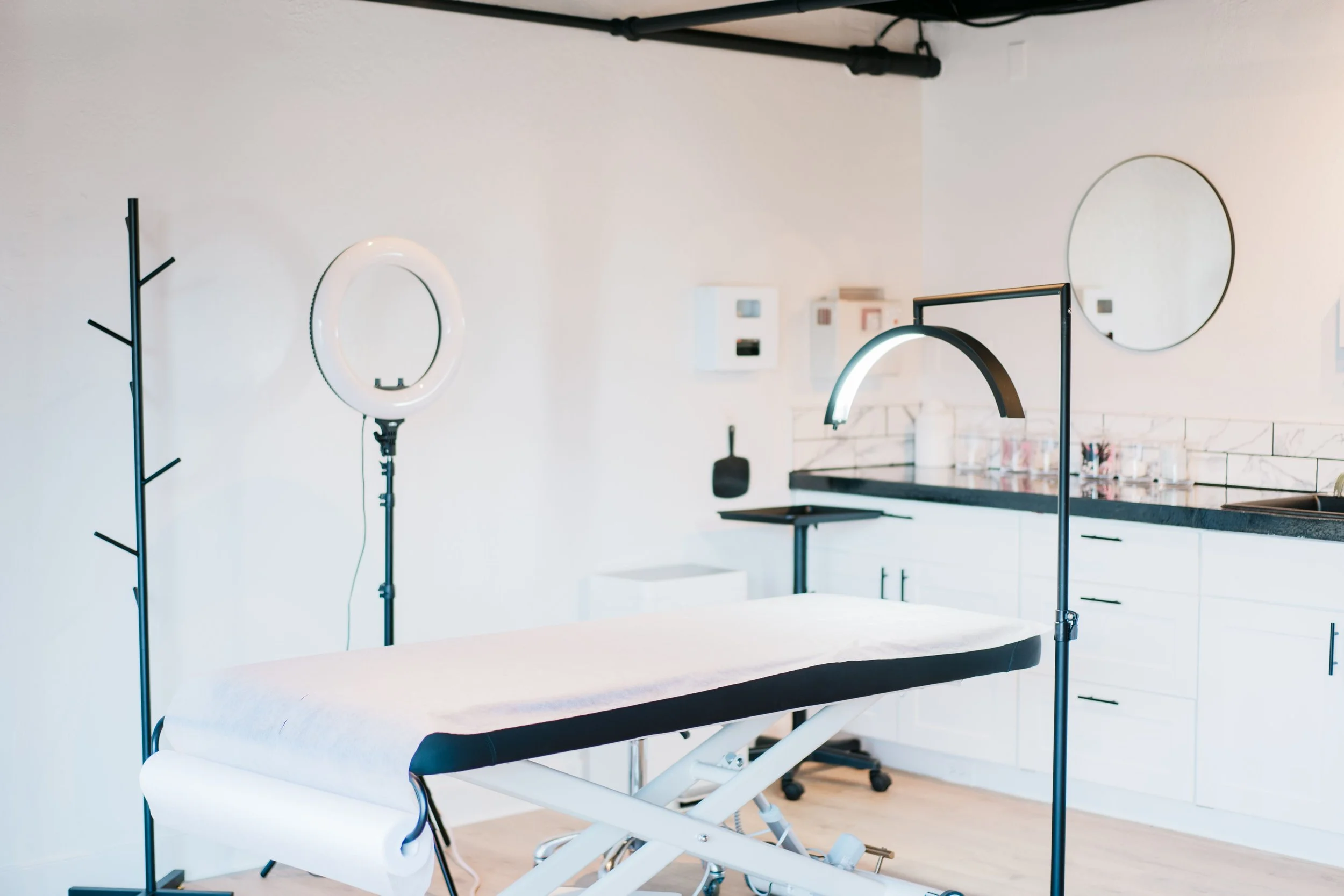
Treatwell, the European salon booking and software platform, sees the same insurance mistake again and again. New owners treat insurance as something to sort once the business takes off.
Their view is that the day you leave a salon job is the day your employer's cover stops protecting you. Two policies matter from your very first client, and they're separate policies:
General liability covers claims like a client slipping in your studio or damage to the space you rent.
Professional liability covers claims that come from a treatment itself, such as a reaction after a peel.
Where Treatwell sees new owners cut corners is protecting their income. Business interruption and equipment cover rarely feel urgent until a closure or a broken machine wipes out earnings.
For a sense of cost, Insureon's median premiums for estheticians who buy through its marketplace are $29 a month for general liability and $42 a month for professional liability.
Your price depends on your state, services, and limits.
If you sell retail products, ask whether your policy covers product liability, too.
Write a Simple Esthetician Business Plan
Your plan needs to answer one question: how many appointments do you need each week to cover your costs and pay yourself?
"Opening your own beauty business starts with a passion for your craft but your first-year plan needs to turn that passion into a sustainable income. Work out how many appointments you need each week to cover your costs and pay yourself and how you'll attract and retain those clients; a common gap is assuming a full diary from day one without allowing for quieter periods and the time it takes to build a loyal client base."
Here's the calculation behind that number:
Say your suite rent, insurance, and software come to $450 a week, and you want to pay yourself $900. Your average facial is $100, and products and card fees take $15 of it, so each appointment leaves $85. That's $1,350 ÷ $85, or about 16 appointments a week.
These figures are illustrative, so swap in your own.
Around that number, a simple plan covers:
Your services and prices, with the time each one takes.
Your ideal client, and where they already spend time online and locally.
Your monthly fixed costs and the cash buffer you'll start with.
How you'll find and keep clients, from referrals to rebooking.
Your retail plan, even if retail starts later.
Our breakdown of salon profit margin shows where the money goes once the business is running.
What to decide: sole proprietorship or LLC, how you'll pay yourself, and how much of each payment you'll save for taxes.
What it costs: license and registration fees, insurance, and a cash buffer for your first quiet months.
Common mistake: spending the tax money. When nobody withholds tax for you, part of every payment already belongs to the IRS.
3. Choose Your Tech Stack

On day one, a solo esthetician needs two things from software: a booking page clients can use at any hour and a way to take deposits or keep a card on file.
Everything else can wait until you have regulars.
What to Set Up Before Your First Booking
Start with the simplest tool that covers the basics. Bookedin's advice is to keep it light:
"For estheticians starting out, we suggest picking the simplest booking tool you can find. A new business already comes with a long list of tasks, so spending days learning complicated software is the last thing you need. If a tool takes more effort to manage than it saves you, it's not doing its job.
At the start, you only need a few basics. Clients should be able to find your booking page online and book any time of day, even while you're with another client. Your calendar should also stay in sync, so you always know what's coming up.
If you take bookings the old-school way, through calls, texts and DMs, admin work can quickly become your main job."
WellnessLiving's Luciana Bridges keeps her day-one list just as short:
"When you leave a salon, you lose the front desk, the reminders, the payment system and the walk-in traffic, and you're now responsible for all of it. So before your first client, set up only what protects your time and makes booking effortless:
- A short menu of five to eight services. Give each an honest duration, buffer time for cleanup and a real price. Let clients book more than one service in a single visit, like a facial plus a brow wax.
- An online booking link with accurate availability. Put it everywhere clients already look: your Instagram bio, your email and text signature, and Google.
- A deposit or card on file. One no-show can cost a solo pro a full hour of income, so protect your calendar from day one.
- Automated confirmations and reminders by text and email. They keep the schedule full without you chasing clients.
- Digital intake and consent forms. Collect skin history, allergies and contraindications for facials, peels and waxing before the appointment, not in the treatment room."
WellnessLiving says it covers that list in one platform, including listings through Reserve with Google, deposits at booking, and built-in intake forms, so new owners aren't piecing together four or five separate tools.
Here's how that splits between launch and later:
| Set up before your first client | Add once you have regulars |
|---|---|
| Online booking page with accurate availability | Packages and memberships |
| Deposits or a card on file | Gift cards |
| Automatic confirmations and reminders | Loyalty and referral programs |
| Digital intake and consent forms | Email and text marketing campaigns |
| A way to take card payments in person | Retail stock tracking and detailed reports |
Rosy Salon Software draws the same line between day one and later:
"On day one, essential salon management features include 24/7 online booking, embedded payments with a secure card-on-file option, and automated text and email confirmations to minimize no-shows and save time. Text check-in, rewards programs, and a waitlist are also helpful. Later, as the business grows, the solopreneur may want to consider advanced tools like email and text marketing, an AI front desk, and other add-ons."
If you'll take payments in your studio, the card reader and checkout matter, too. Our guide to choosing a salon POS system covers processing fees, payout speed, and deposit settings by situation. For the booking side, see our roundup of salon booking apps.
Build Your Own Website
A booking page gets you open. Your own website gives clients a place to get to know you before they book, and it’s the one channel you fully control. Social and marketplace profiles follow their platform’s rules and layouts, while your site follows yours.
You don’t need a big site to start. A first version needs only a few pages:
Home: who you are, where you work or which area you travel to, and a clear booking button.
Services and prices: each treatment with its length, price, who it suits, how to prepare, and aftercare. This is where you can say more than a booking app’s short description allows.
Booking: your calendar, embedded from your booking tool or set up in the website builder itself.
Results: before-and-after photos, shared with written client consent.
About: your training, your license, and how you work.
FAQ or blog: answers to the questions clients ask you in the chair.
Then build it up step by step. Each new service page, FAQ answer, or blog post gives Google and AI search tools more to show when someone nearby looks for a facial or an esthetician. One post a month that answers a real client question is a realistic pace while your calendar is filling up.
You don’t need a developer for any of this. Website builders let you set it up yourself. Options like Wix suit many estheticians: it has templates made for beauty businesses and lets you add online booking and, later, a shop.
Our picks of the best Wix templates for beauty businesses are a good place to start. If you plan to sell products online, our comparison of WooCommerce, Shopify, Squarespace, and Wix shows which platform fits your setup.
When to Upgrade Your Software
A free or basic booking tool is fine for your first months. Rosy Salon Software suggests watching for the point where client data, payments, and your online presence get harder to manage:
"A solo professional typically outgrows basic booking tools when managing client data, processing secure payments (such as cards on file and deposits), and maintaining a professional online presence become too complex for a standard calendar app or basic scheduler to handle efficiently."
A few signs you've reached that point:
You're copying client notes between apps.
Deposits and no-show fees are handled by hand.
Clients ask to buy products or gift cards online, and you can't sell them.
You're adding a second person, or renting a room to another pro.
When you switch, check that you can export your client list and appointment history first.
What to decide: one booking tool and one payment setup that work together.
What it costs: most booking tools charge a monthly fee, and card processing adds a percentage plus a fixed fee on each payment. In-person card payments usually cost less to process than online or typed-in ones.
Common mistake: running bookings from DMs and a notebook. It works for a few clients, then double bookings start.
4. Build Your Service Menu and Retail Plan
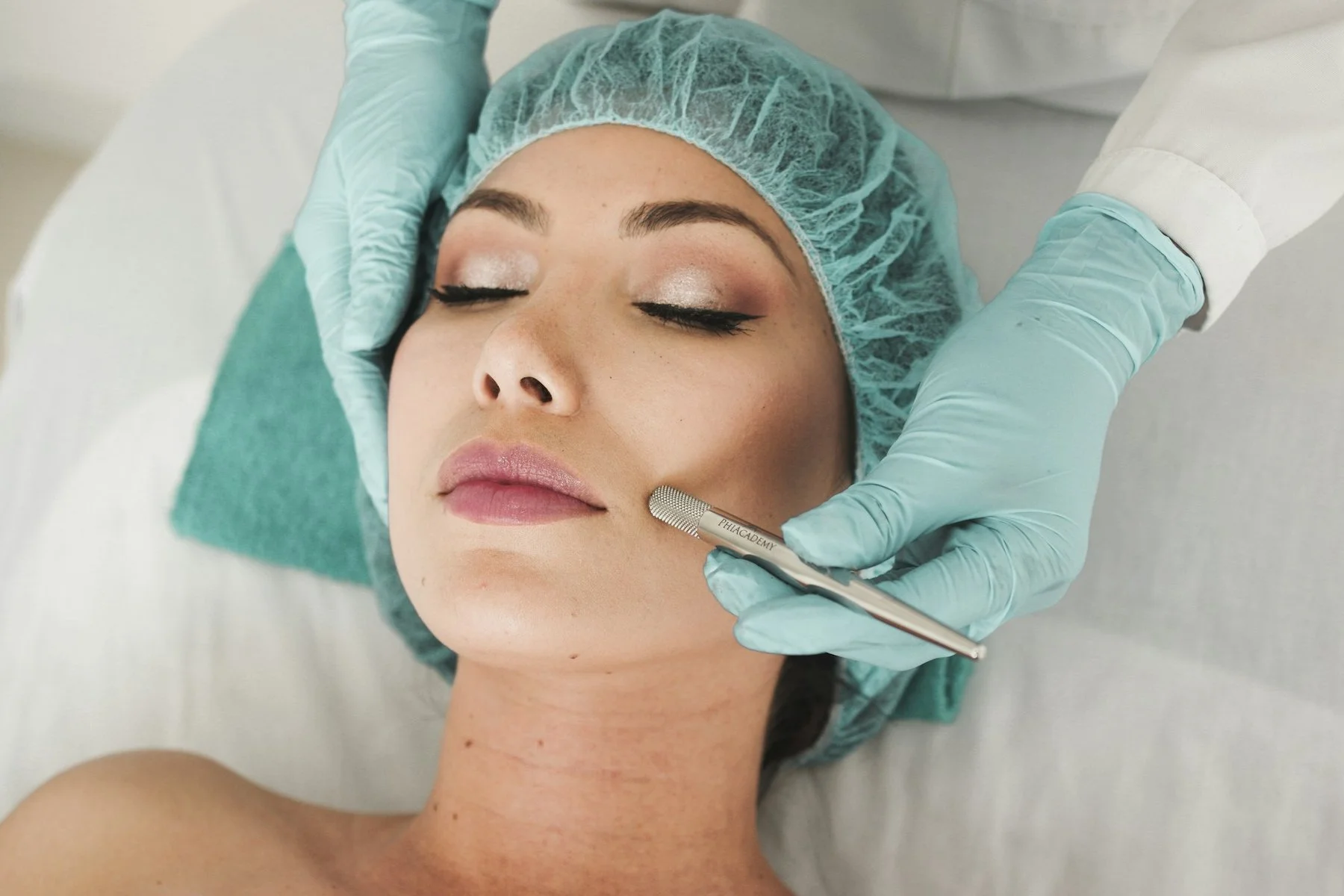
A short menu of signature services is easier to book, price, and market than a long list. Retail comes next, once you know which treatments your clients come back for.
Build a Short Menu and Price It for Profit
Five to eight services is enough to launch. A menu that size reads well on a phone and keeps your product orders small.
A simple structure works for most new studios:
One or two signature facials that show what you're known for.
A shorter express option for clients with a lunch break.
Add-ons that raise the ticket, such as a mask or a brow tidy.
Waxing or brow services, if they fit your license and your clients.
Price each service from your own numbers. Add the product cost per treatment, your time, the card fee, and a share of your fixed costs. Then check local prices to see where you sit.
Avoid copying your old salon's price list. Those prices covered the salon's rent, staff, and commission split, and your costs are different now.
Give every service an honest duration with cleanup time built in. A 60-minute facial that really takes 75 minutes pushes your whole day late.
When to Start Selling Retail
You already recommend products in almost every appointment. Clients ask what to use at home after a facial, and your own retail lets the treatment recommendations come from you.
Retail adds income to each visit without adding hours on the treatment bed. It also gives clients a reason to come back between treatments, when a product runs out.
A low-risk way in is three to five products that match your signature facial. Add more once you see what clients reorder.
There are three common ways to sell retail as a solo esthetician:
Resell a professional brand. Clients may already know the name, and you buy stock at wholesale prices.
Use a virtual storefront. Your software sends product recommendations and the brand ships the order, so you hold no stock.
Launch your own private label line. Your name goes on the bottle, so clients can only reorder from you. No stock or minimum order requirements.
Rosy Salon Software describes how the virtual storefront route works:
"Integrated salon software like Rosy connects with platforms like SalonInteractive to provide a 24/7 virtual retail store with zero inventory overhead or shipping needs. A virtual storefront lets beauty professionals send digital product recommendations with pre-filled carts and use hands-free, brand-sponsored marketing campaigns to drive online sales and create a passive income channel."
For your own line, Selfnamed is a private label platform that lets you pick ready-made formulas and add your branding. You choose from 200+ ready-to-brand products, design your labels in the free Selfnamed Design Studio, and order without a minimum on most products.
Check out our success stories for more insights. For example, one esthetician in Germany built a 60+ product range alongside her studio. Read how she built MINDt Cosmetics.
What to decide: your signature services, your prices, and whether retail starts at launch or after your first few months.
What it costs: a menu costs almost nothing to build. Retail stock ties up cash, unless you sell through a virtual storefront or partner with private label services.
Common mistake: a long menu copied from your old salon, priced for someone else's costs.
5. Source Products and Inventory


You'll buy two kinds of products: back-bar products you use in treatments, and retail products clients take home. Track them separately, because you'll pay for and price them differently.
Professional Brands, Private Label, or Both
Most estheticians use a professional brand on the back bar. The open question is retail.
| Professional brand | Your own private label line | |
|---|---|---|
| Whose name clients see | The brand's | Yours |
| Where clients can reorder | Anywhere the brand sells | Only from you |
| Pricing | Often guided by the brand | Set by you |
| Getting started | Account approval, sometimes an opening order | Design labels, then order |
| Brand building | Done by the brand | Done by you |
A professional brand is the quicker start, and clients may already trust the name. The trade-off is that they can often buy the same bottle online, sometimes for less.
A private label line keeps the reorder with you. Selfnamed offers 200+ ready-to-brand beauty products, COSMOS certified by ECOCERT. You can order a single product to test it, buy in bulk for your shelf, or connect a Shopify, Wix, WooCommerce, or Squarespace store so online orders ship under your brand from fulfillment centers in the EU and US.
See the range of spa and esthetician products.
You can also run both, with a professional brand on the back bar and your own line on the retail shelf.
How to Choose Suppliers
The right supplier fits your cash flow as well as your treatment room.
Ask every supplier the same questions before you order:
What's the minimum order? A low or no minimum keeps cash out of your stockroom.
How fast can you restock? Slow reorders lead to gaps on your shelf or your back bar.
Can I test before I commit? Samples or single units let you try textures and scents on your own skin first.
What certifications does each product carry? Check them per product, not brand-wide.
Who handles US labeling rules? Under the Modernization of Cosmetics Regulation Act (MoCRA), the company whose name is on the label is the responsible person, with duties such as reporting serious adverse events. Ask what support the supplier gives.
What happens with damaged or late orders? Get the returns policy in writing.
Once stock arrives, keep it simple. Set a reorder point for each product, note how much back-bar product each service uses, and sell older stock first so nothing expires on the shelf. Our guide to MOQ explains how minimum orders affect a small brand's cash.
What to decide: which back-bar line you'll use, and whether your retail is resold, your own brand, or both.
What it costs: opening orders tie up cash. Low-minimum and private label options keep your stock spend close to what you sell.
Common mistake: ordering a full retail wall before you know what clients actually buy.
6. Get Your First Clients
Your first clients will most likely come from people who already know your work: past clients, friends, and the people they send your way. Your job is to make yourself easy to find and book.
Let past clients know where you've moved, within your contract. If your old salon contract limits contact with clients, follow it, and let your public profiles do the work.
Set up a Google Business Profile. It puts you on Google Search and Maps for free. If you work from home or travel to clients, Google lets you hide your address and list a service area instead.
Put your booking link everywhere. Add it to your Instagram bio, your Google profile, your text and email signature, and your business cards.
List your services on booking marketplaces. Booksy, Fresha, and Vagaro each run a marketplace where people search for treatments, so a profile there gives new clients one more place to find and book you. Our guide to salon booking apps compares them.
Show your work. Post your treatment room, short clips of your process, and before-and-after photos taken with written client consent.
Ask for reviews while results are fresh. A short message after the first visit, with a direct review link, is often enough.
Build local referral partners. Hair stylists, lash and nail artists, yoga studios, and bridal planners all see clients who may need you.
Reward rebooking. A small perk on the third visit, such as a free add-on, gives clients a reason to come back.
For more channels and campaign ideas, see our guide to beauty salon marketing.
What to decide: two or three channels you'll focus on for the first three months.
What it costs: mostly your time. Paid ads are optional, and they work better once you have reviews and photos.
Common mistake: trying every channel at once, so none of them gets enough time to work.
7. Your 90-Day Esthetician Business Launch Checklist

The first 90 days are about turning first visits into a rebooking habit.
Days 1-30: Set Up and Open
Confirm your licenses, business registration, EIN, and business/tax bank account.
Research insurance offers and start your plan before the first client arrives.
Publish your booking page with five to eight services, deposits, reminders, and forms.
Verify your Google Business Profile and add your booking link to your social channels.
Prepare your space and equipment, stock your back bar, and choose your retail route.
Book your first appointments with past clients, friends, and referrals.
Days 31-60: Turn First Visits Into Rebookings
Build a simple website with your menu and booking link. Add to it every week or two.
Suggest the next visit before each client leaves.
Send a short follow-up within a day or two, with aftercare tips and a rebooking link.
Personalize your reminders with what to bring or how to prepare.
Ask happy clients for a Google/social media review.
Introduce your first retail products, if you haven't yet.
Bookedin sees two habits make the biggest difference here:
"The second mistake is having a scheduling tool and never turning on reminders. Reminders work even better when you personalize them, for example by including what to bring or how to prepare their skin before the appointment.
Thank-you emails help too. A short note sent shortly after the visit, with a link to book the next appointment, can be what turns a first-time client into a regular."
The first mistake on Bookedin's list is the one from the tech stage: skipping a scheduling tool, then losing a new client's trust to a double booking.
Days 61-90: Check Your Numbers and Win Back Quiet Clients
Compare your weekly appointments with the break-even number in your plan.
Check how many clients left with their next visit booked.
Message past clients who haven't returned.
Review which services and products sell, and trim what doesn't.
Check your estimated tax due dates and pay what you owe.
Decide what comes next: more retail, packages, or a software upgrade.
WellnessLiving sees the same pattern in the solo pros who build a steady client base:
"The new solo pros who build a steady client base treat the first appointment as the start of a relationship. They suggest the next visit before the client leaves the chair, timed to a natural cycle, such as every four to six weeks for facials. They send a personal follow-up within a day or two with aftercare tips and a rebooking link, then a 'time for your next visit' reminder when the cycle is due. They ask for a Google review while the results are fresh and offer a simple referral thank-you. And they contact past clients who haven't returned, rather than waiting and hoping they come back.
The most common mistake is putting all the energy into finding new clients through discounts and social posts while skipping rebooking and follow-up. The calendar fills once and then empties, so you spend every month chasing new bookings. The second most common is not requiring a deposit from day one, because it sets a no-show pattern that's hard to reverse."


Start Your Own Esthetician Business One Stage at a Time
Pick the model that fits your clients and your budget. Get your licenses, structure, and insurance in place. Then set up a booking tool that takes deposits and sends reminders for first visits.
From there, keep your menu short and price it from your own numbers. Add retail once you know what clients ask for, and choose suppliers that fit your cash flow.
The first 90 days decide whether new clients become regulars. Rebook at checkout, follow up within a day or two, and check your numbers every week.
And when you're ready to put your own name on the products you recommend, Selfnamed lets you start with a single product and grow the line as your client list grows.
Frequently Asked Questions
-
It depends mostly on your model. A home studio or mobile setup has the lowest upfront and monthly costs, and your own studio lease costs the most. Budget for licenses, registration, insurance, equipment, back-bar products, software, and a cash buffer for your first quiet months.
-
In many states, yes, if your home studio meets state board and local rules. Texas and California, for example, require an establishment license and a separate entrance for home salons. Check with your state board of cosmetology and your city's zoning office before you set up.
-
A solo esthetician business plan should cover your services and prices, your ideal client, your monthly fixed costs, and the appointments you need each week to break even and pay yourself. Add how you'll find and keep clients, your retail plan, and the cash buffer you'll start with.
-
Most solo estheticians start with general liability, which covers accidents such as a client fall, and professional liability, which covers claims from a treatment. If you sell retail, ask about product liability. Equipment and business interruption cover protect your income if a machine breaks or you have to close.
-
A sole proprietorship is the simplest structure, but your personal assets aren't separate from the business. An LLC protects personal assets in most cases, and profits can still pass through to your personal tax return. State filing fees and rules differ, so ask an accountant which fits you.
-
First clients usually come from people who already know your work: past clients, friends, and their referrals. Set up a Google Business Profile, put your booking link in your Instagram bio, ask for reviews after early visits, and build referral partners such as local hair stylists and lash artists.
Must read